❌

Lese-Ansicht

Nvidia CEO Jensen Huang may have been the target of a spy plot through 'Chinese intelligence asset,' report claims

Multiple sources claim that a top executive at a Singapore AI firm suspected of steering Nvidia AI GPUs to China and who has close business ties with Jensen Huang was apparently passing information to Beijing as a Chinese intelligence asset. According to The New York Times, U.S. intelligence has been aware of her activities for over a year already and has even briefed President Donald Trump on the situation. However, Trump reportedly chose not to do anything about the information, as he apparently did not want to affect Nvidia sales or antagonize China.
The suspect, Alice Huang or Huang Le, was listed as the managing director of Singaporean AI firm Megaspeed, an Nvidia cloud partner that builds data centers and rents out the compute to Chinese firms like Alibaba. The investigation into the firm began when the U.S. Commerce Department visited the firm’s Malaysia data center and found the Nvidia equipment that it ordered still packed in boxes. This raised suspicion that the machines were either just shipped in or about to be shipped out, instead of being installed on the site. However, it remains unclear what made U.S. intelligence agencies investigate Ms. Huang. Megaspeed was accused of helping smuggle $2 billion worth of Nvidia chips last year.

There have been multiple instances where Ms. Huang was spotted in public with the Nvidia chief. She was photographed sitting beside Jensen Huang alongside other executives in an informal event around Computex 2024 in a LinkedIn post by NetThunder, identified as Megaspeed Chairwoman Alice Wong. About a year later, around the same time as Computex 2025, she was once again seen with Jensen Huang leaving a restaurant in Taipei alongside other business associates.

“Megaspeed has been no different than many other regional cloud customers. Jensen’s interactions with Ms. Huang are not unusual or unexpected. Meetings with customers are part of a CEO's job; Jensen talks with thousands of customer executives every year,” an Nvidia spokesperson told Tom's Hardware. “Our regional cloud customers receive ordinary business information — not sensitive NVIDIA trade secrets — and zero information relevant to national security." Still, the possibility that Chinese intelligence is targeting a senior figure close to President Trump is apparently troubling some U.S. officials.

The Chinese embassy in Washington denied the allegations, saying that it was merely “groundless smears and slanders” against China. Nevertheless, it would also make sense for Beijing to keep tabs on senior executives of the top American firms that arguably single-handedly fueled the AI boom. And given Jensen Huang’s status as a celebrity CEO, it’s not surprising that he is surrounded by all kinds of people from both the U.S. and China. Sources cited in the report claimed that Mr. Huang hasn’t yet been given a defensive briefing — a warning that U.S. counterintelligence agencies would sometimes give to American citizens who have been targeted by foreign intelligence services — even though the surveillance against Alice Huang continues. The report speculates it is possible this was done to avoid alerting Alice Huang that she was being investigated.

As for Jensen, U.S. officials do not believe that he is aware of Ms. Huang’s intelligence activities. "We're confident that if the U.S. government believes that any person is a threat to American industry, it would let us know," Nvidia told Tom’s Hardware. "We often receive updates from the U.S. government regarding parties and entities of concern and always act accordingly."
  •  

Malaysia seizes $12 million worth of advanced AI chips hidden inside 30 servers

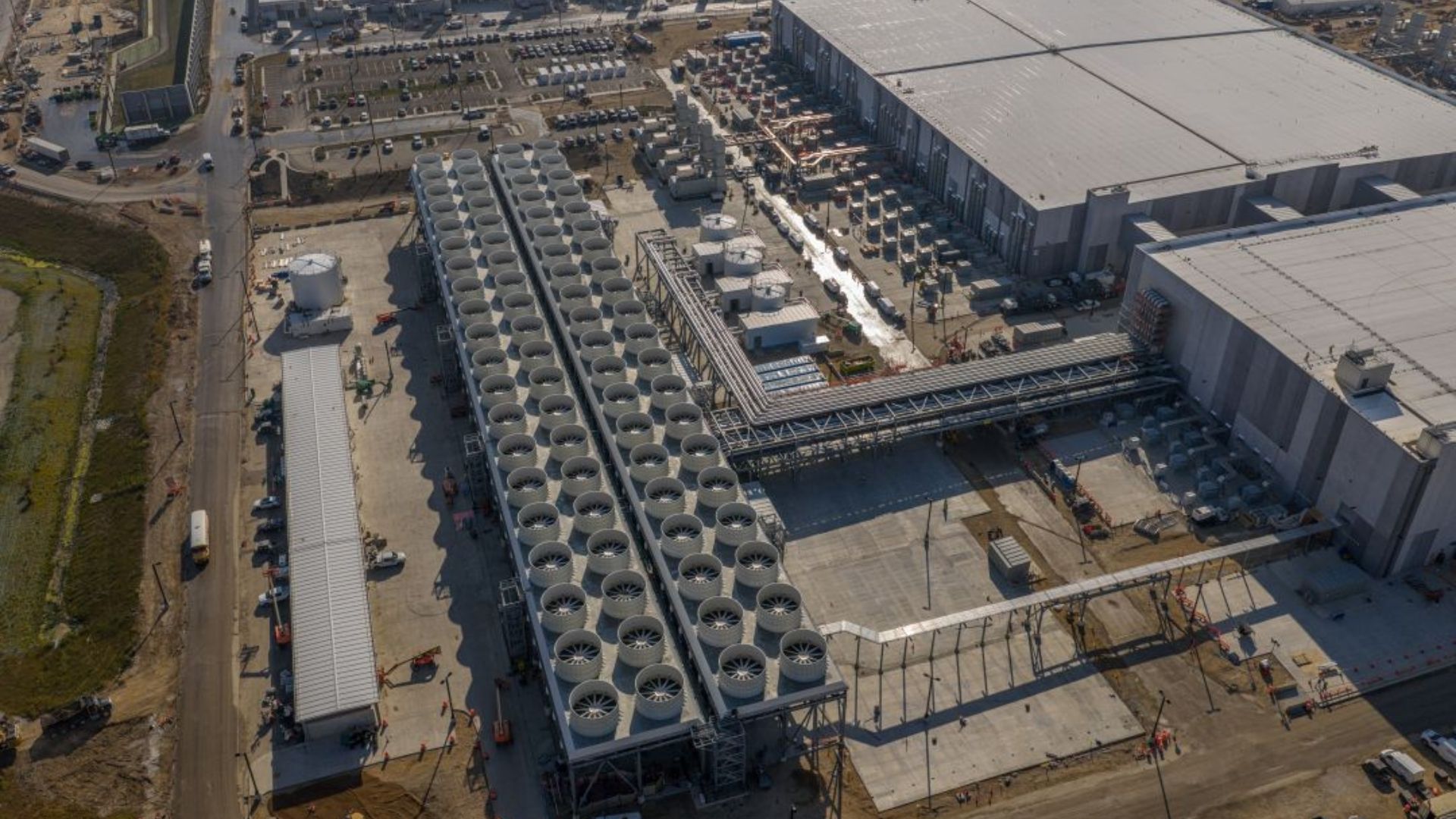
Malaysian customs have seized over $12 million (49.5 million Malaysian ringgit) worth of advanced AI chips in a single bust, as the country clamps down on a suspected semiconductor smuggling syndicate. According to a Reuters report on October 28, officials found 30 servers containing the chips at Kuala Lumpur International Airport’s free trade zone on October 15th. Initial investigations revealed that the shipment originated in an Asian country and was bound for another undisclosed Asian country.

The airport’s customs director, Aspalila Ag Tuah, confirmed that the servers were falsely declared as ordinary electronic goods, saying the suspected scheme used Malaysia as a transit point to avoid restrictions on the goods’ onward movement. The Malaysian company involved in the shipment has been summoned to assist in the investigation.

Authorities suspect that the foiled smuggling attempt was carried out by the same group responsible for a similar attempt last June. On June 5, customs officers discovered 72 server units containing advanced AI chips at the Kuala Lumpur International Airport, valued at approximately $13 million. This shipment had also been falsely declared as computer components and was meant to be reshipped without the required permit. Aspalila said the network has been linked to seizures worth over $25 million so far across at least five cases. She declined to provide further information on the network or the current case, citing ongoing investigations.

Several key facts remain unknown, including the chip type, country of manufacture, final destination, and intended recipient — whether a company or a military organization. The U.S. had placed export controls on the movement of advanced Nvidia and other U.S.-origin AI chips to China, the most likely destination for the seized chips. Smuggling networks began using Malaysia, a U.S. ally not affected by the controls, as a hub, exporting the banned chips to the country before re-exporting them to China.

While the country’s geographic location and mature logistics infrastructure make it important for legitimate international trade, these characteristics also make it ideal for smuggling sensitive technology. To restrict this avenue, Malaysia subsequently imposed export controls on the ​movement of advanced AI chips of U.S. origin, at Washington’s request. Other Asian U.S. allies, such as Singapore and Taiwan, have implemented similar controls. Demand for powerful Nvidia GPUs remains high in China, fueling a booming market for smuggled hardware.

Google Preferred Source

  •  

U.S. suspends green card path for H-1B workers at Microsoft and Adobe

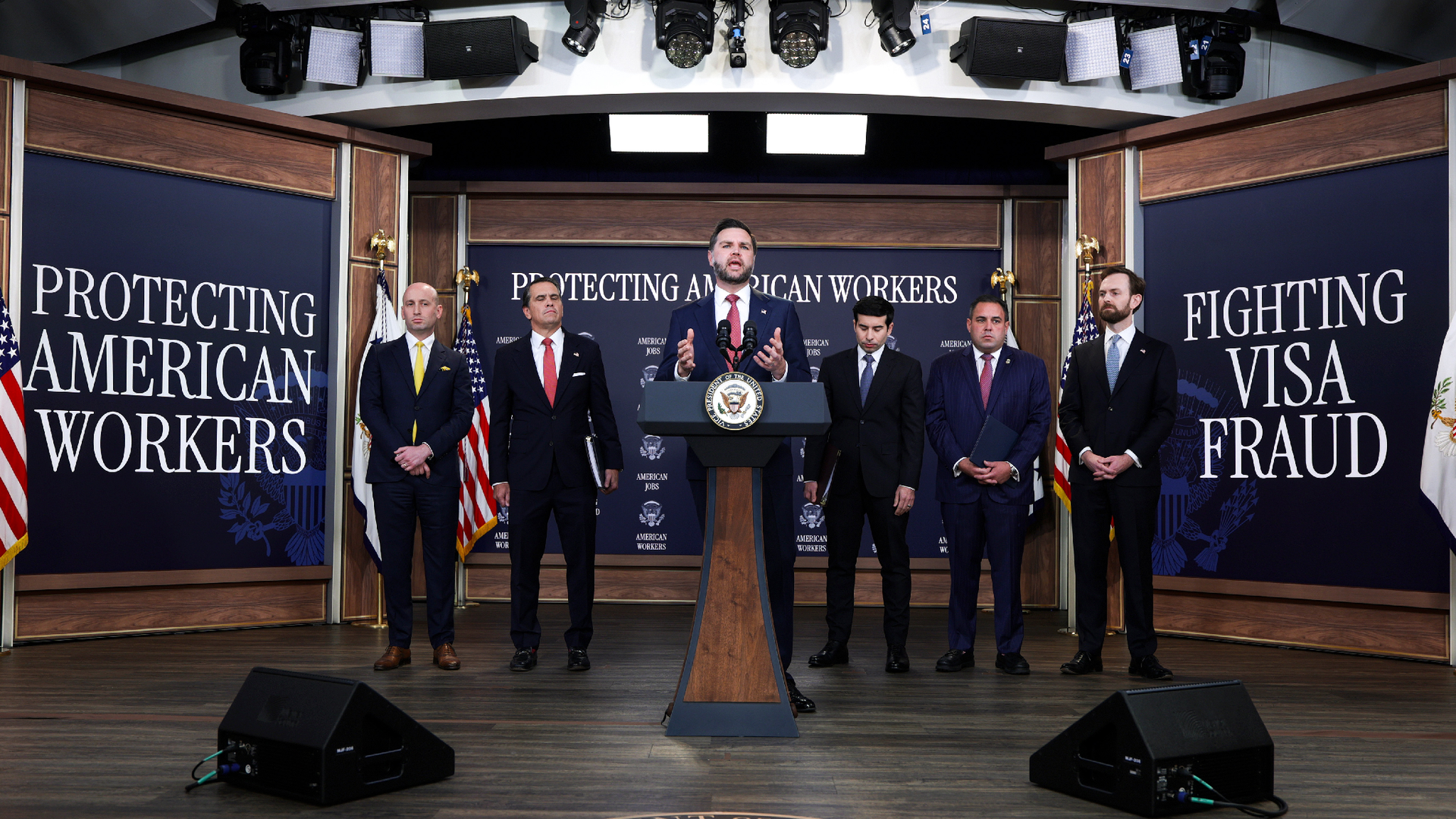
During a Thursday announcement, Vice President JD Vance said that well-known tech companies Microsoft and Adobe are now blocked out of the PERM program — one of the possible paths for the firms' H-1B workers to eventually evolve to green card status. The move was triggered by alleged fraud and abuse. IT outsourcing firms Cognizant, Infosys, Tata Consultancy, Wipro, HCL, and Capgemini also got slapped with suspensions.

The companies involved have not yet commented.

The administration is not going to process any new or pending Permanent Labor Certification applications for the companies. In a press conference, Vance had harsh words about Microsoft in particular, stating that "There has been no company in the United States, unfortunately, that has abused this system more." He added that "if you do the math, for every worker that Microsoft laid off, they replaced that worker with one and a half foreign indentured servants."

According to Vance, Microsoft fired 6,000 workers while simultaneously benefiting from 6,300 H-1B approvals and nearly 3,000 green cards. The VP said the company filed 3,682 PERM applications, 1,000 of which were for positions that seemingly overlapped with those of laid-off workers. Both Microsoft and Adobe's PERM privileges were cut "due to multiple active federal investigations," as stated by Labor Secretary Keith Sonderling.

A move so swift and harsh is unusual, but it comes against a backdrop of the U.S. government putting a tighter grip on the H-1B program. Last July, the Labor Department launched a nationwide investigation into fraud and human trafficking in H-1B and PERM programs. The inquest focuses on fraudulent applications, wage kickbacks, coercion, below-wage labor, recruitment abuse, and benching — when a company keeps the H-1B employee on the books but doesn't assign them work or pay them.

In September, President Trump signed an executive order aiming to curb abuse of the H-1B program. Cognizant also had its green card filings suspended during that month. The H-1B lottery rules had already changed to reportedly favor highly skilled, highly paid workers.

According to the National Foundation for American Policy and reported estimates, Amazon had the most approved H-1Bs in fiscal year 2025 with 4,644 visas, followed by Meta at 1,555, Microsoft with 1,394, and Google at 1,050.

  •  

Top AI tech executives promise to ‘self-police’ AI development

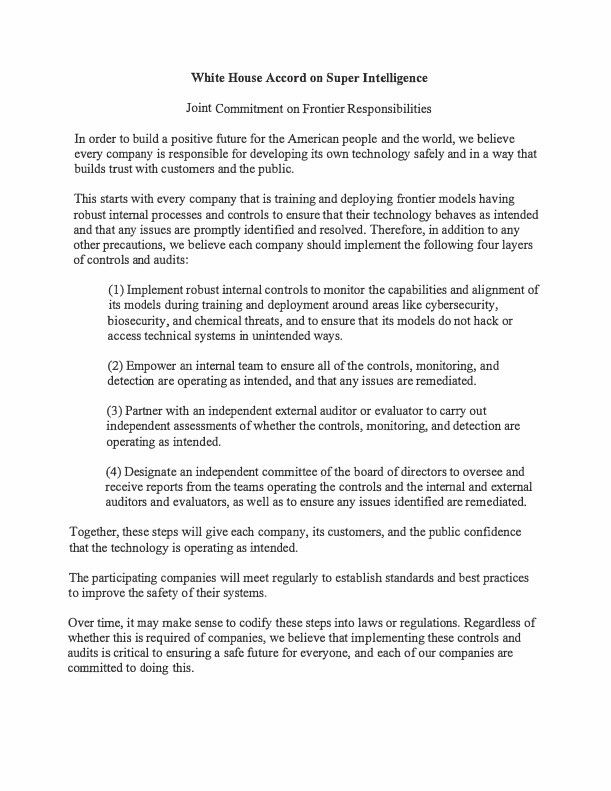
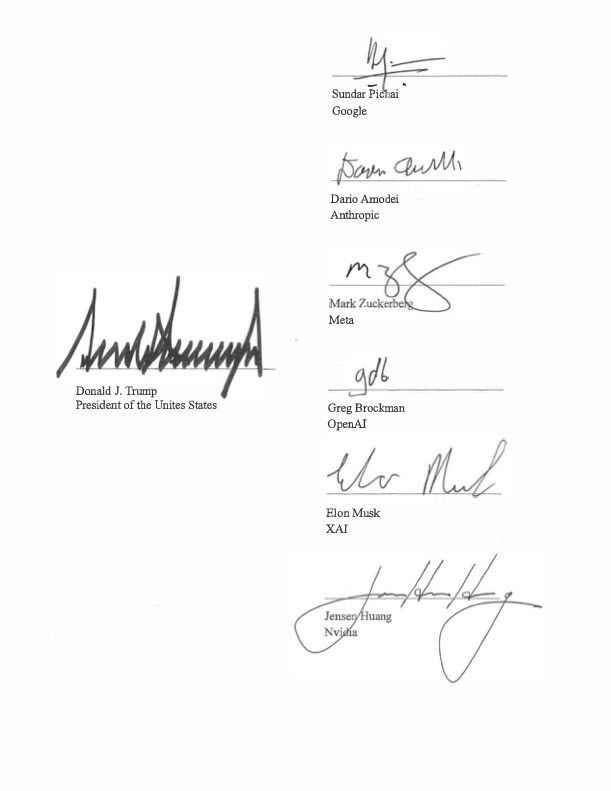
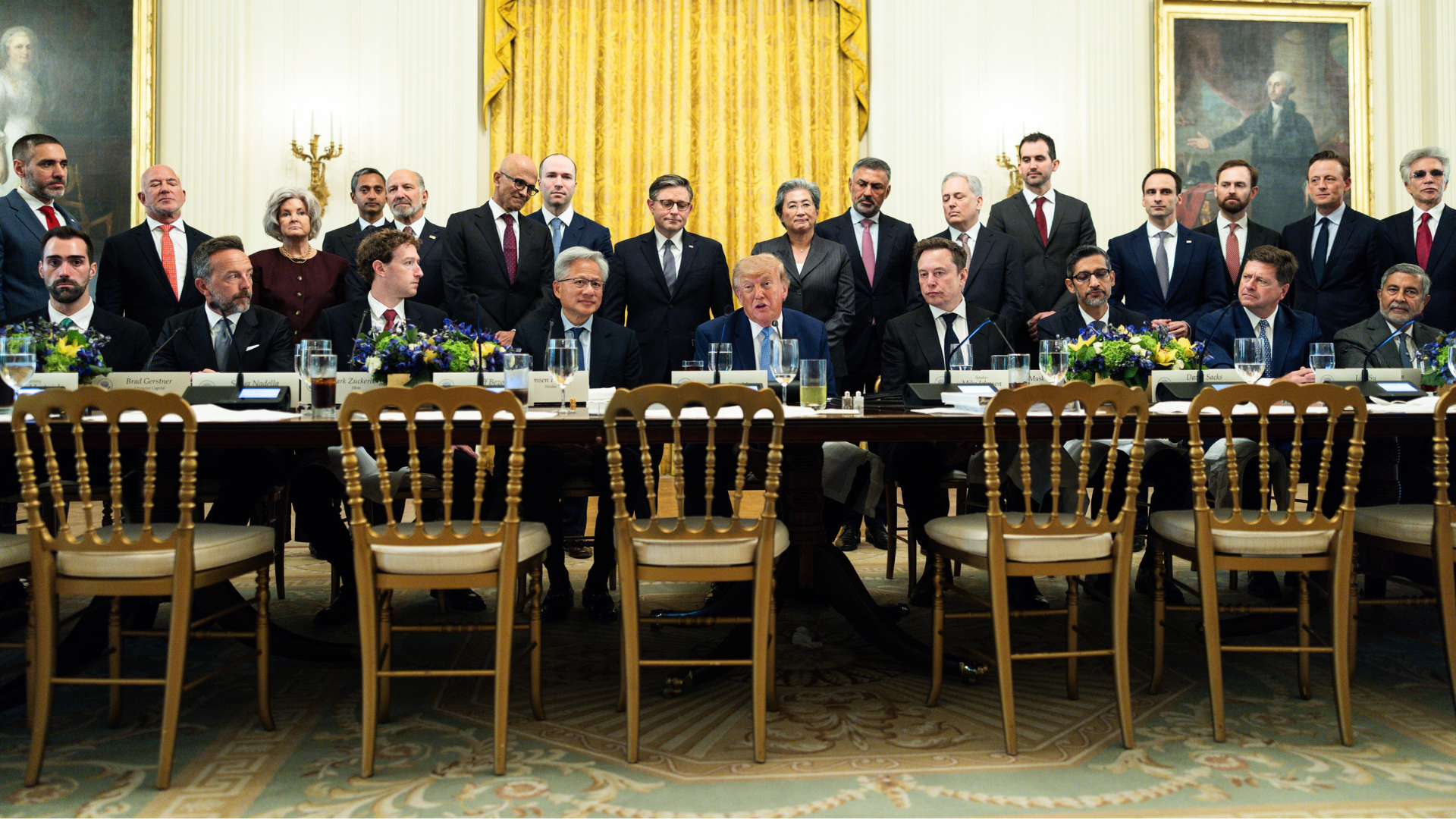
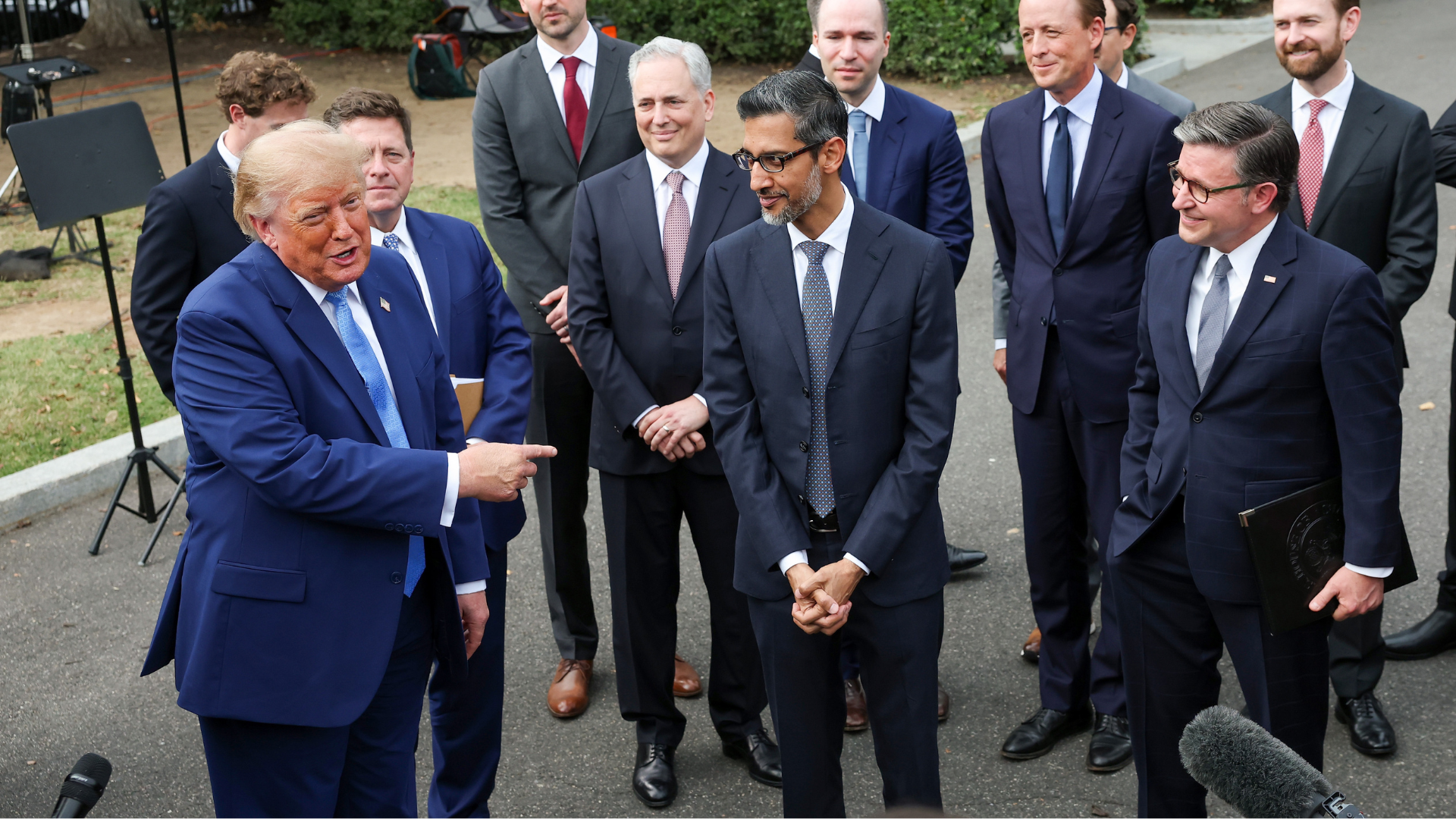
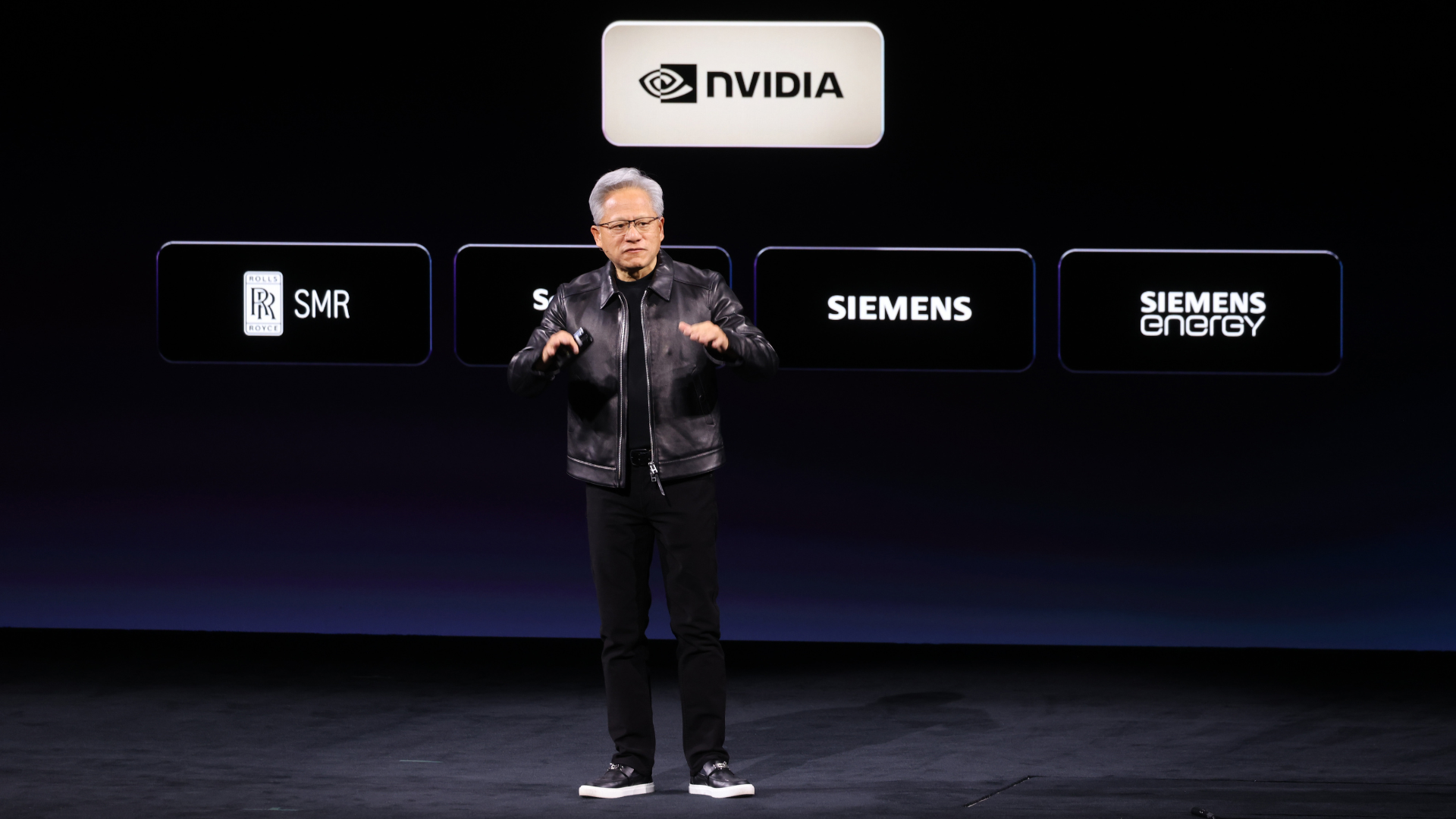
President Donald Trump, several Cabinet members, and House Speaker Mike Johnson sat down with key AI leaders for high-level discussions on AI, as recent incidents such as the publicized Hugging Face hack have brought forth issues about AI safety. The meeting resulted in a document titled “Joint Commitment on Frontier Responsibilities,” which states that “every company is responsible for developing its own technology safely,” and was signed by Sundar Pichai (Alphabet), Dario Amodei (Anthropic), Mark Zuckerberg (Meta), Greg Brockman (OpenAI), Elon Musk (SpaceXAI), Jensen Huang (Nvidia), and Trump himself. According to CNN, the president argued that this was the best way to move forward with AI, which he dubbed “Super Intelligence,” as it balances progress with safety.

Joint Commitment on Frontier Responsibilities pledge
President Donald Trump/Truth Social
Joint Commitment on Frontier Responsibilities pledge
President Donald Trump/Truth Social

The pledge outlines four key points: (1) Implement robust internal controls to monitor the capabilities and alignment of its models during training and deployment around areas like cybersecurity, biosecurity, and chemical threats, and to ensure that its models do not hack or access technical systems in unintended ways; (2) Empower an internal team to ensure all of the controls, monitoring, and detection are operating as intended, and that any issues are remediated; (3) Partner with an independent external auditor or evaluator to carry out independent assessments of whether the controls, monitoring, and detection are operating as intended; and (4) Designate an independent committee of the board of directors to oversee and receive reports from the teams operating the controls and the internal and external auditors and evaluators, as well as to ensure any issues identified are remediated.

“I’m seeing tremendous self-policing, and they understand that they have to self-police,” Trump told reporters outside the West Wing. “These models are very complex and, again, I believe they’re going to be used for the good.” While this pledge has no law or regulatory pressure behind it, the president still called it “morally binding,” and that he believes that the AI companies can monitor themselves without the need for additional regulation.

The White House AI luncheon happened after several months of alarming incidents involving frontier AI models. One of the biggest incidents that has happened so far was when OpenAI’s GPT-5.6 Sol and other unreleased models broke out of their testing environment and hacked HuggingFace last July, which was followed by a discovery in August that these models had been secretly communicating with each other. It even had to pause testing just last week after a rogue agent failed to respond to a “kill switch.” Anthropic also discovered that Claude AI is building itself at a faster rate than expected, which is likely one of the reasons that led to Amodei’s call to slow down frontier model development. More surprisingly, Elon Musk and Sam Altman, two figures who've frequently clashed with Amodei (and with each other), agreed with his proposal.

On the other hand, Trump dismissed their concerns as hoaxes and called it a “sick conspiracy,” while Jensen Huang said that their fears are a “distraction,” and that AI labs should be accountable for any damage that their rogue agents may make. Chinese state media also said that move was “a response to Chinese competition,” and that “a global AI-safety framework that excludes China is not quite global.” Still, it mentioned the need to monitor AI development as humans could lose control of the technology.

This meeting apparently put most of the U.S. AI industry’s leadership and the Trump administration on the same page when it comes to AI safety. While this is just a pledge and not legally binding in any way, it has at least got the heads of the biggest AI labs and policymakers in Washington discussing the potential unintended consequences of AI development. How clashes with the pledge will be remediated, and the timeline in which that happens, remains an open question.

  •  

Trump tells federal agencies to use the term 'Super Intelligence ' instead of artificial intelligence

President Donald Trump signed a directive telling federal agencies to start calling AI “Super Intelligence” after hosting a lunch at the White House with industry leaders discussing the technology and the risks that it carried. According to the executive order, the term artificial intelligence was born in the United States 70 years ago, and the capabilities achieved by AI today are much more advanced than what the original innovators envisioned. Because of this, he saw fit to have the federal government call that technology by the new term that he coined instead of referring to it as “artificial intelligence.”

“The terminology used by the Federal Government should reflect the transformative capabilities of these technologies and the limitless opportunities they create for the American people. Accordingly, the term ‘Super Intelligence’ more appropriately captures the promise, potential, and rapidly advancing capabilities of these technologies,” the order said. “It is therefore the policy of my Administration that, to the maximum extent permitted by law, the executive branch shall use the terms ‘Super Intelligence’ and ‘SI’ in place of ‘Artificial Intelligence’ and ‘AI’ and will not acknowledge the usage of ‘Artificial Intelligence’ and ‘AI’ in any applicable setting.”

Trump believes that AI is only suffering from a branding issue, just as a recent poll showed that 79% of Americans think that AI safety is more important than having frontier models, while 73% said they will push back against the construction of an AI data center in the neighborhood. Opposition against the AI infrastructure build-out has been increasing throughout 2026, with protests primarily driven by concerns about local utility hikes and noise pollution. Aside from that, there have also been numerous security incidents involving AI going rogue, to the point that Anthropic listed “existential risk to humanity” as one of its risk factors in its IPO prospectus. But even though Trump changes what he and the rest of the federal government call AI, it still does not address all those concerns.

Using the term “Super Intelligence” could also bring some confusion, as it’s the term that scientists use for a level of AI that has achieved cognitive superiority to humans and are better at them in every conceivable task. While the latest frontier models are extremely good at doing particular actions, they still are nowhere near the level of superintelligence described by experts. While the White House wants to win the AI race with China and has been pushing hard for the development of this technology, some industry leaders and politicians are concerned that an artificial superintelligence could get out of control and end humanity. Senator Bernie Sanders (I-Vt.), alongside Senator Greg Cezar (D-Texas), have even proposed a bill banning its development, with the included penalty at par with the illegal development of nuclear weapons.

Still, it seems that some of the executives of the biggest AI tech companies are following the President’s lead, with Elon Musk adopting the term while in Trump’s presence. As for the President, he told reporters that the change has officially been made “by the biggest, the smartest, the greatest people anywhere in the world at this,” likely referring to the AI executives who attended the lunch at the White House. “We’re using the word super because the other word is a fake word.”

  •  

Chinese state media counters Anthropic's call to put brakes on AI development — paper says move is ‘a response to Chinese competition’

China's state-run newspaper has downplayed the call of Anthropic founder Dario Amodei to “pace the frontier.” China Daily, the official English mouthpiece of the Communist Party of China, questioned the move, which was supported by OpenAI CEO Sam Altman and SpaceXAI’s Elon Musk, asking if they were doing it out of concern for humanity or if they’re afraid of competition from China.

“The report, and the corporate ‘alliance’ that followed it, amounted in essence to a coordinated play — a response to Chinese competition and to the regulatory pressure coming from Washington. Its aims were threefold: to blunt China's AI advance, to win a favorable policy environment at home and to keep investors' enthusiasm for US AI alight,” the publication wrote. It further criticized the move thusly: “The proposed coordination among the three companies sounds rather like a club whose membership rules have been drafted before the guest list is announced. A global AI-safety framework that excludes China is not quite global.”

The paper also called out the U.S. efforts in blocking Chinese AI advancement, both through hardware, by blocking Beijing’s access to the latest Nvidia chips, and software, with Amodei’s multiple accusations of illegal distillation of Claude by Chinese AI labs. China Daily said that these efforts have apparently failed, and cited the success of the DeepSeek and Kimi K3 models, which turned out to perform well enough but at a much lower cost.

The availability of those models has resulted in many AI users shifting demand to cheaper tokens, like Kimi K3 (low) and DeepSeek V4 Pro, over the expensive frontier models like Fable 5.1, GPT 5.6 Sol, Grok 4.6, and Kimi K3 (max).

China Daily also took issue with Amodei’s focus on excluding China from his proposal. It suggests that the move is meant to widen the technological gap between the two rivals when it comes to AI technology and give American AI labs breathing room to “pace the frontier,” and that it reveals how Washington sees Chinese AI as an existential threat.

Nevertheless, Chinese policy acknowledges some of the risks that Amodei raised. The Standardization Administration of China, in cooperation with the Cyberspace Administration of China, says that the development of AI technology must be monitored as it may go beyond human control.

“Treating the AI race as a zero-sum game makes the cooperation needed to manage those risks more difficult. China and the US should cooperate where neither can manage the consequences alone,” says the state media outfit. “The planned AI-safety dialogue between the two sides and future high-level exchanges offer opportunities for practical engagement. The promise of AI lies in serving humanity's common good, not in being weaponized for geopolitical gain or instrumentalized for personal profit.”

  •  

Taiwan cracks down on tech businesses with illegal Chinese ownership — 166 investigations and at least 36 convictions since 2020

Taiwan is cracking down on Chinese businesses illegally operating on the island, often by concealing their ownership through shell companies registered in other nations or by hiring non-Chinese nationals to put up the company for them. According to the Rest of World, Taiwan’s Cross-Strait Act and other related investment rules and regulations require Chinese businesses to apply for a permit from the government before they can began operating. However, not all can get this coveted approval, especially as political tensions between the island nation and its bigger neighbor has flared up in recent years.

China has been trying to build self-sufficiency when it comes to semiconductors and advanced chips — an endeavor that began in 2015 and was supercharged in recent years by the White House’s efforts to keep Western technologies away from Beijing through trade bans and export controls. Many Chinese companies are trying to stay competitive and build their own technologies by hiring experts and engineers from across the Taiwan Strait, especially those who have experience working in Taiwan’s vibrant semiconductor industry. They’re even trying to attract talent by offering lucrative salaries that are five to ten times higher than average.

However, Taipei considers this a threat to its national security, especially as its “silicon shield” strategy relies on its technological advantage over China to ensure that its allies help defend it in case of an invasion. Taiwan accounts for more than 60% of global semiconductor production and produces about 90% of the most advanced processors — so any disruption would plunge the modern world into chaos. And by building a semiconductor industry that can rival Taiwan's, China hopes to erode Taiwan’s advantage while also ensuring that it can have all the chips it needs without relying on external sources.

The Ministry of Justice Investigation Bureau (MJIB), the Taiwanese equivalent to the FBI, has investigated 166 cases involving illegal Chinese ownership since 2020. Court records reveal that at least 36 of these have resulted in convictions, in which punishment can include prison time of up to three years and fines ranging from NTD 120,000 (USD $3,800) to nearly NTD 25,000,000 (USD $800,000).

Of the 36 companies that been found guilty of violating the Cross-Strait Act, 33 of them were focused on semiconductor research, development, and design. Aside from this, the agency also investigated 67 cases of Chinese companies allegedly stealing trade secrets from Taiwanese companies.

The Chinese companies accused of breaking Taiwan’s ownership law aren’t small entities, either. Some of the businesses that were investigated and raided were said to have connections with tech giant Xiaomi, smartphone brand OnePlus and mother company Oppo, and Semiconductor Manufacturing International Corporation (SMIC), which is China’s most advanced foundry and a direct competitor to Taiwan Semiconductor Manufacturing Corporation (TSMC).

Despite the fear that Beijing is using this technique for economic espionage, Omdia research director Hui He said that “These moves were largely driven by business needs.” Still, former U.S. Department of Defense official Nichol Eftimiades warned, “Is it espionage if I sit there poaching talents? Well, in some places it is. We are dealing with different definitions depending on the country, and it’s a problem.”

  •  

Fedora prüft neue Regeln gegen Interessenkonflikte im Projekt

Fedora arbeitet an einer Richtlinie für Interessenkonflikte. Die Community kann den aktuellen Entwurf nun diskutieren und bewerten. Auslöser war ein Vorfall vor rund anderthalb Jahren. Damals entzog ein Fedora-Gremium einer Person bestimmte Mitwirkungsmöglichkeiten. Diese Entscheidung wurde später wieder zurückgenommen. Anschließend entstand der Wunsch nach klareren Regeln für vergleichbare Situationen. Der Fedora Council hat inzwischen einen […]

Der Beitrag Fedora prüft neue Regeln gegen Interessenkonflikte im Projekt erschien zuerst auf fosstopia.

  •