❌

Lese-Ansicht

Russian military satellite closes from 200 miles to 3 miles of US radar craft aiding Ukraine

A Russian military satellite, Cosmos 2612, has closed to roughly 3 miles, from a previous distance of more than 200 miles, of the U.S.-owned radar satellite that operates in a fleet that supports Ukraine, Axios reports. The unapproved rendezvous in low Earth orbit, which astronomer Jonathan McDowell says may be the first of its kind, raises alarm in the West. The position change, which was likely not an accident as fuel is scarce, is probably a provocation and an attempt to spy on the satellite.

New TLEs show that K2612 made a manuever on Oct 16 and is now stationkeeping within 5 km or less of ICEYE X36. To my knowledge this is the first LEO rendezvous of two active satellites where the owner of one of the sats did not give approval.October 17, 2026

LeoLabs said in a statement Friday that the movement “appears to be a deliberate approach” toward ICEYE-X36, with uncertain intent and behavior that “warrants continued monitoring.” Roughly 3 miles is too close for comfort in satellite terms: there is no strict legal limit on how close satellites can get, but countries generally keep at least 6 miles (9.7 km) apart, University of Mississippi space law professor Aaron Brynildson told Axios. The approach was made without the owner’s consent, and Russia hasn’t said what the military satellite carries.

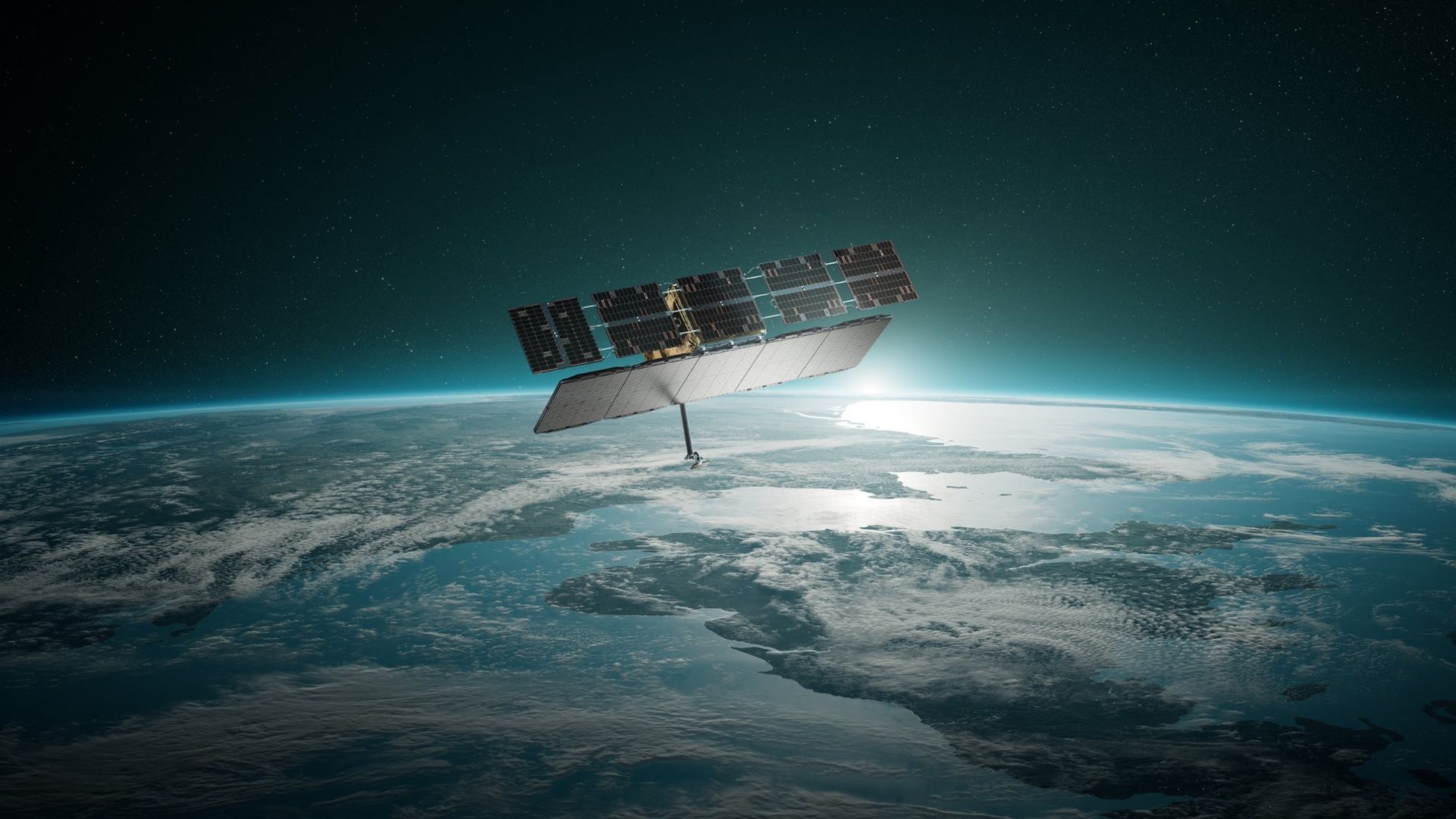
Some clues may come from the target’s operational purpose. ICEYE-X36 is a synthetic aperture radar (SAR) satellite which can image through cloud cover and at night. It was launched in March 2024 on a SpaceX Falcon 9. It’s registered to ICEYE US, the U.S. arm of the Finland-founded company. The satellite, which is in a roughly 545 km (339 mi) sun-synchronous orbit, is part of a fleet that has supplied Ukraine with information since 2022. This includes a deal earlier this year with a customer in Ukraine’s defense ministry, but a Ukrainian official told Axios it’s unclear whether ICEYE-X36 itself supports the country; ICEYE and the Defense Department declined to comment.

In May, the majority of the six military satellites Russia launched in April via a Soyuz-2.1b, Cosmos 2609–2614, shifted their orbits about 0.8 degrees to match X36’s orbital plane. Cosmos 2609 passed within 2.5 km (1.6 mi) on May 26. Cosmos 2612, on the other hand, drifted off X36’s plane by about 0.24 degrees by Sept. 30, up to about 28 km side to side, according to Greg Gillinger, a space analyst with Integrity ISR.

Then, Cosmos 2612 made separate burns from Sept. 30 through Oct. 16 to match altitude, eccentricity, and orbital period, Dutch satellite tracker Marco Langbroek wrote. By Saturday night, he estimated from public orbital data, it was within “a few hundred meters or possibly (much) closer.”

These movements appear deliberate and cost a lot of fuel, which the Center for Strategic and International Studies calls “a limited resource on a satellite.” Close-proximity work can be benign, it says, but policymakers should assume the Russian satellite “could take an action that threatens the commercial satellite,” and the U.S. and Europe should decide how to respond to any hostile act in space and make a statement on the decision. Back in July 2020, Russia’s Cosmos 2543 released an object at up to 186 m/s (416 mph) relative to itself, an action which was condemned by the U.S. and U.K.

Intent was less clear earlier this year, when McDowell told Meduza the orbital data showed no sign of the stable, close distance that tracking ICEYE-X36 would require. Now, he says it is an unapproved meeting and is not alone. Gillinger says the setup “removes any remaining doubt for me that Cosmos 2612 is interested in ICEYE X36.” Langbroek adds that “I was skeptical” at first but now calls it “completely non-consensual,” though he cautions it would be difficult to pin any X36 failures on 2612’s actions.

In a Reuters report less than two weeks ago, ICEYE CEO Rafal Modrzewski said the company moved its satellite after May, only to draw more Russian maneuvers, which Germany’s Space Command head, Maj. Gen. Michael Traut, described as “chasing.” Belinda Marchand, chief scientist at U.S. space intelligence firm Slingshot Aerospace, added that the moves may have been meant for surveillance, to prepare for future interference, or to signal capability. Western officials reportedly describe such trailing as a way to gather intelligence and test the West’s tolerance.

No statement from Russia is on record. Gillinger also told readers to “watch Cosmos 2611 and 2613, whose planes are converging on ICEYE X37’s,” with crossings expected around Nov. 6 and Nov. 15.
  •  

US military-backed cargo pod promises 90-minute orbital delivery anywhere on Earth, 10-ton Ghost vehicle gets first real-world test

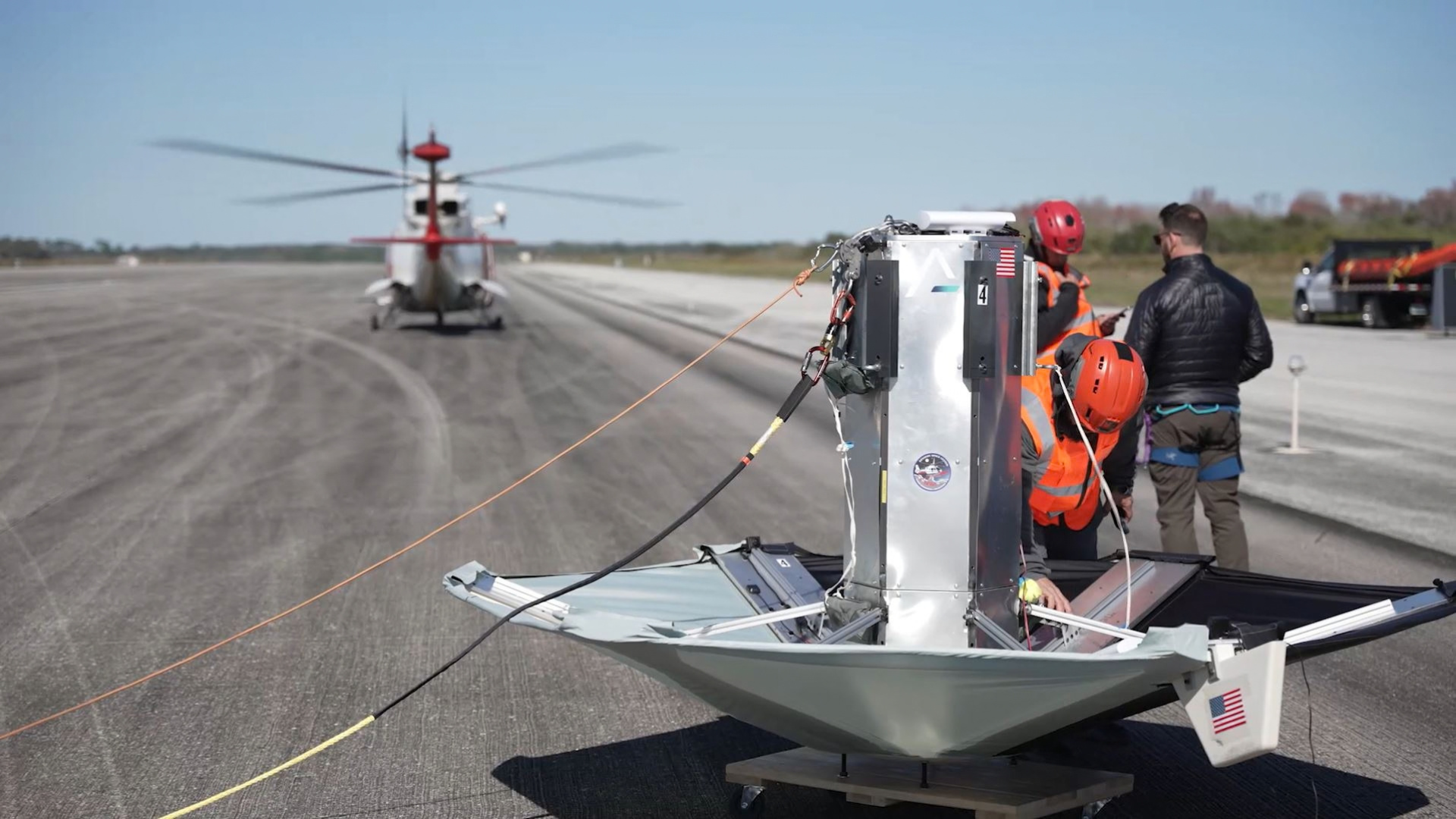
A U.S. military-backed company plans to deliver a payload to any point on Earth within 90 minutes by prepositioning assets in space and then calling down delivery vehicles as needed. Sierra Space, a subsidiary of the Sierra Nevada Corporation, has successfully completed two test drops of its Ghost reentry vehicle while carrying a bottle of whiskey and a software-defined radio. According to Aviation Week, the test was conducted using high-altitude balloons that dropped it from 35,000 feet and 68,500 feet.

While this test isn’t as exciting as SpaceX rockets landing on a platform at sea, it’s still an achievement for the team working on the project, as it’s the first test of the vehicle in two years. This demonstration is part of the U.S. Space Command’s Apollo Nexus training exercise, which aims to demonstrate the needed synchronization of multiple units in complex operations.

The test’s payload isn’t just two random items, either. They’ve been specifically selected to show that liquids and sensitive electronics could survive part of the trip back to the surface. “We were able to safely demonstrate that and prove that we could come through all of those environments and then be recoverable in a certain period of time by the team on the ground,” Sierra Space senior vice president Erik Daehler told the publication.

It should be noted that these cargo units aren’t designed to be launched by rockets from another side of the world to be delivered to frontline forces as needed. Instead, they’re designed to stay in orbit for up to five years and then be called down to troops as needed — similar to how Orbital Depots drop down from the sky when called by an SCV in StarCraft II. “Getting something into theater to the warfighter when they need it is critical,” Daehler added. “If you’re in a denied area where you couldn’t get a C-17 or a C-130 to be able to drop into the theater, space is a perfect logistics node.”

The company says that Ghost can deliver its payload to any point on Earth within 90 minutes of getting called down. However, since it is based in space, the military would have to anticipate what supplies are needed, launch them, and keep them in orbit for up to five years. This is similar to how the U.S. pre-positions supply and cargo ships in remote bases across the world like Guam and Diego Garcia, so it could easily deploy materiel where it’s needed. The Ghost is a seemingly small unit, though, with a capacity of just five to ten tons, so it won’t be able to deploy tanks or artillery pieces across the world. Still, it’s a useful device for dropping equipment, ammunition, and supplies, like this in-house assembled drone or microwave counter-drone system, to units that need them without having to risk assets and aircrew.

  •  

X-MAS Meeting 2026 vom Verein DevLab-TSA – die Tarnkappe feiert mit

Die Initiatoren vom Hacker- & Makerspace DevLab-TSA laden am 21. November ins gutbürgerliche Brauhaus in Wuppertal ein. Was passiert dort?

Der Artikel X-MAS Meeting 2026 vom Verein DevLab-TSA – die Tarnkappe feiert mit erschien zuerst auf TARNKAPPE.INFO

  •  

China launches 'Supercomputing-1' AI satellite as orbital data centers gather momentum

China has launched nine satellites — including its first integrated “rocket and satellite” AI computing project — as part of its push to put AI computing in orbit. According to a Digitimes report, the Kinetica 1 Y18 rocket, operated by Chinese commercial launch provider CAS Space, lifted off on September 20, carrying the nine satellites to their planned orbits.

The payload of greatest interest is the “Supercomputing-1” satellite, developed by Chinese AI computing infrastructure company S-AIDC. Also known as the S-AIDC-1, the satellite is designed to capture and process Earth-observation data in orbit instead of sending data back to terrestrial data centers. Keeping the processing local is meant to cut cross-regional data processing times from hours to minutes. The satellite features both a high-res optical payload and the image-processing AI computer.

According to Digitimes, the launch highlights China's efforts to develop orbital computing as part of a “broader integrated computing network.” In early June, the Chinese government approved the Space Computing Industry Innovation Center, which aims to bring together rocket and satellite manufacturers, semiconductor fabs, and AI tech companies to build a space computing network. A couple of factors are driving this spike in the development of off-planet computing, foremost among them being the AI boom.

The demand for artificial intelligence has spurred the construction of numerous data centers to house AI accelerators. These data centers, some of which can house hundreds of thousands of accelerators, consume unprecedented amounts of electricity, placing significant strain on the grid. This, along with land use, water consumption for cooling, and noise, has fueled growing anti-data sentiment, with local residents blocking $68 billion worth of new data center projects in Q2 2026.

Despite numerous economic and practical challenges, space might offer an alternative with unlimited area, access to solar power, constant cold conditions, and a dead-quiet vacuum. These advantages have made orbital computing a serious topic of discussion. SpaceX is leading the charge with the AI1 satellite, a proposed orbital data center that will deliver 150 kW of peak compute power. The company aims to achieve 1 GW per year of space AI compute by 2027 and has begun constructing the 11-million-square-foot Gigasat facility that would manufacture the 6,000 satellites required to meet this goal.

Beyond the large-scale serving of AI models, putting edge compute capacity in space is already useful for a range of applications. Earth-observation satellites can process images onboard to identify wildfires, storms, floods, ships, or other objects of interest, sending only the useful results back to Earth instead of dumping enormous amounts of raw data to ground stations. The same approach can speed up weather monitoring, disaster response, communications, and even the management of satellite constellations, where spacecraft could make more decisions independently rather than waiting for instructions from Earth.

The launch of a single satellite with edge AI capabilities on board is a far cry from an entire orbital data center, but China's approach could prove to be a more practical and immediate application for advanced computing capabilities in orbit.

Google Preferred Source

  •  

Russian Starlink rival flounders after entire batch of satellites fails to reach operational altitude — many of the 16 launched hit less than half their 870km target, and two are already falling back to Earth

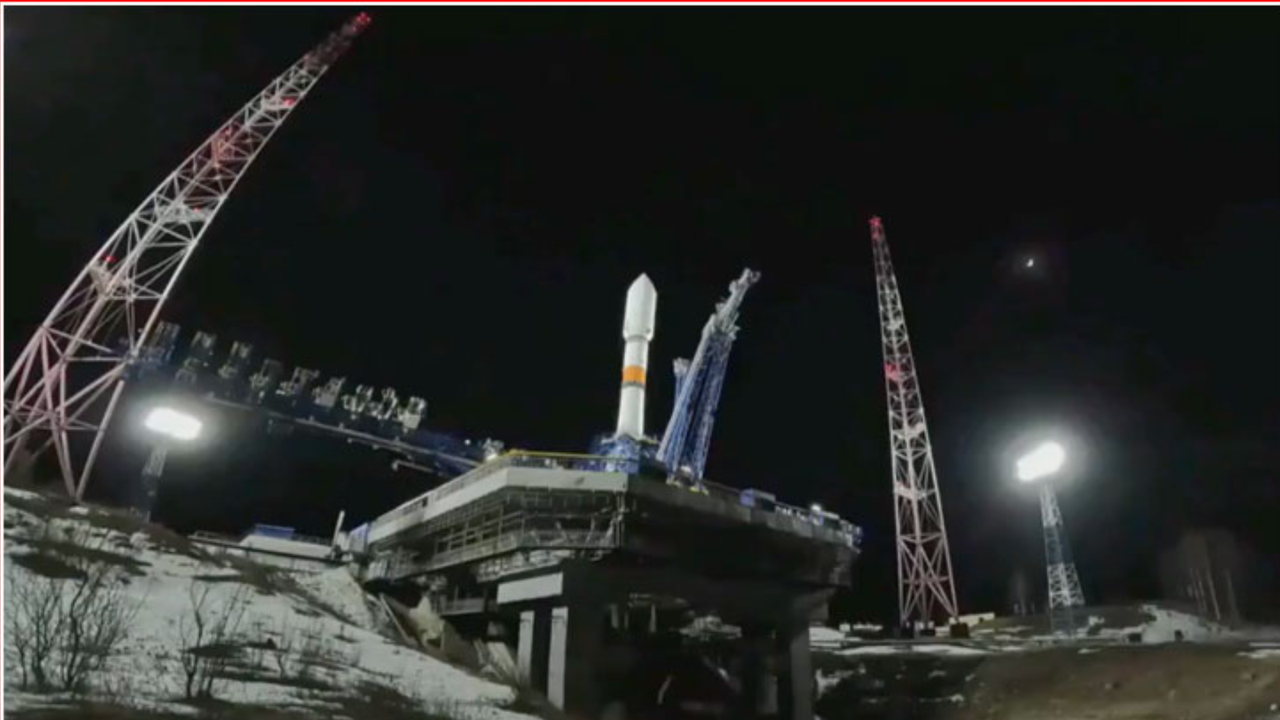
The entire second batch of Russian Rassvet satellites have failed to reach their target operational altitudes, reports the U.S.-based Institute for the Study of War (ISW), citing data from live satellite tracker N2YO. They were supposed to reach an operational altitude of 870 kilometers, but “many of these satellites ended up at altitudes between 300 and 400 kilometers, and some are experiencing orbital decay,” notes the source. Moreover, two of the second batch are already on their fiery return journey to Earth.

We’ve been watching the progress of Rassvet, the Russian homebrew alternative to Elon Musk’s Starlink, with some interest in 2026. Russia accelerated its state-funded satellite internet development after access to Elon Musk’s solution was removed, when a new whitelist user-access system was implemented (after some prior ineffective Russia-blocking efforts).

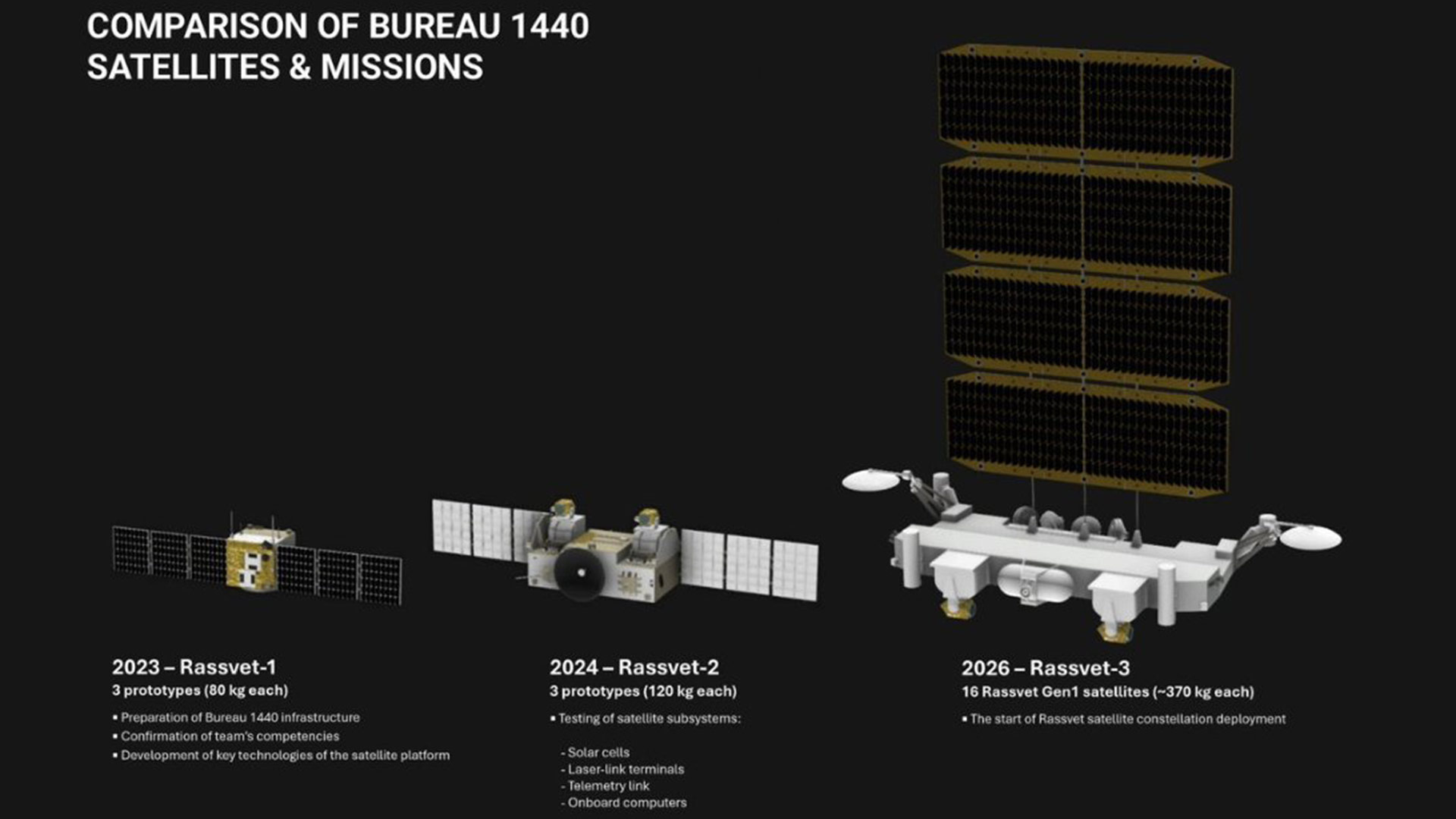
Developed by a private aerospace outfit called Bureau 1440, the Russians aim to expand the Rassvet constellation to 900 satellites by 2035. There’s still a very long way to go to hit that target. In March we reported on the launch of the first 16 Rassvet satellites. In June we followed up with news that one of them, dubbed ‘Object 4,’ had dropped out of orbit already. The ISW now says that only 12 of the first batch actually reached their anticipated altitudes. Running at lower altitudes will mean reduced lifespans as the lower-altitude satellites require more fuel.

Russian ‘Starlink Rival’ established with 16 satellites launched

A single Rassvet-3 satellite is quite a chunk of metal, weighing in at 370kg (~815 pounds). (Image credit: Bureau 1440 )

The second set of 16 Rassvet satellites was launched in mid-June. Reports indicate that none of the second batch have reached their anticipated altitudes, so things don’t look good for this project. The ISW reckons that Russia will need at least 200 to 300 fully operational Rassvet satellites to achieve stable connectivity over Ukraine 24/7. Rassvet as it stands offers two up-to-90-minute connectivity windows a day over Ukraine. Meanwhile, Ukraine’s strategists surely have Russian satellite production and launch facilities on targeting lists. It looks like Russia’s interim target of 250 operational Rassvet satellites sometime in 2027 will have to be revised.

  •