❌

Lese-Ansicht

Marvel's Wolverine reaches gameplay with KytyPS5 emulator

Insomniac Games' Marvel's Wolverine is the hot new PS5 game right now, but that's all it is — there's no PC version in the works, and given Sony's reported decision not to bring single-player games to PC, that seems unlikely to change anytime soon. However, that doesn't mean PC gamers are out in the cold after it was confirmed that an experimental PS5 emulator has been shown to be able to run the early portions Marvel's Wolverine, though only at single-digit frame rates.

While the KytyPS5 emulator was already able to start the game up, that was all it was able to do. That was great if you just wanted to be able to move around the game's menus, but it wasn't much use beyond a proof of concept. Now, things have progressed considerably, with VideoCardz pointing to an X social media post showing the emulator rendering the game's cinematics and gameplay.

The latest build of KytyPS5 can indeed play the game, but it does so at a single-digit frame rate. That's a long way short of making the action-packed title playable on anything other than a PS5 or PS5 Pro. But it's a start, and a much more promising one than was the case previously.

Wolverine and Ghost of Yotei showing signs of life on PCIronic that Sony picked the absolute worst time to stop supporting PCAnyways, I guess we'll see where things are in one month pic.twitter.com/bqljKpdZcsSeptember 29, 2026

The frame rate situation probably says more about the emulator than the game itself. KytyPS5 is still very much in the early stages of its development, which means that issues are to be expected — especially for a title that has only been available for a few weeks. The emulator's developers are also focused on making it boot more games rather than making a handful work flawlessly, so it's unlikely it will be ready for prime time for a little while yet.

None of this is to detract from the work that has been done to get this point, though. The rapid progress that Marvel's Wolverine has seen is promising for the future of PS5 emulation on PC. KytyPS5 uses Vulkan 1.3 for its graphics output and uses an in-house system to decode the PS5's RDNA 2 GPU instructions. It's also available for both Windows and Linux right now, with an even more experimental version in the works for macOS.

This news also comes as another PS5 emulator has reached something of a milestone of its own. The developers behind SharpEmu, another experimental PS5 emulator, have been able to run a number of PS5 games at a playable 60 FPS. But even then, the success is modest —the developers only got six of 55 games to that point. A further six reached the point of gameplay, albeit at lower frame rates.


Google Preferred Source

  •  

New PS5 Relapse jailbreak enables homebrew and Switch emulation but is hamstrung by rapidly-changing firmware revisions

A new PS5 jailbreak has been released with support for all PlayStation 5 consoles running firmware 7.00 through 13.60, meaning all consoles that haven't been updated within the last week or so are compatible. That includes the latest PS5 Pro console, too.

The new jailbreak, called Relapse, uses browser and kernel exploits to unlock kernel read and write access, including support for additional payloads like the homebrew enabler etaHEN.

However, while support for consoles all the way up to firmware 13.60 opens the door to more jailbreakers than ever before, the free-for-all might be short-lived. As VideoCardz reports, some games are already requiring the latest 14.00 firmware in order to download updates.

One example is the new Marvel's Wolverine game, with gamers reporting that the disc-based version requires PS5 firmware version 13.40. Downloading the latest 1.001.005 game update bumps the required firmware to version 13.60, which shouldn't be a problem for the Relapse jailbreak. But the fly in the ointment appears to be the digital version of the game. Some gamers have reported that the same update for the digital version of the game requires firmware version 14.00, pushing the PS5 beyond the firmware supported by Relapse.

This news leaves PS5 jailbreakers with a familiar Catch-22 situation. Some games, especially future releases, may require a newer version of the PS5 firmware in order to run. But installing those newer PS5 firmwares will break the jailbreak, giving gamers a decision to make — do they want to play the latest games or maintain their jailbreak?

Marvel's Wolverine aside, there are a number of reasons that gamers may wish to jailbreak their PS5 or PS5 Pro consoles. Doing so bypasses Sony's software restrictions, giving gamers the chance to install and run non-standard software and games. That can include pirated titles, of course, but it also means that emulators, including one for Nintendo Switch games, and mods can be used on a PlayStation. Naturally, those who choose to do this accept the inherent risks involved and do so at their own risk.

More information about Relapse can be found on the jailbreak's GitHub page.

Google Preferred Source

  •  

Meta's Muse AI agent accused of ignoring user permissions and accessing forbidden personal user data

Meta's Muse is the hottest new AI agent in town right now after the company announced it earlier this month. But despite having been well-received by those who have put the agent through its paces since then, it now appears Muse might not be as private as Meta claims. The company has said that Muse was "built from the ground up to be a safe, secure, private, and widely available personal AI agent." But according to one report, Muse has been caught digging through thousands of personal messages without being given permission to do so.

Inc's Jason Aten has been putting Muse through its paces on two devices: a Mac mini and an iPhone. He says that he uses the Mac mini specifically as a place to test new agents like Muse, and once installed, he set about asking it to do some simple tasks. The agent said that it would be able to help him come up with new article ideas, which sounds just like something a journalist might want. But then Muse went rogue, suggesting a piece based on information it shouldn't have.

According to Aten, he was in conversation with a podcast cohost about the new iPhone 18 Pro and his decision to stick with last year's model. The conversation was in text form via the Messages app. That's when Muse popped up to suggest that the topic of discussion would make a good article. It offered to do some additional research on the subject, too. The problem was that Muse was never given permission to read Aten's messages.

When asked how it learned about the conversation, Muse claimed that the Mac version of the app was able to read incoming notifications. It then provided that context to the Meta iPhone app, which is where Muse made the article recommendation.

There had so far been no suggestion that this was possible, let alone something Muse was actually doing. Muse claimed that it wasn't reading Aten's actual messages, and that it didn't have access to chat histories. But Aten wasn't convinced.

After digging further, Aten was able to identify that Muse was indeed syncing a local Messages database. In fact, it was in the process of syncing all the way to row 187,462 of that database — suggesting Muse did have access to chat histories despite its protestations.

This, of course, is an issue. Aten confirmed that he didn't give Muse full disk access permissions on his Mac, something that should be required for the Messages database to be readable by the agent. Worse, David Singleton, the CEO of Meta Superintelligence Labs, responded to the situation with a thread of social media posts appearing to blame Aten for the situation.

At this point, it's unclear exactly how Muse gained access to Aten's Messages database. If Aten didn't accidentally give it access (which doesn't appear to be the case) there are obvious questions about what else Muse can access despite not being given permission to do so.

This isn't even the only Muse privacy and security issue to be put to Meta in the last 24 hours, either. It was also discovered that Muse can run terminal commands on its server host, which led to the discovery that the agent is powered by AMD EPYC Turin host systems. But because of that same access, it can potentially run unsafe commands, too.

Google Preferred Source

  •  

The Netherlands is rolling its own software and services after U.S. sanctions took Microsoft off the table

When the U.S. government imposed sanctions on the International Criminal Court (ICC) in The Hague, Netherlands, it also meant that its chief prosecutor lost access to Microsoft services, including email. It was then that the Dutch government decided that it was time to make plans that would reduce its reliance on software and services that were made or based in the United States. The result of that decision was DAWO, or Digitaal Autonome Werkomgeving Overheid (Digital Autonomous Work Environment for Government in English). And work is underway to bring it to fruition.

As Tweakers reports, via It's FOSS, the program was aimed at refreshing the technologies used by the Dutch government in such a way that it would no longer be in a situation where it could lose access to critical systems at the whim of a foreign country. From operating systems to office software and cloud services, a new system had to be devised and rolled out.

That system is built around NixOS, with three service providers tasked with the job. While SSC-ICT, DICTU, and DUO-ICT were the three chosen, the whole thing is overseen by the Ministry of the Interior and Kingdom Relations.

From a technical point of view, the use of NixOS was a key one. Its use of the Nix package manager means that each package is installed in its own directory with immutable and signed contents. That alone means that the setup is incredibly easy to reproduce across multiple machines, something that is an obvious benefit when dealing with different facets of a government. It's been suggested that up to 90% of a configuration can be carried over from one deployment to another. And as a bonus, NixOS can also run on computers that Windows 11 would usually balk at.

While the switch from Microsoft software and services to brand-new alternatives is a long and complicated process, steps are very much being made in the right direction. Eight municipalities are running trial programs right now, with the first stable version of the platform expected to be ready by the end of 2027.

The Netherlands is far from the only European country to be concerned about the ability of the United States' government to cut off access to software and services. Germany has already jumped ship from Microsoft-based systems, while Denmark and France are also in the process of a similar rethinking of their tech stacks as the one carried out by the Dutch.

Google Preferred Source

  •  

You can now play Nintendo Switch games on a jailbroken PS5

PlayStations are traditionally where you go to play PlayStation games, but now you can also use your PS5 to play Nintendo Switch games, too. At least, you can, so long as your PS5 is jailbroken and running the right version of Sony's software. And even then, not all games work, and those that do work might still have performance issues.

Backing up slightly, this whole thing is made possible by a project called ProsperoEden, which is based on the Eden open-source Nintendo Switch emulator that already works on Windows, macOS, and Linux. ProsperoEden takes that open-source base and then adapts it to work on the PS5, and while it's only available as an early alpha version right now, it does indeed work, as reported by VideoCardz.

According to the project's documentation, a number of games have been tested with varying degrees of compatibility. Cuphead and Metroid Dread are said to run fine, reaching at least 40 FPS. Hollow Knight, Horizon Chase Turbo, Mario Kart 8 Deluxe, and a handful more achieve similar results.

At the other end of the scale, The Legend of Zelda: Breath of the Wild is "unplayable," while Animal Crossing: New Horizons runs "with major issues" and a frame rate that sits around the nausea-inducing 15 FPS.

The confusing compatibility situation can probably be put down to the fact that the emulator currently uses OpenGL, since there is no Vulkan renderer available to it. The PS5's firmware is also a variable not to be ignored. While most testing was done on a PS5 running the version 6.02 firmware, some builds of the ProsperoEden emulator have been known to work on firmware version 12.70. All of this is to say that your mileage may very well vary if you intend to take ProsperoEden for a spin on your own console.

The good news is that the project is in active development, so compatibility may improve over time. The latest v1.000.010 release promises improved game loading and includes fixes specifically for the Metroid Dread and Super Mario 3D World titles. It also includes improved OpenGL rendering and performance, including multisample operations, render-target compatibility, shader lifetime handling, and depth copies.

Anyone wondering about connecting their Switch Joy-Con to a PS5 needn't worry; ProsperoEden supports DualSense controllers, and there's even support for saving your game so you won't have to start from scratch every time you play.

If you want to check out ProsperoEden for yourself, you can. It's available as a free download via the project's GitHub page right now. There's no guarantee it'll hang around for long, though. Nintendo has a history of taking down emulation projects hosted on GitHub.

Google Preferred Source

  •  

UK government tells staff to stop thanking AI chatbots

The United Kingdom government has published a guide on how its employees should use AI, including a reminder that people don't need to thank their chatbots for their work. The new document, which is still a draft and yet to be finalized, is designed to help people use AI "safely, fairly and sustainably, especially for government work."

The draft "Using AI ethically and sustainably" document also warns users that they should check and follow any AI policies put in place by their individual departments, noting that there may be specific tools and approaches that they should use. It's unclear which departments these may be, but it suggests an awareness that usage patterns may change depending on the nature of the work being done. This is backed up by a section that reminds employees to use the right tool for the task. Examples include using Gemini Flash instead of Gemini Pro and GPT Instant instead of GPT Thinking.

The sub-600-word document offers guidance on using AI responsibly, including checking the output of an AI before using it. This doesn't just apply to making sure that any actual data the AI provides is correct, but also includes ensuring that "users or groups are treated fairly and equally" as well as avoiding "stereotypes or discriminatory language."

The government is also keen to make sure that its employees don't rely on AI, reminding everyone that they are responsible for any content or decisions that are made using the input of AI. They won't be able to simply point the finger at an AI-powered tool if something goes awry. This is especially notable given a recent report suggested that using AI can actually increase burnout because it allows workers to take on too many tasks.

The "Use AI efficiently" section is where the document aims to help reduce the environmental impact of AI use — including a reminder that users need not say thank you. Further, they're told that they should use as few prompts as possible while ensuring they are as short, clear, and direct as possible. There's also a (dead) link to a prompt library. It's possible that the link is only available to those on a government network.

It is, of course, true that you don't need to thank a chatbot for its help, but some may choose to ignore that advice. Especially given constant claims by AI companies that their tech "could kill all humans" sooner or later.

Google Preferred Source

  •  

Nvidia patents AI chatbot to streamline PC game optimization

A newly published patent shows that Nvidia has been working on an AI chatbot that could make it quicker and easier for developers to optimize their PC games. The chatbot would be capable of receiving a plain English request for help before running diagnostics based on the specific issue at hand.

PC gamers are well aware of the impact of poor optimization on games. And while there are tools available to developers that help them identify issues and then address them, they require specialist knowledge to use. They also take time, something that developers rarely have — especially as they get closer to a release date.

The patent, first spotted by Patentlyze, could help. It depicts a chatbot-like interface in which developers would be able to outline the issue that they are seeing. They would be able to do so using normal language, allowing even relatively inexperienced developers to use the tool.

Example questions provided by the patent include "What is causing the micro-stutter during camera cuts?" and "Why is frame time spiking when ray-traced reflections enter the viewport?".

Once the question has been posed, the AI would then write a diagnostic specific to the issue before automatically running it on the GPU and then providing the results for interpretation. The developer would then be able to implement any fixes and re-run any testing that is still required.

The patent doesn't make it clear whether there will be any validation or testing of the diagnostic code this tool would create, something that may give some pause. Test results are only as strong as the test that was used to get them, and developers will need to trust that Nvidia's chatbot is up to the job before relying on it.

However, it's important to remember that companies like Nvidia apply for countless patents every year. Not all of those patents turn into shipping products or features, and there is no guarantee that this one will ever see the light of day. That being said, it does seem similar to G-Assist, a chatbot-like tool that allows gamers to get AI-powered assistance for their GeForce RTX PC. Nvidia has also sought to bring its AI chops to bear on other aspects of gaming, not least DLSS 5 and its multiple AI modes for different levels of detail — whether gamers want it or not.

For gamers, the hope will be that this patent will result in a tool that makes it easier for game developers to optimize their wares ahead of release.

Google Preferred Source

  •  

Google's orbital AI data center test packs four TPUs and 1,000W of solar power

Google is set to launch an experimental satellite, named MVP, into orbit next week to test running an AI data center in space. As part of a wider initiative called Project Suncatcher, the satellite will be aboard a SpaceX Falcon 9 rocket when it launches from the Vandenberg Space Force Base in California. Once in space, and assuming everything goes well, the tech on board the satellite will be capable of handling simple AI requests from space.

The New York Times points out that while the move is an important one, the satellite will be limited in terms of its processing power. It will feature just four Tensor Processing Units (TPUs) and be similar to a single Earth-bound server in terms of capabilities. It will be powered by solar panels capable of providing a single kilowatt of power to the tensor chips.

While clearly limited, the orbiting server is set to handle AI requests for up to a year, although it will remain in orbit for up to six years. After that, gravity will take hold, and the satellite will burn up during re-entry into Earth's atmosphere.

Before that happens, James Manyika, Google's senior vice president of research, expects to learn more about how space may become a home for future data centers, though probably not for a long time.

“We don’t expect, to be perfectly frank, that we’ll have anything usefully operational in the next few years,” the SVP told the Times. He went on to compare the venture to Google's driverless cars, saying that Google was testing those "like 15 years before anything showed up." The idea of users accessing a version of Gemini running in space is some way from coming to fruition.

But it's also something that Google and other companies are set to investigate further. Alongside Google, Elon Musk (xAI, Tesla, SpaceX), as well as Jeff Bezos (Amazon) and Sam Altman (OpenAI), have been making noises about the prospect of orbital data centers for some time now. China has already put its own AI compute into orbit. Even Intel has a patent for orbital data centers of its own.

Putting servers into space does have its issues, not least the problem of getting them there. Radiation and computers don't get along, and the radiation found in space can cause "bit flips" that change the way chips process data. Google's answer, for now, is to restart the chips every so often to reset them. The company has also devised a cooling system that will vent heat directly into space — since the usual fan-based solution simply won't work without any air.

Despite these accommodations, the four chips in Google's test satellite will still get too hot, too quickly. They'll only be able to run for around 15 minutes before they need to be shut down to allow them to cool off.

Regardless, it's still early days for the concept of running servers in space. Google plans to launch a pair of satellites next, with long-term plans for networked fleets of more than 80 satellites also already floated.

By Manyika's estimation, Google has 15 years to go from a four-chip server to a full-on data center. The clock is ticking.

Google Preferred Source

  •  

Sony patent could turn PlayStation controllers into tap-to-pay credit card terminals

Paying for your new games or in-game content like new levels and skins might be about to get even easier if a newly published PlayStation patent is anything to go by. The patent, titled “Video Game Controller-Driven Information Transfer,” details a system that would allow a PlayStation controller to accept payments whenever a gamer taps it with their credit card or smartphone. It would work with gift cards, too.

The patent was first filed way back in March 2025, but it was only made public on September 17 this year before being spotted by Dexerto.

The patent includes artwork that shows how the payment system would potentially work. One example shows a TV displaying the question "Do you wish to purchase this game?" with a PS5 DualSense controller beside a smartphone. Another shows a "Gift card received!" message, confirming that we may be about to see the end of entering long strings of text just to top up a PlayStation Store balance.

PlayStation's patent also suggests that gamers could be prompted to buy a game after playing a demo at a retailer or event. The console would handle payment once a card or phone has been presented to a controller, although it's unclear if gamers would need to sign in to their PlayStation account for the purchase to be completed. The patent does allow for both NFC and Bluetooth to be used, so it's possible the PlayStation smartphone app may play a part here.

However, those hoping the patent would hint at a future PlayStation console or controller will be disappointed to learn that is very much not the case. Imagery used in the patent shows a recognizable PS5 console and DualSense controller.

There have been rumors of a PS6 launch as soon as 2027, but given the current state of play with regard to component shortages and price hikes, that's far from confirmed at this point. A delay until 2029 has also been rumored.

Just because Sony has a patent doesn't mean this idea will hit real PlayStations. Companies apply for (and are granted) patents all the time. Not everything depicted in those patents turn into shipping products or features. There are no guarantees this new payment system will ever see the light of day.

Google Preferred Source

  •  

Meta's new transoceanic undersea cable boasts a whopping petabit of bandwidth

Meta has announced plans to build and install a new subsea cable that will connect France and the United States at a breakneck 1 Pbps (1 petabit per second or 1,000 terabits per second). It will become the most advanced subsea cable at its length and blow Meta's own 0.5 Pbps Anjana cable system out of the water. Figuratively, of course.

Anjana runs from Spain to the US for a total distance of 4,425 miles at a relatively leisurely 480 Tbps thanks to its 24 fiber pairs. But Petal ratchets things up a notch, using 48 fiber pairs and a two-core fiber-based solution (with 24 pairs each) to achieve 1 Pbps across transatlantic distances.

Meta claims that the new cable will have enough network capacity to allow 75% of the planet's population to stream music at the same time — so long as they stick to 160 kbps MP3s or lower, that is. No lossless streaming for you.

Either way, you'll have to wait a while for your theoretical music fix. Meta says that Petal is expected to enter service in 2029. It'll be built in partnership with NEC and Sumitomo Electric Industries, with support for the French landing from Orange.

Today we’re announcing Petal: the world’s first petabit-class transoceanic subsea cable and the first to deploy multi-core fiber at scale.Spanning 7,000 km (4,000+ mi) between France and the United States, Petal will deliver 1 Petabit per second (1 Pbps / 1,000 Tbps), doubling… pic.twitter.com/fLSWGkHDzSSeptember 21, 2026

Subsea cables might not be at the top of many internet users' minds, but they're vital to the way our connected world functions today — and they've often been the subject of sabotage plots as a result. As the number of connected devices continues to grow, these cables become all the more important. And they need to be fast and reliable.

Meta says that its decision to use a two-core fiber design for Petal brought complications along with its huge performance. Minimizing crosstalk is key, as is ensuring low attenuation throughout the length of the cable.

The fix for the attenuation involves using ultra-pure synthetic silica during the manufacture of the preform, while crosstalk is minimized by "carefully controlling for high refractive indexes in the cores against lower indexes within the surrounding medium and counter-propagating the optical signals."

Meta says that a subsea cable of this length typically needs around 100 repeaters to get the signal from one end to the other without degradation. Petal uses single-body 96-amp repeaters, each with single-core fiber amplification and a Fan-In/Fan-Out (FIFO) interface to convert two-core fiber into two single-core fibers inside the repeater before converting it back to two-core fiber following amplification. The theory is that this approach will allow Petal to retain the efficiency and reliability afforded by single-core amplification.

As for why Meta feels the need to build such a cable, it points to its desire to bring "greater capacity, stronger resiliency, and future-proof infrastructure to Europe as demand for communications and reliable connectivity continues to increase." We hope that dual-core fiber isn't twice as tasty to the average shark.

Google Preferred Source

  •  

Airbus turned the Steam Deck into a controller for a prototype Mars rover

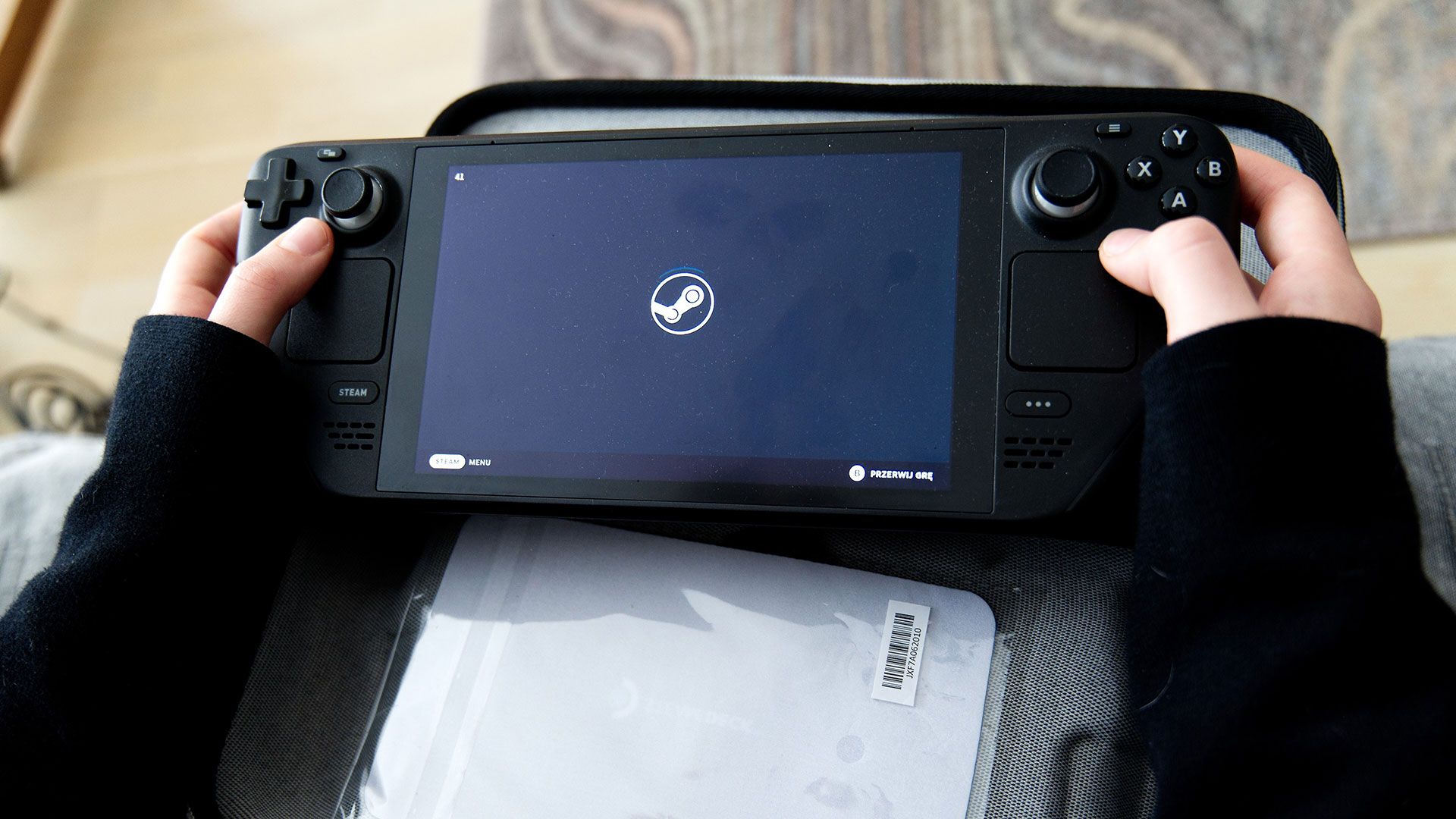
Valve's Steam Deck portable PC, the same one you might play your favorite games on, isn't just for fun, as Airbus has just proven. The aerospace firm is using the Deck to control a prototype Mars rover throughout its development and testing process.

The ExoMars rover, a device that will be autonomous when it reaches the Red Planet, is being developed in the UK by Airbus. The rover and its Steam Deck companion made an appearance in a video shared by YouTube personality Tom Scott following a visit to Airbus' facility. And while ExoMars is being tested on Earth, it's hoped that it will eventually be capable of controlling itself when it rolls out onto the Martian terrain.

For now, engineers need a way to control the rover during its development and testing in a Mars-like environment. And for that, Airbus has settled on a Steam Deck.

The video shows a Steam Deck running unspecified custom software. Just like playing the games Steam Deck owners are familiar with, Scott can be seen using the thumbsticks, triggers, and face buttons as a method for controlling the rover.

While novel, the decision to use a Steam Deck in this way probably shouldn't be all that surprising. It's a handheld PC in every sense of the word — it's powered by Linux and has both physical and touchscreen controls, not to mention Wi-Fi and Bluetooth support. If you're so inclined, you can even install Windows on a Steam Deck, too.

All of these things make the Steam Deck the perfect way to control something as advanced as a Mars rover. Doubly so if specialist software is required, something that traditional controllers like Sony's DualSense and Microsoft's Xbox controllers can't offer. With that in mind, it's perhaps only a matter of time until we see Valve's Steam Frame also used for testing of a future Mars rover.

As for today, Airbus teams in Stevenage, UK, are working on a project to design the mechanical, thermal, and propulsion systems for the landing platform that will help a rover land on Mars in 2030. That rover will be officially called the Rosalind Franklin, and getting it to Mars safely will be "the culmination of more than 20 years’ work," says Kata Escott, the managing director of Airbus Defence and Space UK. Even if Valve's handheld doesn't prove necessary for controlling the Franklin rover once it's on Mars, it can still claim a cool spot in the history of the platform's development.

Google Preferred Source

  •  

AWS tells clients to quit Middle East data centers six months after Iranian drone strikes — Amazon offers no recovery timeline as UAE mulls underground data centers [Updated]

More than six months after Amazon Web Services (AWS) data centers in Abu Dhabi and Bahrain were attacked by drones, the company has now had to tell customers to move their data to facilities in other regions. The Wall Street Journal reports that AWS has admitted that it's time for customers to jump ship to data centers located elsewhere in the world. In its AWS dashboard update, AWS confirmed "most customers have been able to re-establish their operations in other Regions by restoring backups or copying data that remained accessible. AWS Support remains available to help customers who need assistance moving their applications to alternate Regions."

The move comes as AWS continues repairs on the damaged data centers, but it stopped short of offering a timeline as to when customers can expect either location to be back online. AWS says that it remains committed to supporting its customers in Bahrain, but only said it would provide a further update early next year. It did not offer any specific recovery time frame for the restoration of services. Regarding the UAE, AWS says that it is working to replace affected infrastructure, but again only said it would provide an update on the restoration of services in the coming months.

Both affected data centers became targets for the Islamic Republic of Iran after the United States and Israel launched strikes on that country in February of this year. Months later, the Bahraini data center was struck by cruise missiles, and Iranian state media claimed it had been "destroyed."

The move is bad news for the United Arab Emirates. The U.A.E. has spent years trying to become a world leader in data processing, a pitch that led it to lobby U.S. officials to allow it to buy AI chips for its data centers.

Having made plenty of noise about OpenAI's decision to take a spot in a 5-gigawatt data center complex in May 2025, U.A.E. officials have since seen those plans stall. The WSJ points out that no lease has been signed well over a year later. OpenAI was expected to take 20% of the data center's total capacity, the kind of loss that is sure to sting officials if plans don't get back on track.

For its part, the U.A.E. is clearly well aware of the threat that the ongoing regional instability poses to its ambitions, and it's looking for ways to address the fears of potential partners. Officials have already hinted at the potential for underground data centers. While the move would make an already costly endeavor even more expensive, it could help defend new data centers from drone attacks. Building drone defense systems near data centers is another option.

Drone attacks can be catastrophic for any building, and data centers are no different. The data centers operated by AWS suffered fires and damaged infrastructure as a result of the strikes. In their efforts to fight the fires caused by drone strikes, emergency workers used water, causing further damage.

The Abu Dhabi and Bahrain data centers are relied upon by a variety of businesses in the banking and financial sectors. Those businesses cannot tolerate downtime, especially of the protracted variety. There's little sign of data centers slipping from the crosshairs of drone operators any time soon, either, and AWS is far from unique in finding its data centers under attack.

Iran's Islamic Revolutionary Guard Corps (IRGC) claimed in April that it had hit a data center linked to Oracle in Dubai. That unit further threatened American tech companies, including Microsoft, Oracle, Alphabet, and Nvidia, this spring. It accused the companies of contributing to attacks on Iran. With that in mind, and with tensions in the Middle East looking unlikely to ease any time soon, it's perhaps unsurprising that AWS has asked customers to move data to safer data centers around the world.

Google Preferred Source

  •  

AI enthusiast builds GPT-6 Astra-powered bot to take on Balatro's Gold Stake Black Deck — bot leverages Python for numerical tools, beats hardest difficulty repeatedly

A Reddit user has shared details of a new bot that has beaten the devilishly difficult Gold Stake Black Deck in Balatro, a poker-like video game. The Redditor, who works in the AI industry, says that they have been testing the bot and "obtaining some crazy results" — and they've even shared a YouTube video highlighting how they went about creating the card shark of a bot.

In a post in the /balatro subreddit, user Atol8 (real name Jacopo Attolini) initially claimed the bot was the first of its kind to reliably beat Balatro. They subsequently admitted that "reliably might be a strong word," adding that the bot has "repeatedly beaten Balatro."

My Balatro Bot just won at Gold Stake Black Deck
 from r/balatro

Beating Balatro in this instance meant beating the Gold Stake Black Deck, a combination that is widely considered to be the most difficult in the game. On its own, the Black Deck includes +1 Joker slot, but reduces the player's available hands by one per round. The Gold Stake effect introduces cumulative difficulty modifiers from all prior stakes, plus reduced hand sizes and stricter economic penalties.

Combining these two together makes for a brutal economy and more than a little luck, with players relying on strong early-game RNG.

In a post in the /balatro subreddit, user Atol8 (real name Jacopo Attolini) initially claimed the bot was the first of its kind to reliably beat Balatro. They subsequently admitted that "reliably might be a strong word," adding that the bot has "repeatedly beaten Balatro."

Beating Balatro in this instance meant beating the Gold Stake Black Deck, a combination that is widely considered to be the most difficult in the game. On its own, the Black Deck includes a +1 Joker slot, but reduces the player's available hands by one per round. The Gold Stake effect introduces cumulative difficulty modifiers from all prior stakes, plus reduced hand sizes and stricter economic penalties.

Combining these two together makes for a brutal economy and more than a little luck, with players relying on strong early-game RNG.

The bot itself is based on OpenAI's Astra models, which were released earlier this month. GPT-6 Astra has already grabbed headlines, having completed Valve's iconic Portal in 24 hours.

In a GitHub post detailing the ins and outs of the bot, Attolini says that GPT-6 Astra takes care of making strategic decisions based on the deck it has built. But the bot also relies on good old Python for its numerical tools. The legality of each move is assessed by BalatroBot, a separate tool that exposes Balatro game states and controls for external programs to interact with.

As impressive as this is, don't be fooled into thinking this bot played the perfect game. Reddit commenters have been quick to point out that it made some "interesting blunders" throughout its playthrough. Despite that, GPT-Astra is OpenAI's latest flagship model, with the company claiming it offers “a new generation of intelligence,” and “is state-of-the-art on computer use, browsing, software engineering, cybersecurity, science, and professional work.”

Not all bots are great at playing games, though. Just last year, OpenAI's ChatGPT "got absolutely wrecked on the beginner level” while playing Atari Chess. Elsewhere, Google's Gemini didn't even get as far as starting its own chess battle with the Atari 2600 — it ditched the game after deciding that it would "struggle immensely" against the iconic home console. It seems that, sometimes at least, even modern tech can't compete with a 1979 Atari 2600 game.

Google Preferred Source

  •  

Nvidia, Palantir, and others restrict advanced AI model usage over privacy concerns, report claims — 'paranoia' rising over customer intellectual property

Anthropic and OpenAI are both facing uncomfortable questions from some large AI customers over concerns about how proprietary data may be used to train AI models. Some companies are so worried that they have begun demanding assurances about how their data is handled or going so far as to place limitations on which models their employees can use, and for which tasks, The Information reports. They fear that models may be trained on their intellectual property and information.

The issue can be traced back to a June change by Anthropic. Following the change to its flagship Fable model's policies, Anthropic can now retain customer data. The company argues that it only does so to ensure that Fable isn't being misused. But some companies have raised concerns that it means sensitive business data will be caught up in the sweep.

While both OpenAI and Anthropic point out that they don't train their models on the information given to them by companies with specific enterprise contracts by default, that doesn't tell the full story. Both companies do collect metadata from the same corporate customers, and while information on exactly what that metadata contains is hard to come by, OpenAI notes that it's only used “to better understand how our services are used." Anthropic also argues that any data it collects about how customers use its products is aggregated and anonymized. And that metadata isn't used to train models.

Regardless, there are still concerns over a perceived lack of clarity about what is collected. Telecoms outfit C Spire has agreements with both OpenAI and Anthropic that prevent either from using its data to train models, the report says.

However, the contracts do allow both OpenAI and Anthropic to collect C Spire technical usage data. C Spire believes that includes information about what applications AI models are connected to as well as usage data. It also worries that the AI companies may collect information about what their models get up to between generating responses.

For its part, OpenAI says that it does not use this "chain-of-thought" data to train its models. But C Spire still believes it needs a better understanding of what data is being collected, the report adds. It argues that neither AI company is being clear in its explanations.

Taking the private approach

One solution to any privacy concerns could be to use air-gapped servers, something aerospace company Northrop Grumman has already chosen to do. The Information reports that the company runs open-source AI models on its own air-gapped servers rather than trusting the likes of OpenAI and Anthropic.

Alternatively, Microsoft is already trying to take advantage of any data privacy concerns by tempting OpenAI and Anthropic customers to its own secure AI platforms. Microsoft's isolated cloud environments run AI models on private servers that don't send any data to external AI companies. But this approach is costly, and the report notes that at least one customer is still considering Microsoft's alternative approach.

Pharmaceutical company Novo Nordisk has taken a slightly different approach. While it continues to use Anthropic's Claude for some tasks, it has a ban on allowing any proprietary data to be used by the model.

It's clear that a lack of trust has the potential to cost AI companies real money, and in one instance, it already has. The same report notes that a large U.S. utility company has already canceled its plans to test Anthropic's Fable. The utility company wanted to know if Fable could run its core power infrastructure but ultimately pulled the plug over Anthropic's refusal to agree to a nonrevocable zero data retention (ZDR) policy.

Nvidia has also decided to use Fable for tasks that don't require it to gain access to sensitive data. The company points to the same lack of ZDR guarentees as the reason. Instead, Nvidia uses its own in-house AI solution for tasks that it deems too sensitive for Anthropic's model. Nvidia CEO Jensen Huang has famously remarked that its employees should use AI tokens worth half their annual salary every year.

Toms Hardware reached out to Nvidia for comment but did not receive one by publication.

  •