❌

Lese-Ansicht

Zotac denies warranty support to RTX 3060 owner in India after just one year despite offering three years of coverage

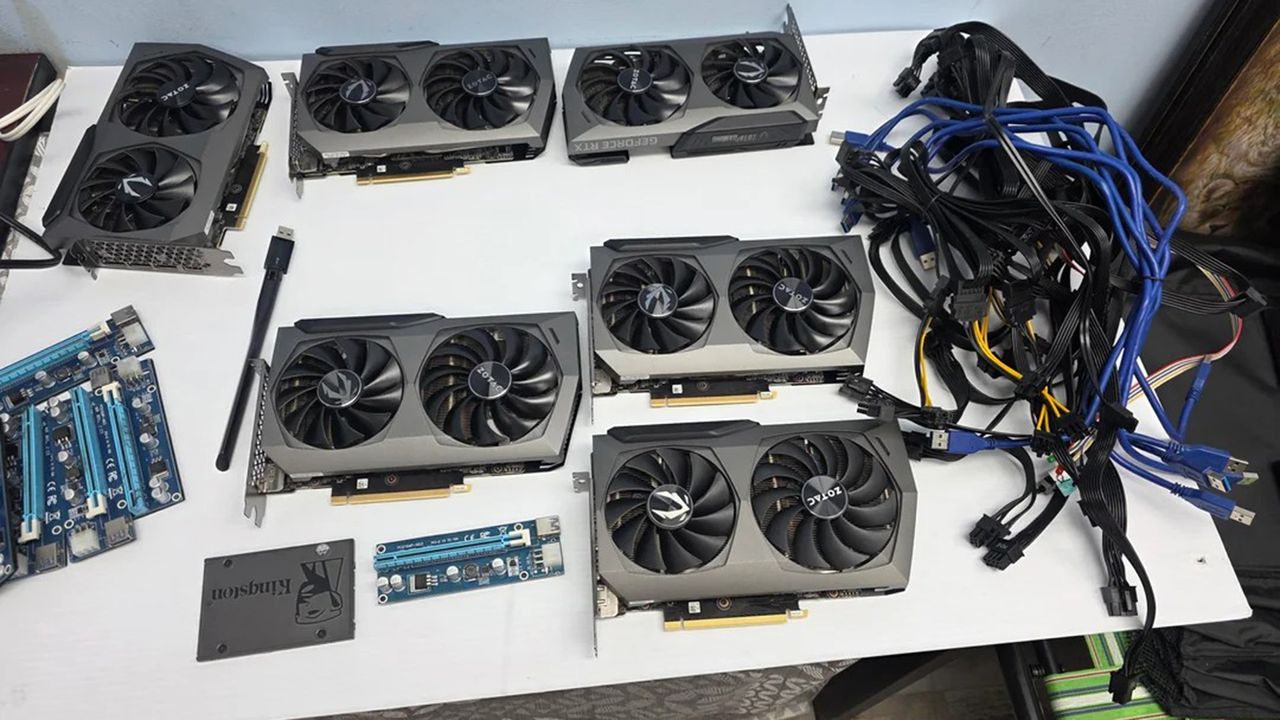
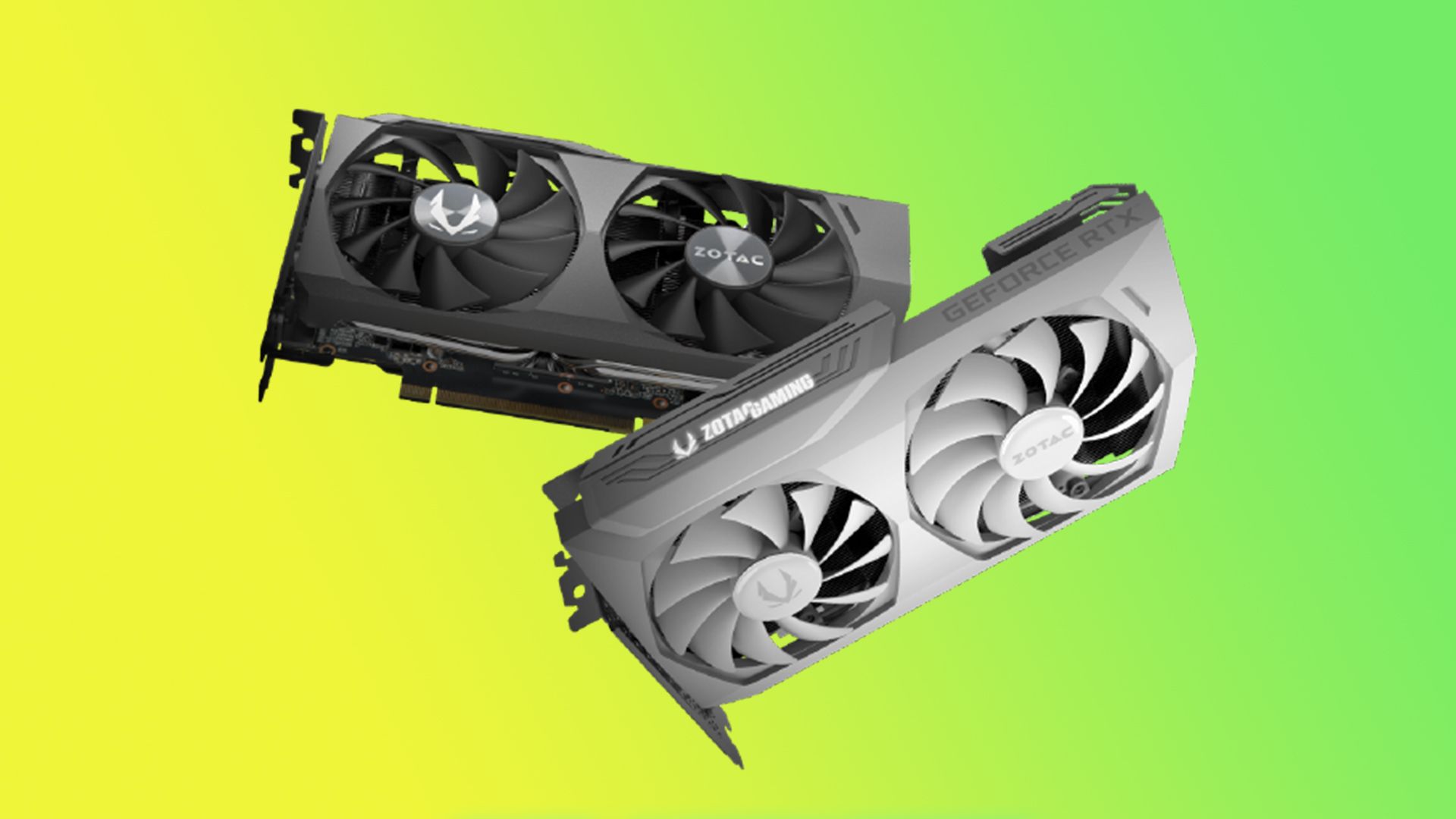
A Zotac RTX 3060 owner in India has been denied warranty support, even though their card would still seem to be covered. According to Reddit user u/AbhishekG9, they purchased a Zotac GeForce RTX 3060 Twin Edge from KVR Gaming System in Nehru Place, Delhi, on June 27, 2025. Zotac offers three years of standard warranty in India for RTX 30-series and later cards. That can be extended by two years in exchange for registering the product. The customer received an invoice and registered the graphics card with Zotac, for which an automatically generated registration confirmation was received on July 2, 2025.

However, when the customer reached out to Zotac for warranty support for an unspecified reason, the company reportedly told them that the graphics card was already out of warranty. According to an email from Zotac, the card's serial number showed an import date of April 2023. The company explained that warranty coverage can be determined using the original purchase date or the distributor's import date, and that product registration by itself does not establish warranty coverage.
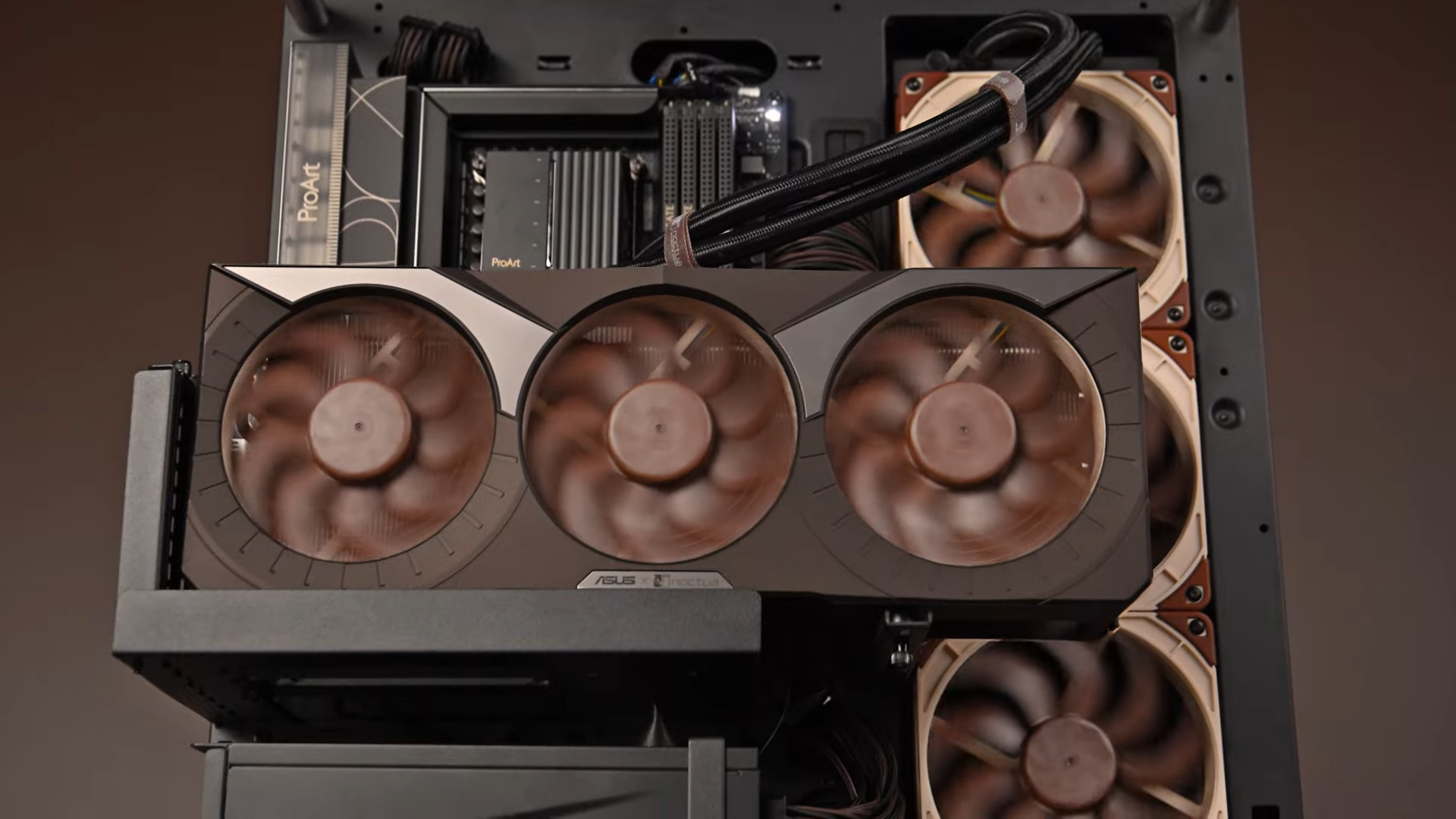
At least in this instance, Zotac asserts that if one of its products is sold more than two years after it was imported, the company cannot provide extended warranty support. Since the graphics card was purchased by the customer in June 2025, the company advised them to approach the original seller for further assistance.

ZOTAC India warranty experience – Rtx 3060 twin edge bought in June 2025, but warranty denied based on import date
 from r/IndianGaming

The customer argues that the distributor's original import date is not something an ordinary buyer would necessarily know when making a purchase. They also pointed out that they registered the product within days of purchase and received confirmation from Zotac.

Other users on the Reddit thread suggest that Zotac's policy isn't necessarily unreasonable. By tying the start of the warranty period to the date of import, plus an additional buffer period to allow the product to be sold, the policy would seem to prevent retailers from arbitrarily changing the date of sale in their records to make a product that would otherwise be out of warranty appear to be covered. If this particular card sat in retail inventory for an unusually long time (two years, in this instance), it's possible that initial buffer period was exhausted and that the clock began running down on the actual legal warranty period, regardless of the buyer's date of purchase.

But this could all be explained more clearly. If we take a look at the warranty terms and conditions on Zotac India’s website, it indeed mentions that the duration of warranty starts from the product's original date of purchase or the distributor import/invoice date. However, the policy does not explicitly specify a period in which the purchase date is used before the import date can become relevant, and that opaque reasoning appears to be the issue here.

The RTX 3060 owner told Tom’s Hardware that they plan to visit the shop where the graphics card was purchased and ask it to arrange a replacement. They also plan to record the visit as proof and, if the issue remains unresolved, file a complaint with India’s National Consumer Helpline.

This is not the first time Zotac has faced criticism over hair-splitting a warranty claim. Back in December 2025, an RTX 5070 Ti owner’s RMA was denied after Zotac said it had found an “irreversible” crack in the PCB near the PCIe connector. The company attributed the damage to external mechanical stress and suggested that the customer file a claim with the shipping carrier. Zotac later offered to dispose of the graphics card at its facility if the customer did not want it returned.
  •  

Noctua upgrades Thermal Grizzly's 12V-2x6 power monitor

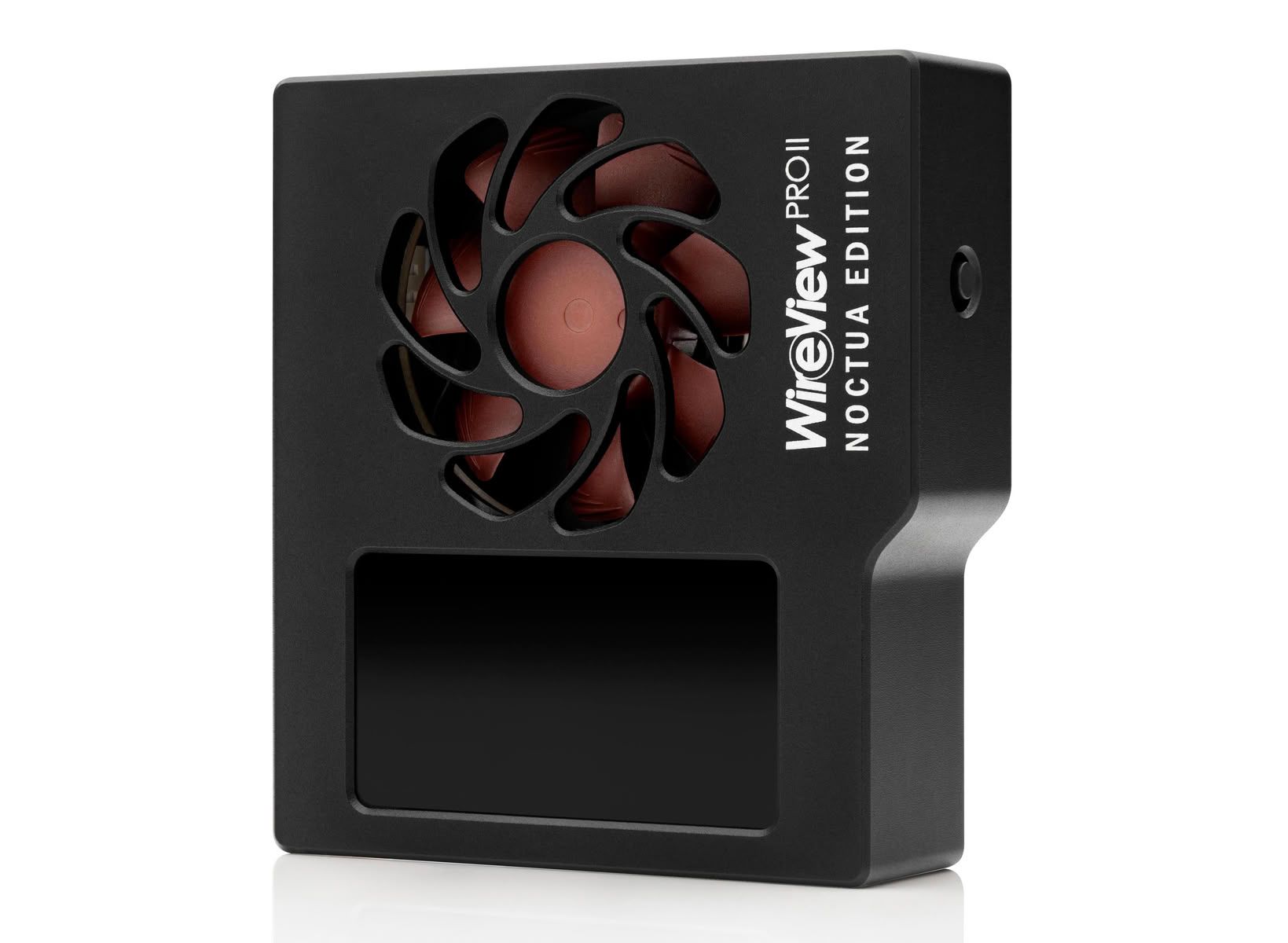
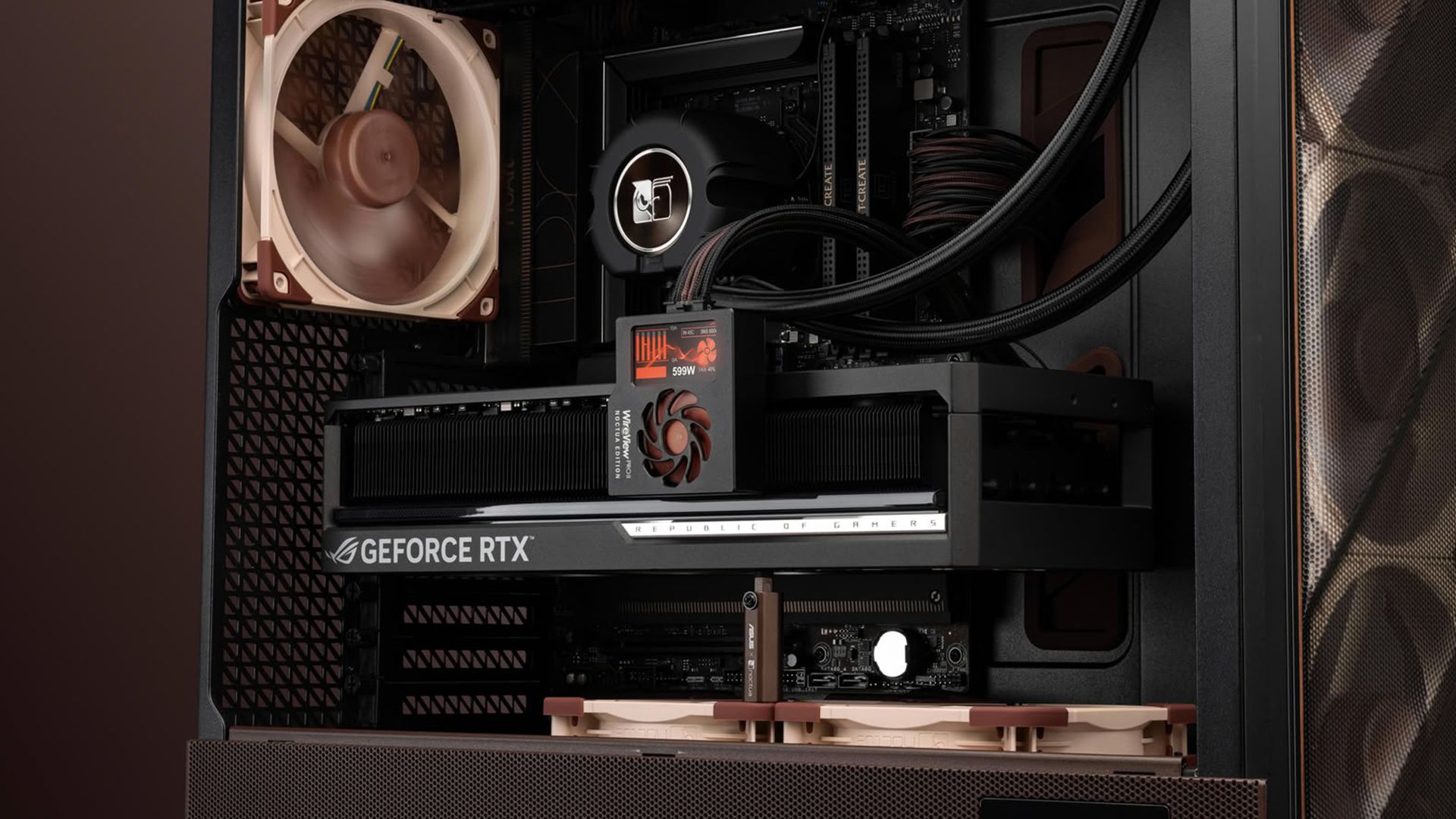
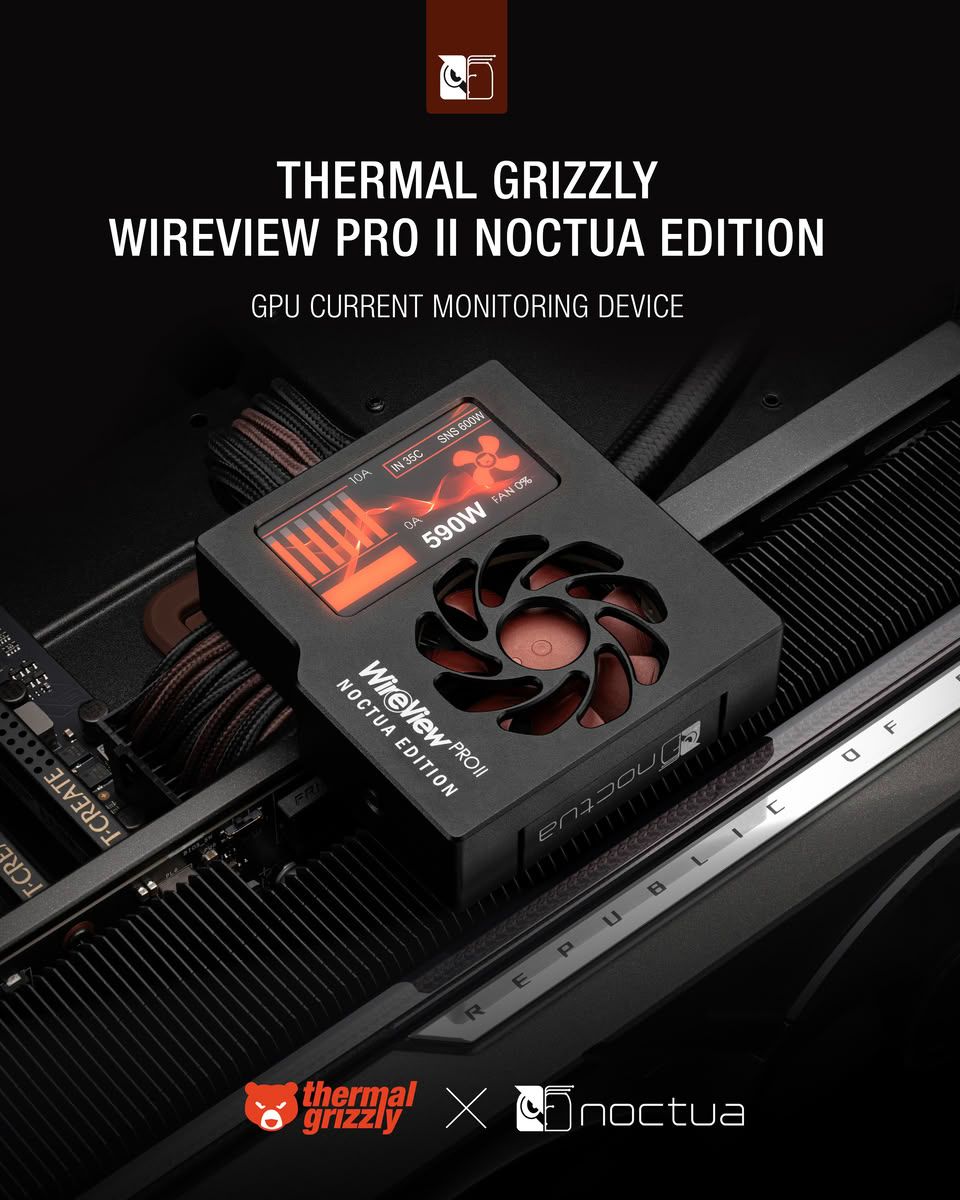
Thermal Grizzly and Noctua have teamed up to release a new version of the WireView Pro II GPU monitoring device. By combining Thermal Grizzly’s power monitoring hardware with Noctua’s expertise in low-noise cooling, the WireView Pro II Noctua Edition aims to offer quieter operation by reducing the noise generated by the device’s cooling fan.

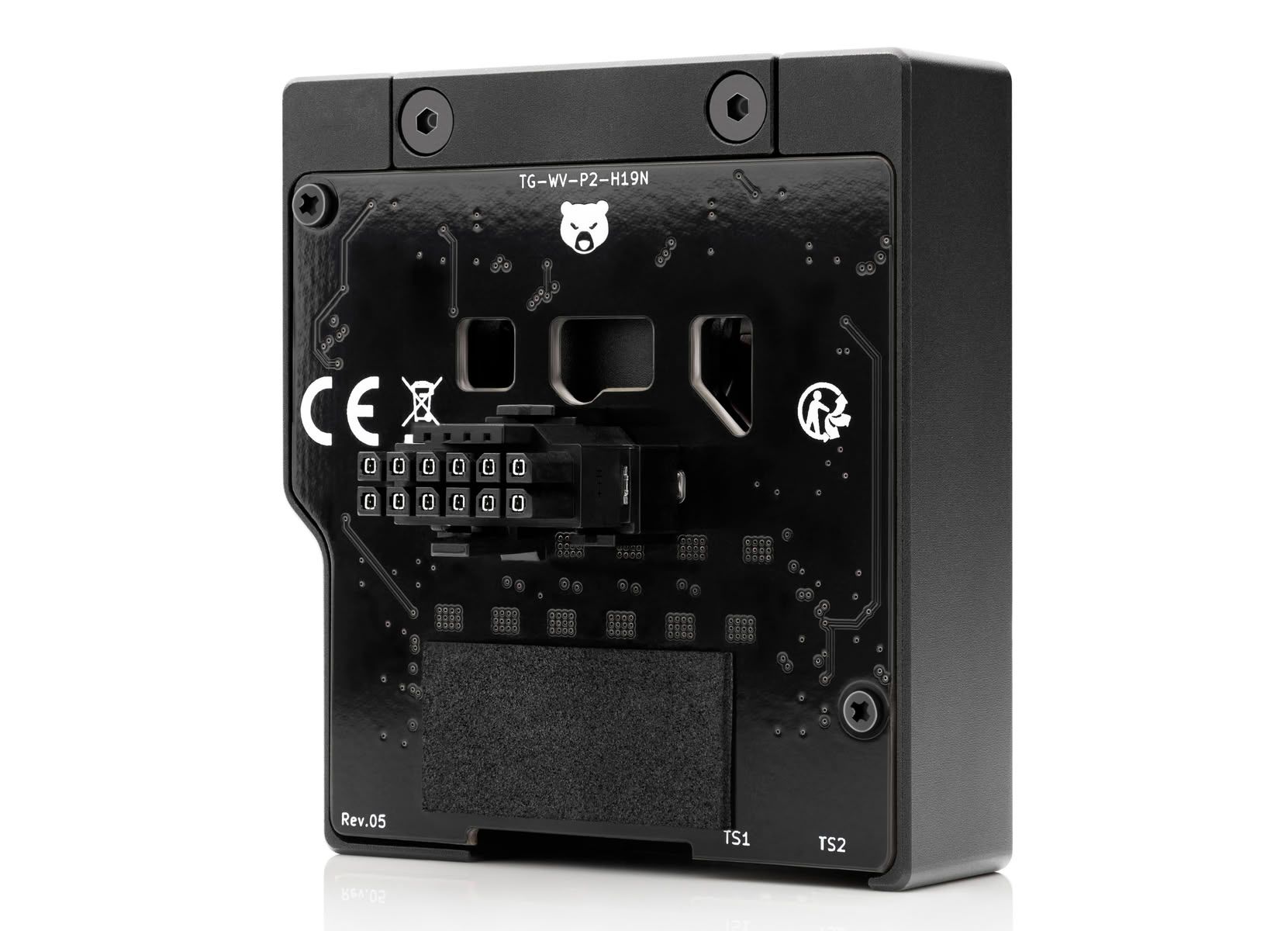
According to Roman Hartung, CEO of Thermal Grizzly, the GPU monitoring device has become a popular choice and has helped many users detect potentially dangerous connector issues with the infamous 12V-2x6 connector before they could cause damage. The WireView Pro II measures current independently on each 12V conductor rather than simply monitoring total power consumption. This allows it to identify unusual current distribution and potential contact issues that could contribute to connector damage. The device can also provide visual and audible warnings when configured limits are exceeded, with an optional automatic shutdown function.

Press images of the Thermal Grizzly WireView Pro II Noctua Edition GPU monitoring device
Thermal Grizzly
Press images of the Thermal Grizzly WireView Pro II Noctua Edition GPU monitoring device
Thermal Grizzly
Press images of the Thermal Grizzly WireView Pro II Noctua Edition GPU monitoring device
Thermal Grizzly

"One of the most common points of feedback, however, was that the fan could still be noticeable in very quiet systems, so working with Noctua on a significantly quieter cooling solution was the logical next step - and, for us, really completes the product," added Hartung. For the Noctua Edition, the standard cooling solution has been replaced with a customized design featuring a Noctua NF-A4x10 fan, an optimized fan grille, and an enlarged CNC-machined aluminum housing. The fan uses semi-passive operation, remaining off for longer periods and only spinning when additional cooling is required.
In a worst-case scenario with the case fans turned off and temperatures above 40°C, it could handle up to a 300W GPU load without turning its fan on. When it does need active cooling, its fan runs under 2,000 RPM compared to 5,000 RPM on the standard mode, which cuts down noise from 39.4dB(A) to just 21.5dB(A) at a 10cm distance. This should make it essentially inaudible alongside the other fans in a very quiet PC.

The WireView Pro II Noctua Edition is available in Normal and Reversed variants to accommodate different 12V-2x6 connector and cable-routing configurations, along with an extended two-year warranty covering the GPU connector. While the press note suggests a retail price of $189.90, it is currently selling at $222.18 on Thermal Grizzly’s official online store.

  •  

Modders bring Nvidia’s DLSS 5 Neural Rendering to AMD Radeon GPUs

Nvidia officially rolled out DLSS 5 earlier this month, bringing its new Neural Rendering technology to supported games for RTX 50-series GPU owners. While early testing has shown improvements in image quality and rendering, the technology is very resource-intensive, resulting in significant drops in frame rate. That, however, has not stopped modders from experimenting with DLSS 5 and attempting to bring the technology to AMD Radeon GPUs.

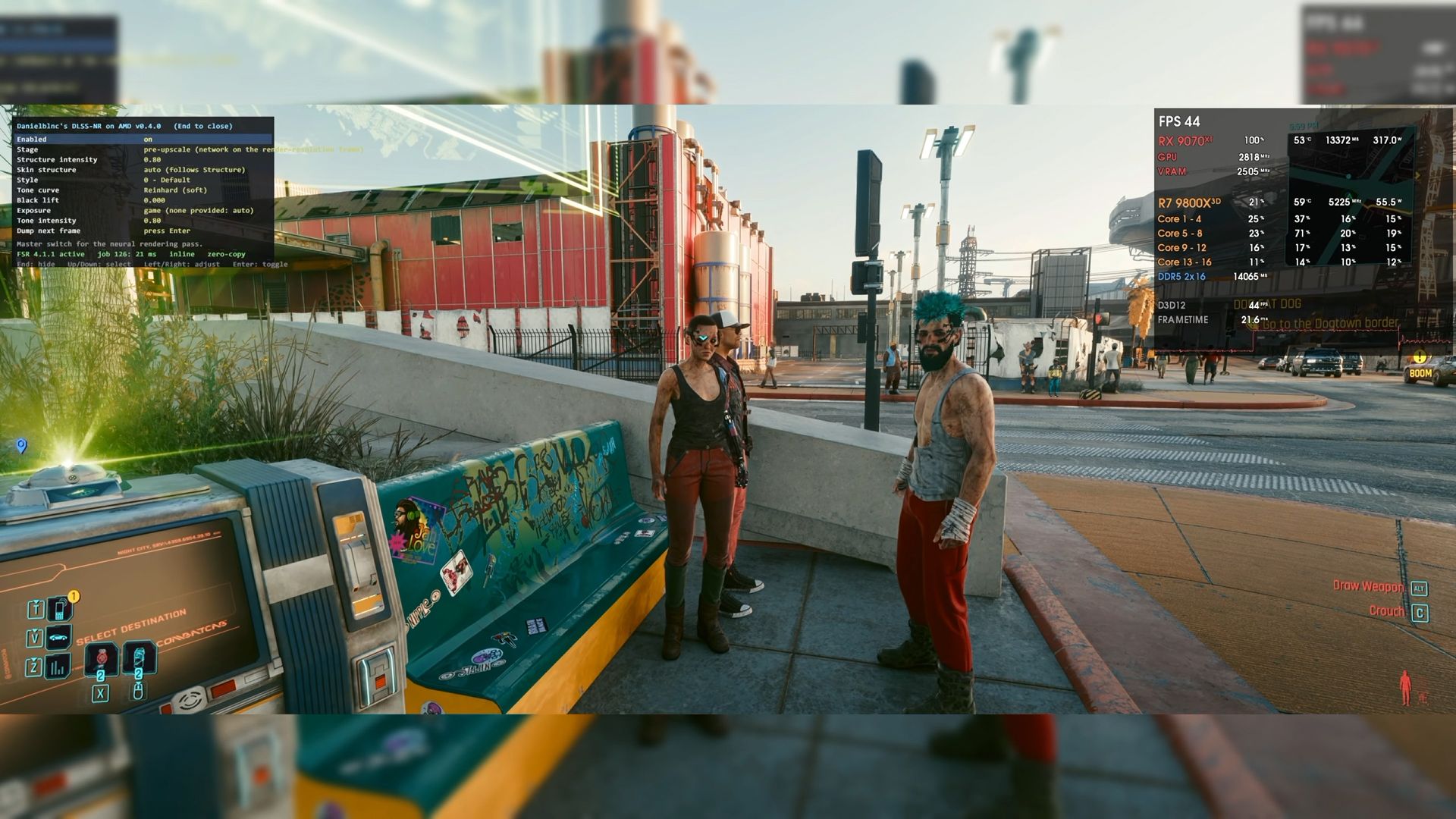
A GitHub project called DLSS-NR-on-AMD, designed to run DLSS 5 Neural Rendering on AMD's Radeon RX 9000 and RX 7000 series GPUs, is already seeing a rapid improvement in performance. It uses a ground-up, full reimplementation of the neural network runtime for AMD GPU architectures. As per the developer, the project currently works with DirectX 12 games that use FSR, with Cyberpunk 2077 and GTA V Enhanced among the tested titles.

Testing done by YouTube channel Ancient Gameplays shows Cyberpunk 2077 running at over 80 FPS on a Radeon RX 9070 XT without DLSS 5 Neural Rendering. Enabling the unofficial implementation, however, caused performance to drop around 11-12 FPS. Not only is that unplayable, but it also highlights just how much optimization was still needed to make the technology practical on AMD hardware.

Development has been rather quick, as an Alpha 0.3.3 version was released with a claimed 23% performance improvement, followed shortly by Alpha 0.4.0, which reportedly added another 42% improvement over version 0.3.3. The changes essentially amount to roughly a 74% performance improvement in just 24 hours. The project has also become easier to install thanks to the AMDNR launcher that can automate much of the setup process, meaning that users no longer need to manually copy and replace DLL files for each game. The launcher also supports different runtimes and provides additional options through the OptiScaler interface.

Ancient Gameplays tested the latest Alpha 0.4.0 build in Cyberpunk 2077 at 3440 x 1440 resolution and found the Radeon GPU reaching around 50 FPS. That is a substantial improvement over the roughly 30 FPS achieved with the earlier build, although it remains well below the performance of the game without Neural Rendering enabled.

There is still a long way to go before DLSS 5 on AMD hardware can be considered a practical alternative to native implementation. The project remains in alpha, which means performance and compatibility can vary considerably depending on the game and GPU. That said, the developer has informed Ancient Gameplays that they are working on another major update, which should bring a substantial performance boost on Radeon GPUs.

  •  

Grab this 14-inch compact gaming laptop powerhouse for $1000 off

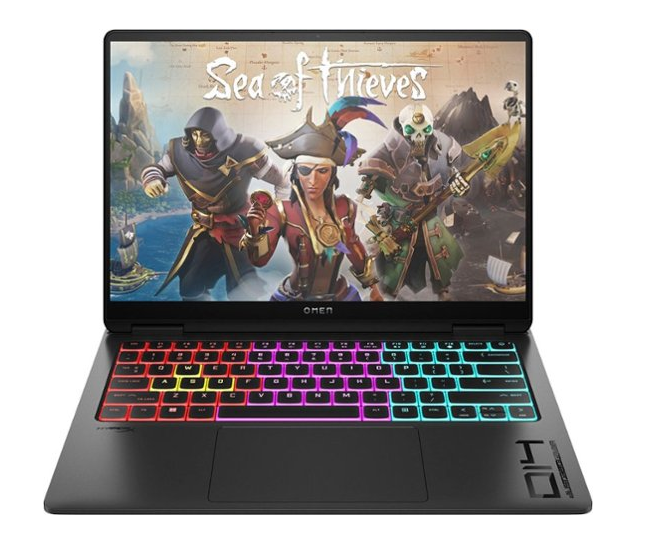
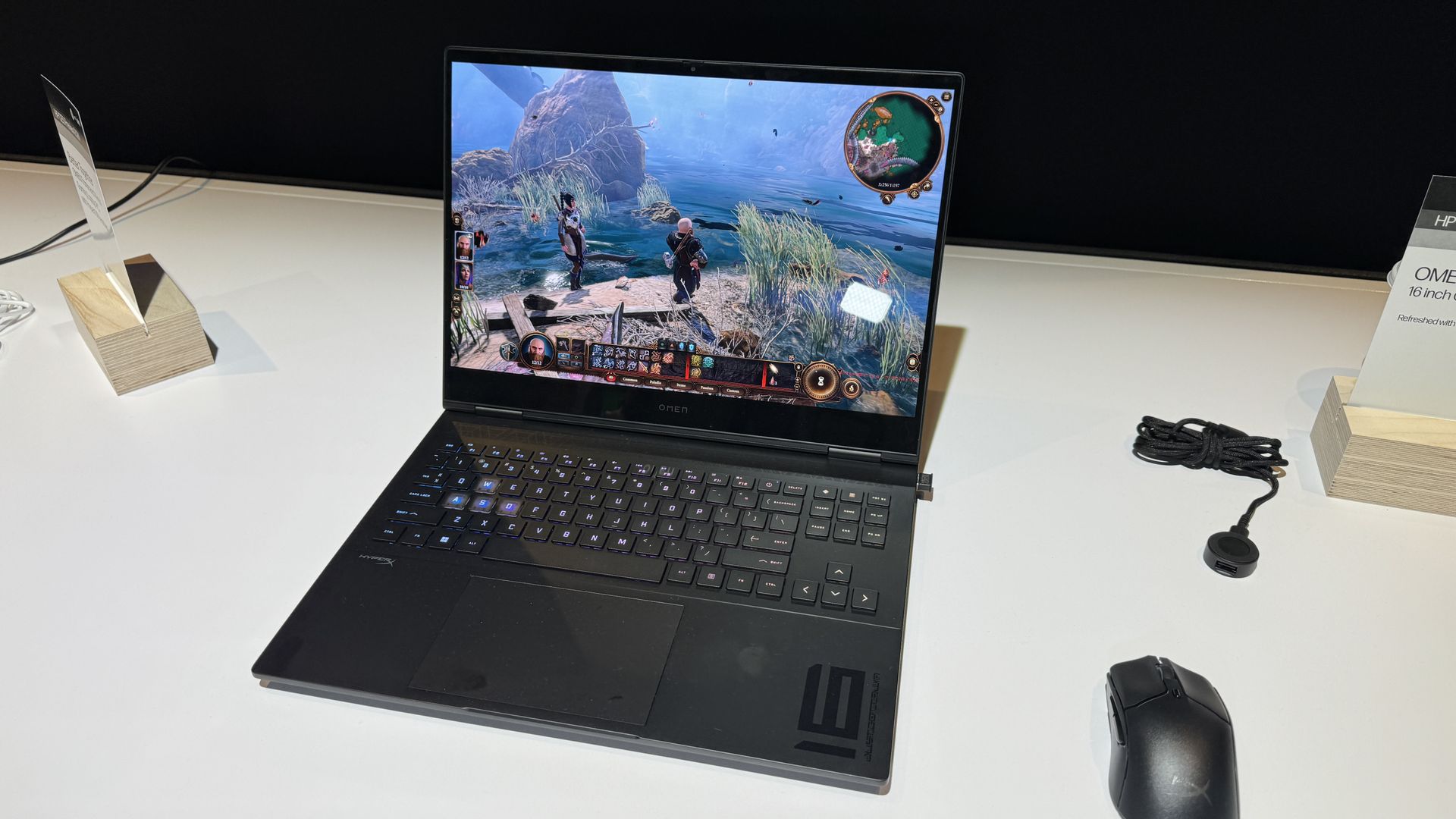
As the memory crisis continues to push up component prices, laptop prices are also rising, making even mainstream models increasingly expensive. However, if you are looking for the right combination of portability and performance, the HP Omen Transcend 14 is currently on sale. The 14-inch powerhouse is available at $1999.99 for a limited period, down from its listed price of $2999.99 at Best Buy, which is a massive saving of $1000.

The HP Omen Transcend 14 is one of the rare compact gaming laptops packing a powerful set of hardware. This particular configuration comes with Intel’s Core Ultra 9 285H processor, paired with 32GB of LPDDR5x memory and an Nvidia RTX 5070 Laptop GPU with 8GB of GDDR7 VRAM. For storage, there is a 1TB PCIe Gen 4 NVMe SSD, while the laptop ships with Windows 11 Home. The combination should make it capable of handling modern games as well as demanding workloads such as video editing and other content-creation tasks.

The HP Omen Transcend 14 is a premium gaming laptop offering high-end performance in a compact 14-inch chassis. The laptop comes with Intel’s top-tier Core Ultra 9 285H processor with 32GB of LPDDR5x memory and an Nvidia RTX 5070 Laptop GPU. View Deal

A highlight feature of the laptop is the 14-inch 3K OLED display, which has a 2880 x 1800 resolution and a 120 Hz refresh rate. The panel supports a 48-120Hz variable refresh rate, covers 100% of the DCI-P3 color gamut, and offers up to 500 nits of HDR brightness, making it suitable for both gaming and content creation.

Despite packing high-end hardware, the Transcend 14 remains relatively portable, measuring around 0.7 inches thick and weighing about 3.6 pounds. In terms of ports, it comes with Thunderbolt 4, USB-C with DisplayPort and power delivery, HDMI 2.1, and a USB-A port. The laptop also comes with a four-zone RGB backlit keyboard, while the 71 Wh battery is claimed to last up to 14 hours on a full charge.

Considering the premium hardware and compact footprint, the HP Omen Transcend 14 at $1,999.99 is a deal worth considering. The $1,000 discount from its $2,999.99 listed price makes it a considerably more affordable proposition. However, you’ll need to move fast, as the deal price is only available for a few hours.

  •  

Counterfeit vinyl record maker sentenced to three years in the slammer after making $3.5 million

With physical media making a comeback, a man in the UK has been sentenced to three years and six months in prison for manufacturing and selling counterfeit vinyl records. Rehan Ahmed, from Southall in west London, was reportedly running a “highly organised, unlicensed operation” since 2017 that produced thousands of fake records featuring music from popular artists including The Beatles, Taylor Swift, Coldplay, and Kendrick Lamar. The operation is estimated to have generated nearly £2.7 million ($3.5 million) in revenue.

Ahmed’s counterfeit business, ‘Phoenix of Vinyl ’, came on the radar in 2024 after a representative from the British Phonographic Industry (BPI) made a test purchase and found evidence of counterfeiting. The City of London Police raided the premises soon after and uncovered the largest stock of fake vinyl ever found in the UK, with 2,791 records by 108 different artists. In addition to the records, police officers also found four vinyl presses roughly 70 years old, along with 3,000 metal stampers, and thousands of sleeves and center labels.

A separate report by The Guardian suggests that the BPI has been involved in 43 search warrants over the past two years targeting counterfeit vinyl and CDs. They have seized around 600,000 items with an estimated value of up to £8 million ($10.7 million).

"With music on physical formats enjoying a resurgence, the market in counterfeit records has unfortunately also been growing as criminals cash in at the expense of creators and fans. This doesn't just impact the legal music economy and everyone that works and invests in it - it also affects every one of us as citizens who fall victim to other forms of criminality that it funds," said Peter Ratcliffe, director of content protection at BPI.

According to a report published by the BPI, vinyl sales in the UK have grown substantially, with 7.6 million records sold in 2025. That’s a 13.3% year-over-year increase, marking the format’s 18th consecutive year of growth. Vinyl revenue also rose 19.9% year-over-year to £174.7 million ($234 million), with the BPI reporting in March that it was the format’s highest annual revenue in more than three decades.

  •  

Open-source AnyPS5 dumps emulation to run PlayStation 5 console games natively on PC

PlayStation 5 emulation has witnessed massive growth ever since Sony confirmed its plans to end PC ports for its first-party, narrative-driven single-player games. The latest name joining the list is the open source project AnyPS5, which is claimed to run PS5 games natively on PC without requiring any emulation. The official GitHub page describes it as a tool for automatically porting executables to Linux and Windows.

Since the PS5 is powered by AMD’s Zen 2 hardware, it uses the x86-64 architecture, thus allowing AnyPS5 to work as a compatibility translation layer somewhat similar to Proton or Wine. It takes the original PS5 executable files and converts them into Windows and Linux formats, while the shaders are recompiled into SPIR-V for Vulkan. By avoiding emulation altogether, AnyPS5 can potentially eliminate some of the computational overhead, resulting in a smoother experience.

That said, development is still in the early stages, with test builds reportedly managing to boot select games as far as the main menu, with some even reaching gameplay with audio. However, the tool still requires a lot of work, particularly when it comes to system libraries and proprietary APIs unique to the PlayStation 5’s operating system. While the project is currently active on GitHub, a working public build is yet to be released.

PS5 emulation is still far from being practical, but if you are interested or have been following the topic, make sure to check out KytyPS5, one of the most prominent and popular PlayStation 5 emulators in active development. It recently managed to run the PS5 version of Grand Theft Auto V as high as 40 to 60 FPS using high-end PC hardware. Unfortunately, this one is also in an early experimental phase and is not stable enough to maintain playable frame rates.

There is also SharpEmu, which focuses on accuracy and the underlying infrastructure needed to improve compatibility with PS5 games. The project has managed to successfully run Astro’s Playroom on a Steam Deck and was shown booting on the handheld at around 0.5 to 1 FPS. The game remains unplayable at those frame rates and does not progress beyond the introductory sequence, but getting PS5 emulation to run on the Steam Deck represents a major step forward for the project.

  •  

Noctua explores 2,000W micro-channel air cooling

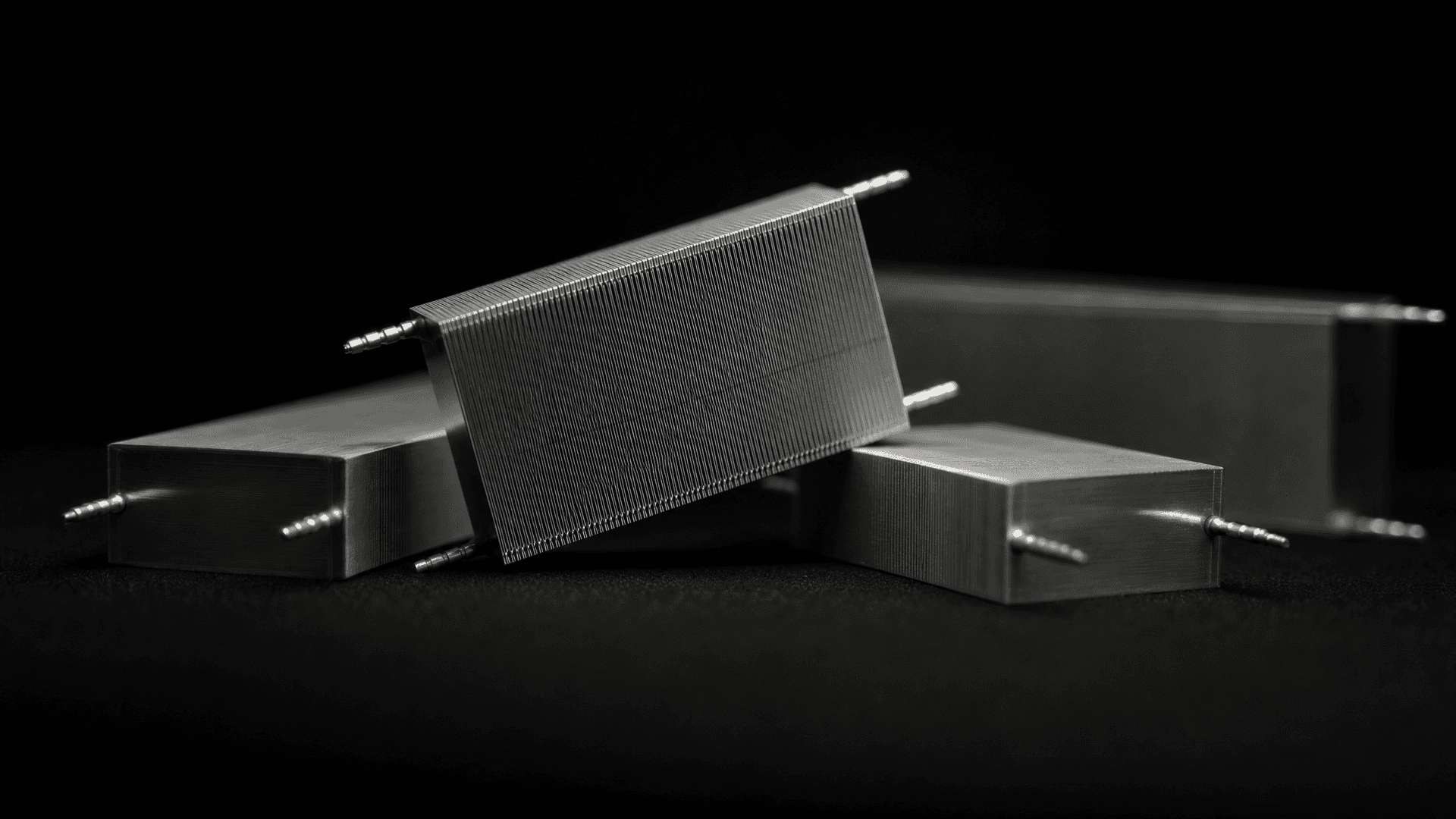
Noctua is teaming up with Forced Physics DCT to explore whether the company’s JouleForce micro-channel array-based cooling can be adapted for desktop PCs and workstations. The long–term partnership will focus on developing a quieter way to use the tech, although Noctua said in its announcement that the partnership is not tied to any specific product or release date.

Claimed to be a new third path to cooling, JouleForce goes beyond traditional air and liquid cooling methods. While it is still based on air-cooling, its capabilities far exceed today’s modern CPU coolers, with the ability to cool over 2000W of thermal energy. The technology uses densely packed micro-channels designed to improve heat transfer. According to Forced Physics, its geometry prevents the boundary layer that normally forms along cooling surfaces, allowing heat to be extracted along the entire length of each channel. This essentially enables large amounts of heat to be removed using air alone, without requiring a liquid-cooling loop.

While that sounds impressive, bringing the technology to desktop PCs comes with a major challenge. The micro-channel arrays currently have a pressure drop that is “an order of magnitude and more” above the range of conventional PC fans. Thus, in its current state, JouleForce relies on industrial blowers, high-speed centrifugal fans, or even vacuum pumps to push air through the arrays.

Noctua’s expertise could prove useful as the company is known for developing some of the best performing PC fans. The partnership will investigate ways to reduce the pressure required by the micro-channel arrays or generate the necessary static pressure without making desktop systems excessively loud. “The pressure levels this technology requires in today’s implementations are currently supplied by equipment nobody would want on or under their desk, so this is a demanding, long-term engineering task – and one that we are eager to tackle,” said Roland Mossig, CEO at Noctua.

For now, Noctua and Forced Physics are still in the early research stage, with both companies planning to share updates as the project reaches significant milestones. If the two companies can crack the airflow and acoustic challenges, JouleForce could eventually make its way to desktop PCs. At the same time, Noctua would have a serious advantage in the market compared to other heatsink manufacturers.

  •  

Logitech refreshes legendary Blue Yeti microphone with 3D voice tracking and AI denoising

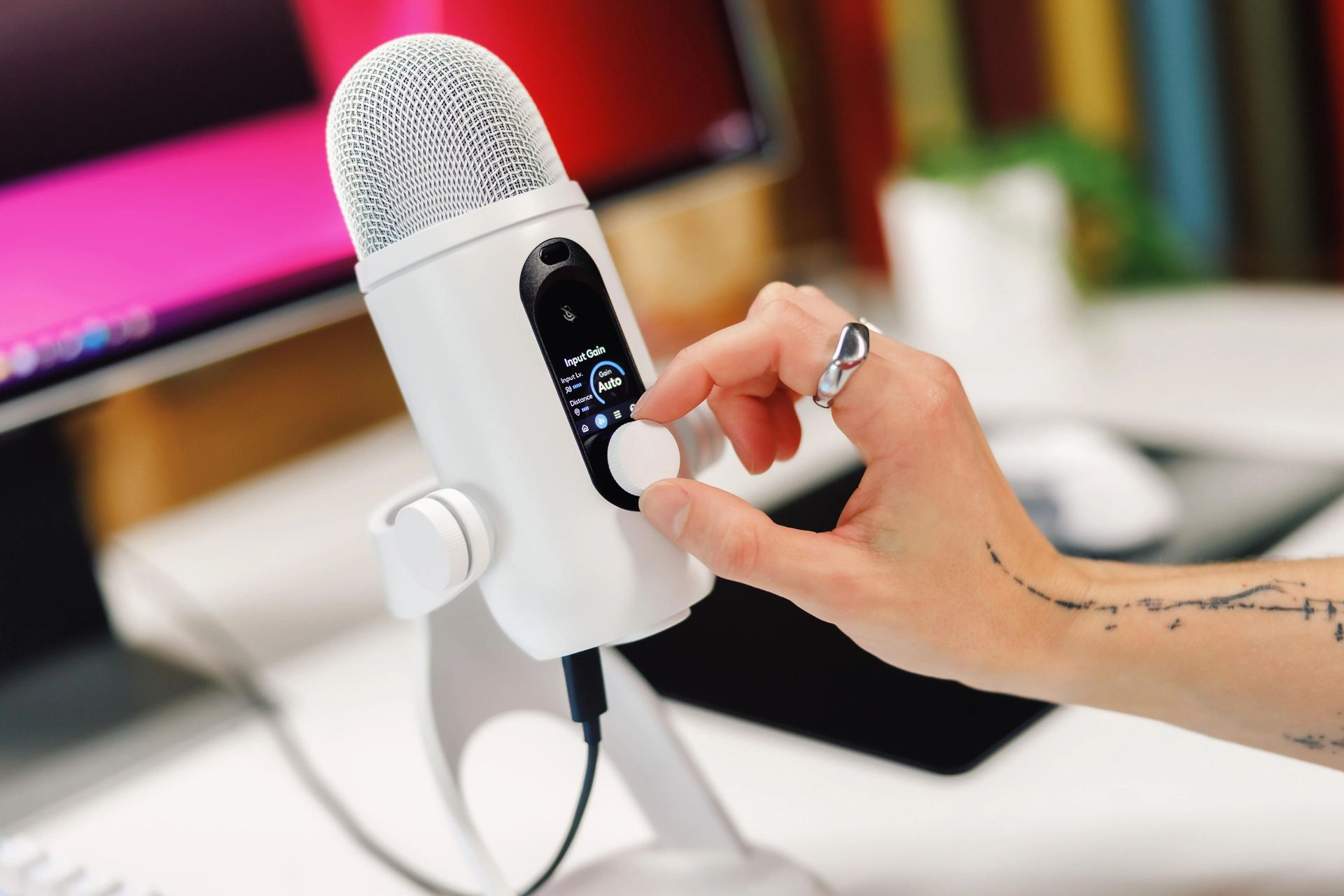
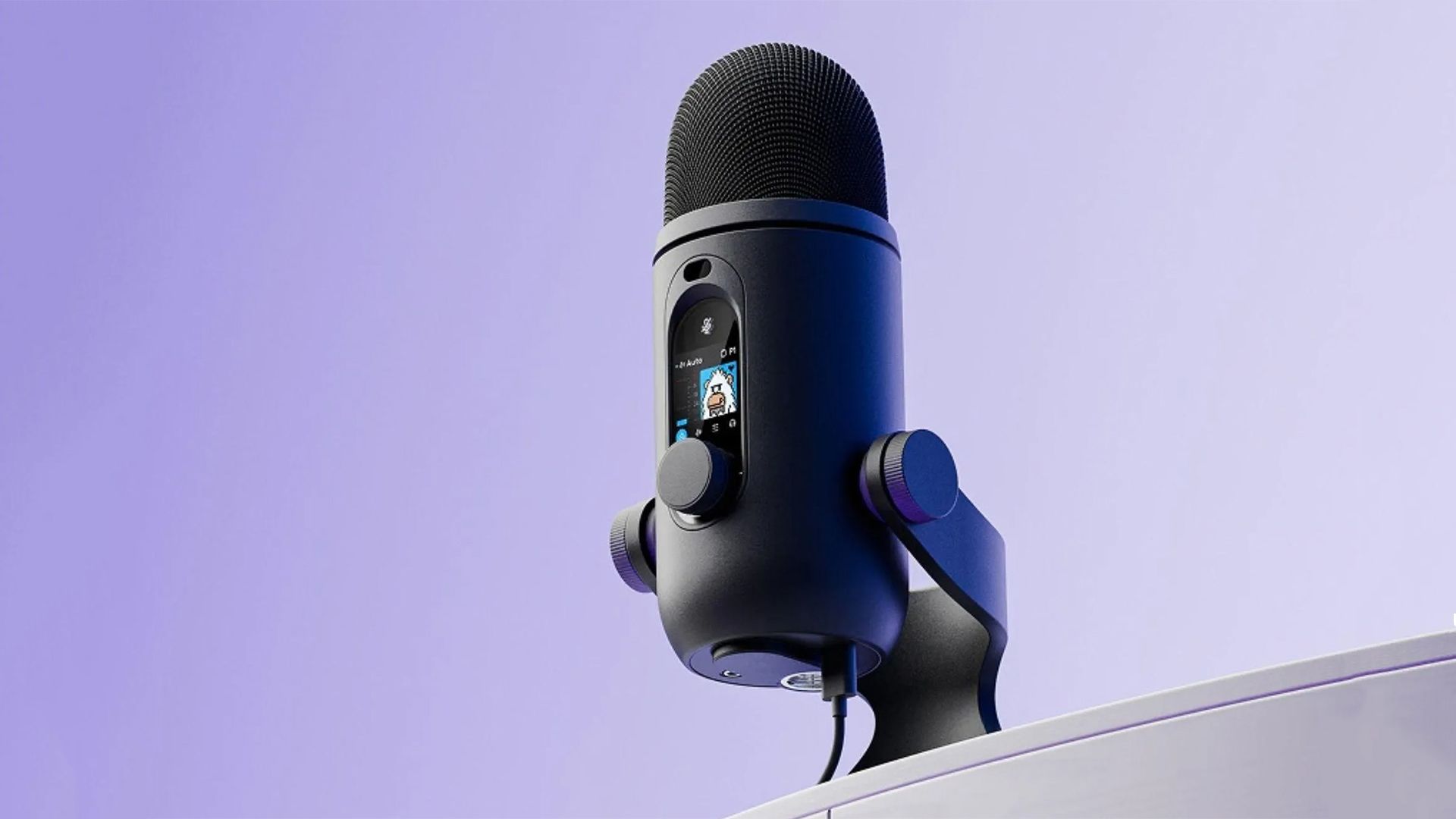
The Blue Yeti launched back in 2009 and went on to become one of the most popular USB microphones for creators, podcasters, and streamers. Now, eight years after acquiring Blue Microphones, Logitech is finally launching its successor. The new Yeti 2 arrives as a more modern version with a cleaner design and features a 3D proximity sensor, AI-based noise reduction, and even a built-in display. Unlike the original Yeti, however, it will be available in only two colors — Black and White — at a starting price of $159.99.

Logitech says the proximity sensor on the Yeti 2 is capable of tracking audio in 3D and can automatically adjust various settings in real time, including gain, equalizer, and pickup patterns. As for the AI denoiser, it can actively filter out unwanted background noise such as keyboard clacks, mouse clicks, and fan noise to ensure crystal-clear audio.

The Logitech Yeti 2 USB microphone in white

(Image credit: Logitech)

The Yeti 2 also retains the USB connectivity that helped make the original microphone popular, while adding several features aimed at making it easier to adjust settings on the fly. The integrated 1.3-inch colored LED display features an easy-to-use interface with an 8-bit Yeti mascot that provides quick information and helpful tips. It also allows you to tweak settings or switch between presets using the dial, without having to rely on dedicated software. Alternatively, the mic offers direct integration with Logitech’s G Hub software for deeper settings control, community-powered Blue VO!CE profiles, and custom avatar uploads.

In addition to its latest microphone, Logitech also announced some gaming-focused products under its G Pro series. The new gaming lineup includes the Pro X3 Superstrike mouse, Pro X Control mousepad, Pro X2 Rapid keyboard, and Pro X3 Lightspeed headset, all designed with input from professional esports athletes.

The Pro X3 Superstrike uses Logitech’s proprietary HITS technology and is claimed to deliver 50% improved power efficiency in a lightweight design. The Pro X Control mousepad measures 400 x 460 mm and features a knitted cloth surface, 6 mm foam cushioning, stitched edges, and a high-friction base for stability. The Pro X2 Rapid keyboard comes with magnetic switches, Rapid Trigger, Key Priority, and an OLED display that allows users to make quick adjustments. Finally, the Pro X3 Lightspeed headset features a 48 kHz microphone, customizable EQ, and extended battery life aimed at long competitive gaming sessions.

  •  

Durabook Z14I-DX3 rugged mobile workstation folds three screens into a 9.8 kg chassis

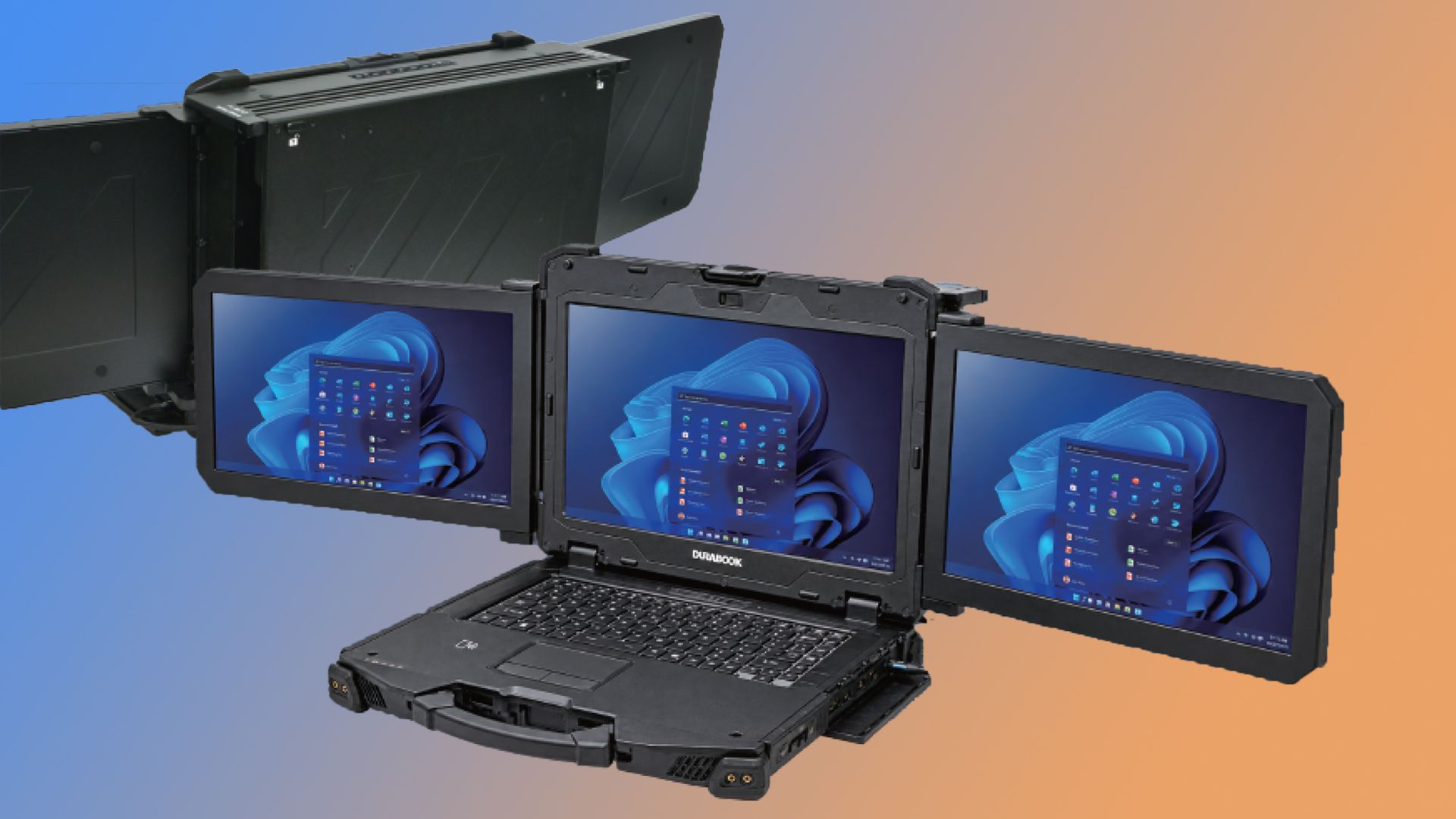
Taiwan-based manufacturer Durabook has introduced a highly rugged mobile workstation with not one, not two, but three integrated 14-inch 1080p displays. The Z14I-DX3 comes in a traditional clamshell design with two additional displays attached on either side that fold inwards during transportation. The laptop is MIL-STD-810H and MIL-STD-461G certified and is primarily meant for field professionals including military, public safety and emergency services, engineers, and other industrial operations.

All three displays are DynaVue sunlight-readable touchscreens with capacitive multi-touch and built-in OSD controls. Offering up to 1200 nits of peak brightness, all three can be synchronized or adjusted individually. The displays also support finger, water, glove and stylus inputs, which can be useful depending on the working conditions.

The additional displays increase the overall weight of the machine to a whopping 21.6 lb or 9.8 kgs, significantly heavier than the standard single-screen model at 3.6 kg. And at 5.4" thick (137.5mm) when closed, this system is best understood as a luggable workstation rather than anything resembling a traditional laptop.

The notebook can be configured with Intel’s Meteor Lake Core Ultra 5 or Core Ultra 7 mobile processors with up to 64GB of DDR5-5600 memory. Unusually for a ruggedized system, Durabook also offers several Nvidia discrete GPUs including the RTX A500 AI accelerator, RTX 3500 Ada and RTX 5000 Ada for up to 682 TOPS of AI performance.

The Durabook Z14I-DX3 also offers support for a wide range of connectivity options including Thunderbolt 4, dual RJ-45 Ethernet, two RS-232 serial ports, ExpressCard 54, Nano SIM and eSIM, as well as USB options ranging from USB 3.2 Gen 2 to USB 2.0. Wireless connectivity options include Intel Wi-Fi 7, Bluetooth 5.4, along with optional dedicated GPS, 4G LTE, and 5G connectivity. Durabook touts the use of this connectivity for highly customized application-specific configurations like the addition of joysticks for drone controls.

Given its likely customers, the Z14I-DX3 has several multi-factor authentication options, such as a smart card reader, optional Windows Hello webcam, RFID/NFC reader, and fingerprint scanner. The system also comes with quick-release dual NVMe PCIe SSD drives, allowing users to swap storage drives without requiring any tools. While the main battery is a 6,900mAh unit, the company lists an optional secondary 4,700mAh battery and a 6,700mAh battery for the two additional screens.

There is no information regarding the price, however, customers interested in the rugged mobile workstation can visit Durabook’s official website for a quote.

  •  

iPhone 18 Pro Max storage can drop lower than a hard drive at 1.1 MB/s during heavy writes

Apple’s latest iPhone 18 Pro series went on sale last week, and the company’s decision to use QLC-based NAND for higher-capacity storage variants appears to come with a trade-off. Bilibili channel Homolab recently tested a 1TB iPhone 18 Pro Max and found that its storage performance can drop significantly under sustained heavy workloads. Since QLC stores four bits of data per memory cell when compared to three bits with TLC, it allows manufacturers to offer higher capacities using the same physical space. However, this higher storage density comes at the cost of slower performance, particularly when handling large amounts of data.

Homolab compared the 1TB QLC-based iPhone 18 Pro Max with a 512GB TLC-based iPhone 18 Pro. While both storage types perform fairly similarly in 4K read tests, the QLC model falls behind by 38% in a low-queue-depth mixed workload, scoring 8,168 compared to 11,285 for the TLC model. Under heavier workloads, the gap narrows, although the TLC storage model still maintains a 12% advantage.

The drop in performance is even more apparent when it comes to sustained write tests. The iPhone 18 Pro Max uses a fast SLC cache that can deliver speeds of up to 3,000 MB/s. Once that cache is exhausted, a secondary TLC-based buffer takes over, averaging around 578 MB/s. When both cache buffers are exhausted, the phone has to write directly to the underlying QLC NAND. At that point, sustained write performance can fall to 79.4 MB/s, with speeds occasionally dropping as low as 25.6 MB/s.

That is significantly slow and comparable to the performance of many budget microSD cards (microSD Express cards are much faster). Things look even worse once the storage starts filling up. At 60% capacity, the available SLC cache drops from 250GB to just 58GB. This also causes the secondary buffer to slow down to 396 MB/s, while direct QLC writes average just 45 MB/s and occasionally fall to as low as 1.1 MB/s.

It’s important to note that these are synthetic benchmarks and are meant to represent a worse case scenario. Users should not experience any performance issues during typical tasks such as web browsing, messaging, gaming, or taking photos. Any slowdown is likely to be noticeable only during specific workloads, such as 4K or ProRes recording, large file transfers, or data backup restores. Having said that, testing by Homolab does point to the trade-off involved in using QLC NAND for a high-capacity flagship smartphone, particularly for users who regularly deal with storage-intensive tasks.

  •  

Give your PC the deep clean it deserves — the Wolfbox MF60 Air Duster with up to 110,000 RPM drops to $33.99

Dust buildup is one of the primary causes of performance throttling, and it is highly recommended to clean your PC as part of its regular maintenance. One of the easiest ways to keep your system dust-free is to invest in a powerful air duster. Right now, the Wolfbox MF60 is currently available at a 32% discount on Amazon, bringing the price down from $49.99 to just $33.99.

Cooling fans within your PC case or laptop end up pulling in a lot of dust, lint, and even small debris that can clog heatsinks, radiators, and various other components. This results in inefficient heat dissipation that can lead to hotter components and a drop in performance. While compressed air cans work well, a high-powered electric air duster is a much better option in the long run.

MF60 Compressed Air Duster: was $49.99 now $33.99
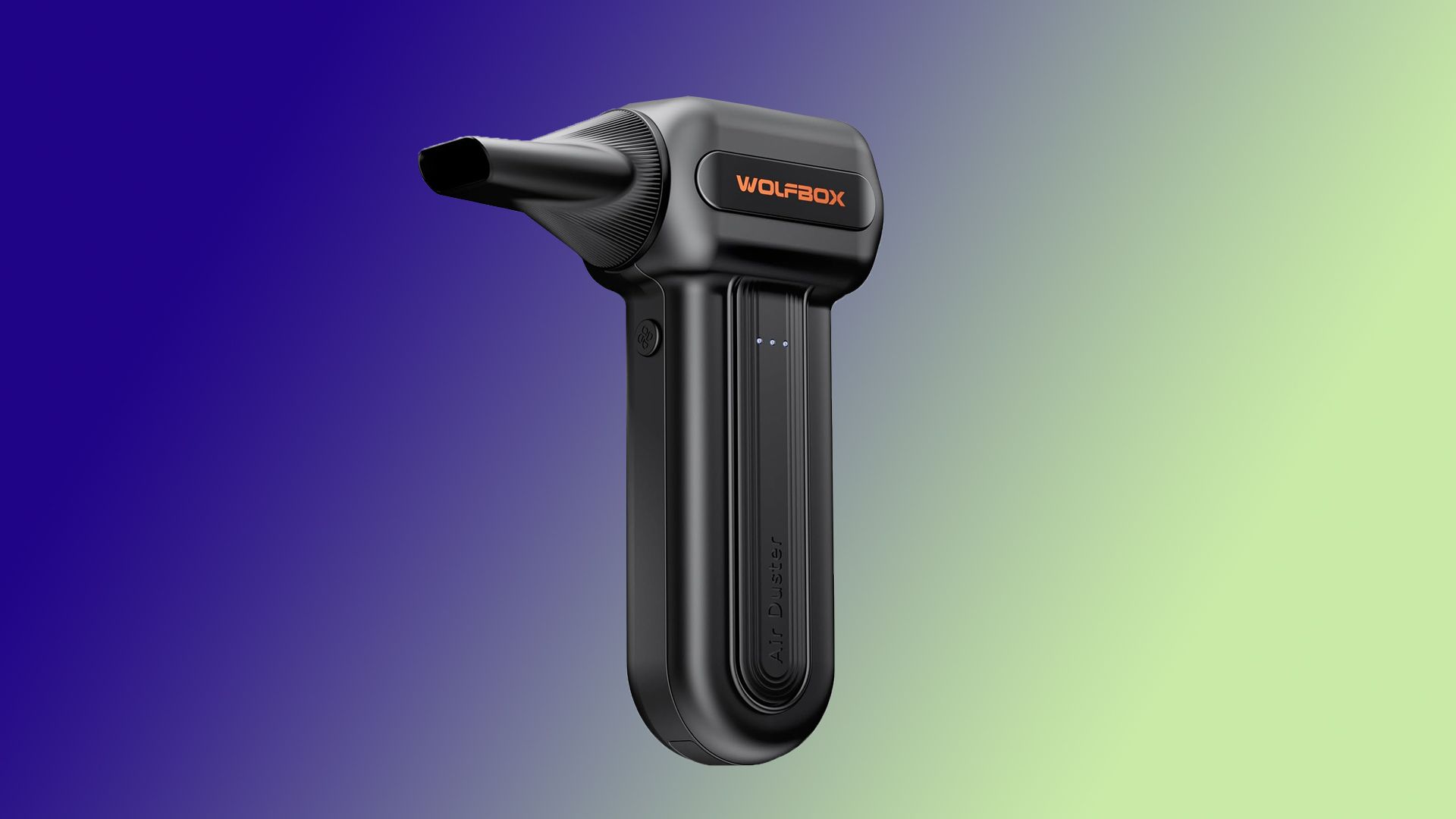
From cleaning dusty PCs, laptops, and peripherals to clearing debris from desks and car vents, the Wolfbox MF60 offers a versatile alternative to compressed air cans. View Deal

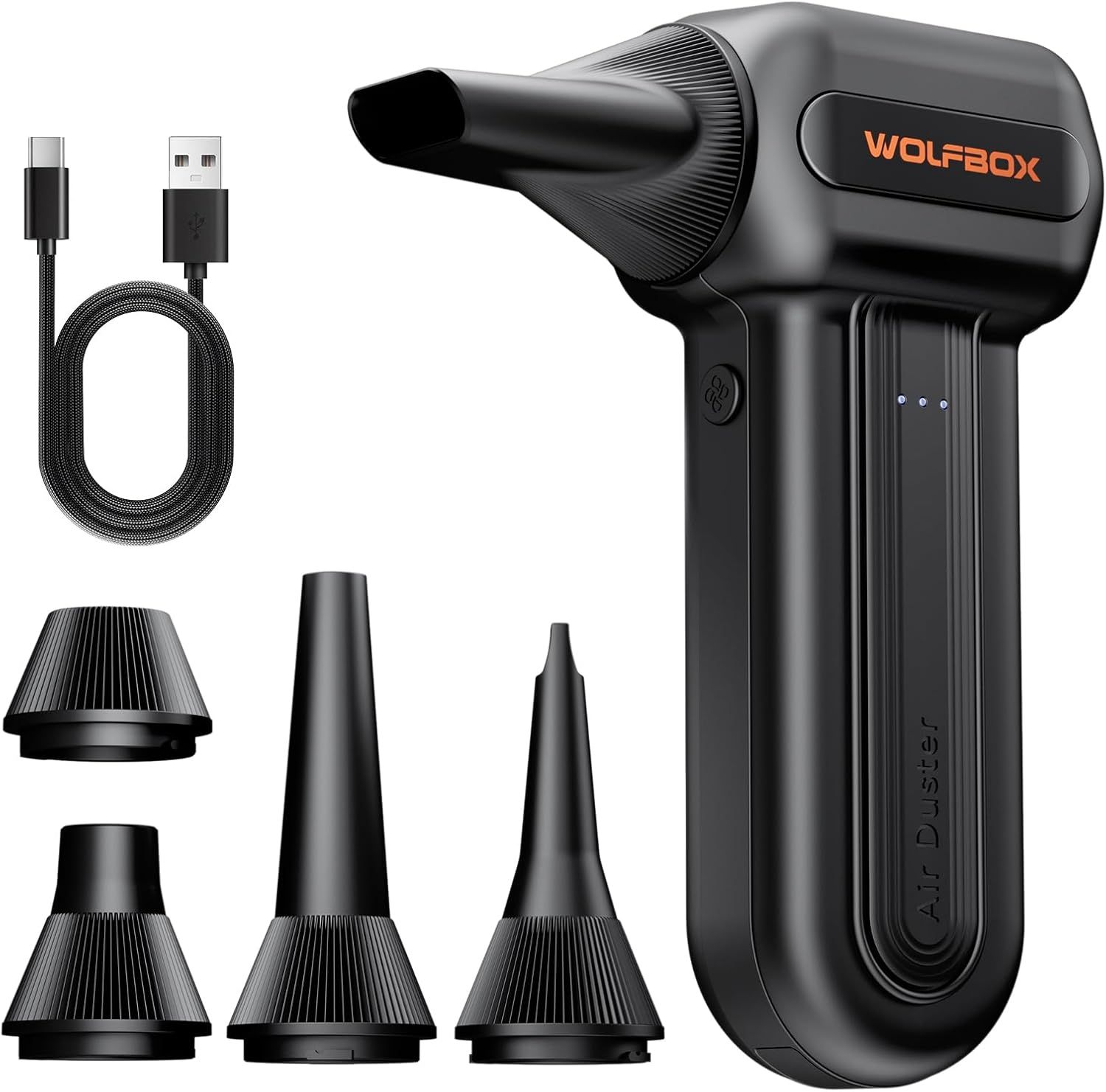
The Wolfbox MF60 is a wireless rechargeable air duster offering three fan speed levels and is claimed to deliver air speeds of up to 72.4 m/s with fan speeds of up to 110,000 RPM. Featuring dual 2,500mAh batteries, the company claims up to 240 minutes of runtime at its lowest fan speed of 25,000 RPM. The air duster can be fully recharged via USB Type-C in about 3.5 hours. It also includes multiple attachments, including a round all-purpose nozzle, a flat nozzle for blowing dust off PC cases and desks, a long nozzle for deep-cleaning computer keyboards and car vents, and a dedicated nozzle for inflating pool floats, beach balls, air mattresses, and more.

If you're on the lookout for a convenient way to keep your PC clean without relying on disposable compressed air cans, the Wolfbox MF60 is definitely worth considering. At its discounted price of $33.99, it's a practical addition to your PC maintenance toolkit, especially if you regularly clean your PC, laptop, or other electronics.

  •  

Denuvo sues anonymous game cracker ‘voices38’ over alleged DRM circumvention — seeks damages after Anti-Tamper protections bypassed in 26 games

Anti-Tamper and DRM (Digital Rights Management) software developer Denuvo is taking its fight against video game piracy to court by filing a lawsuit against the anonymous game cracker known as “voices38.” According to TorrentFreak, the company claims that the accused bypassed its Anti-Tamper technology in at least 26 PC games and is seeking monetary damages as well as a court order that would prevent further tampering of its DRM.

In its lawsuit filed on September 14 in the U.S. District Court for the Northern District of California, Denuvo alleges that the “defendant is a computer hacker who is focused on reverse engineering, hacking, or ‘cracking’ video games employing Denuvo’s Anti-Tamper product. Defendant has bypassed DRM restrictions in copyrighted works, removing protections that allow copyright owners to restrict who may access their works, and allowing for pirated versions of those copyrighted works.” The complaint also named 26 games including popular titles such as Hogwarts Legacy, Black Myth: Wukong, Resident Evil Requiem, and Doom: The Dark Ages.

It is worth mentioning that Denuvo doesn’t actually own the copyrights to any of these games. Meaning that instead of a filing for copyright infringement, the complaint relies on the anti-circumvention provisions of the DMCA. It essentially prohibits bypassing a digital lock that controls access to a copyrighted work, or distributing tools and instructions that help others to bypass copyright protections.

What makes the case interesting is that Denuvo does not know the real identity of voices38. It only points to the defendant as “an unknown individual or entity” alongside ten other unnamed defendants. The complaint also references Reddit and Discord accounts as well as Steam profiles that Denuvo believes may be connected to the cracking activity. The company could eventually seek information from these platforms as part of its legal proceedings.

Voices38 has been particularly active in recent months, with reports pointing to a growing number of Denuvo-protected game cracks to the anonymous cracker. Recent releases include Star Wars: Outlaws, Persona 3 Reload, and Prince of Persia: The Lost Crown. For Denuvo, the lawsuit could lead the way in identifying one of the more active figures in the recent video game-cracking scene. That said, the case is still in its early stages, and Denuvo's allegations have yet to be tested in court.

  •  

AI-induced memory shortage is changing how devices are built, Fairphone says memory now 60% of materials cost — smaller laptop and phone makers are redesigning products and have to test for fake chips

With the ongoing memory shortage, smaller smartphone and laptop manufacturers are reportedly looking at new ways to tackle the problem. While some are changing how they design their products, others are placing orders months in advance and are even forced to test incoming memory chips to make sure they are not fake. A Reuters report suggests that more than the price, availability has become a bigger problem, with manufacturers struggling to secure enough chips in the first place. Still, device makers like Fairphone say that memory now makes up nearly 60% of a device's bill of materials.

Back in July, memory maker SK Hynix’s CEO Kwak Noh-jung said that 2027 will be the "worst year" for the ongoing memory shortage and expects the memory crunch to last until 2030. For smaller manufacturers, however, simply paying more for memory isn't always enough. The situation is particularly difficult for budget-oriented phones and laptops, where memory makes up a much larger portion of the overall product cost.

According to Raymond van Eck, CEO of repairable-phone maker Fairphone, memory can account for almost 60% of the bill of materials in phones costing around $400. That itself is worrying, as a recent Counterpoint Research report expects global smartphone shipments to fall 13.9% this year to 1.08 billion units, marking the largest annual decline on record.

Finnish phone maker Jolla has designed two motherboard versions, allowing it to switch between combined packages for discrete chips depending on availability. The company is also testing samples from every batch it receives to ensure new memory isn't being sold as refurbished hardware.

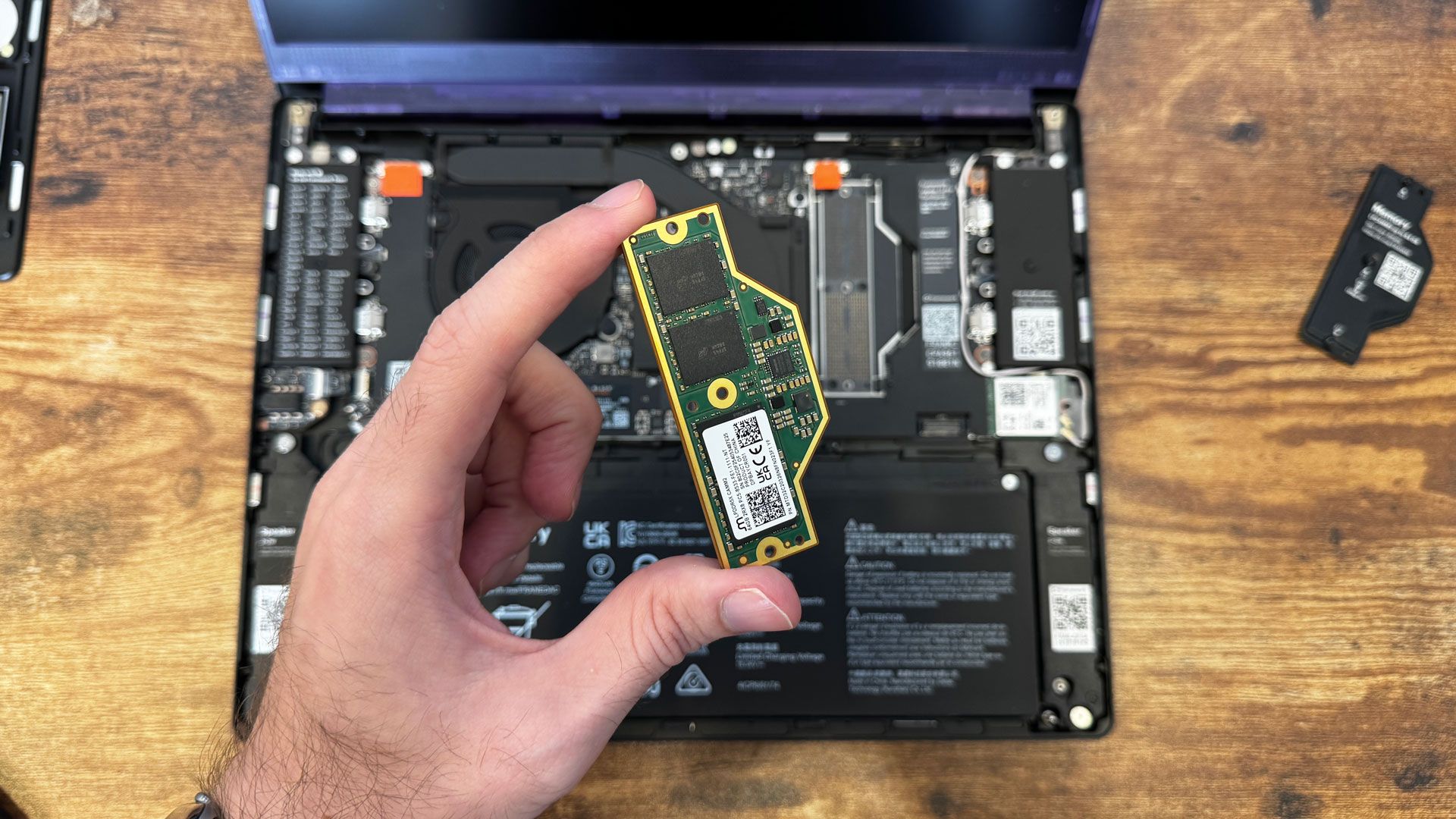
Similarly, laptop manufacturer Framework has been able to rely on its highly modular approach where customers can install memory salvaged from older laptops or opt for second-hand units, giving the company and its users another way to deal with limited supply. The company is also placing non-cancellable orders well in advance, even when it doesn't know the final price or exact delivery volume.

Back in July, it nearly doubled memory pricing for 32GB and 64GB variants of the Framework Laptop 13 Pro after receiving a cost update from its LPCAMM2 supplier. However, after sourcing new inventory at a reduced cost, the company recently announced a price drop for the same, including retroactive orders that have already shipped.

  •  

Proven 8-pin PCIe plugs aren't immune to melting — Thermal Grizzly WireView adapter burns out on Radeon RX 7900 XTX

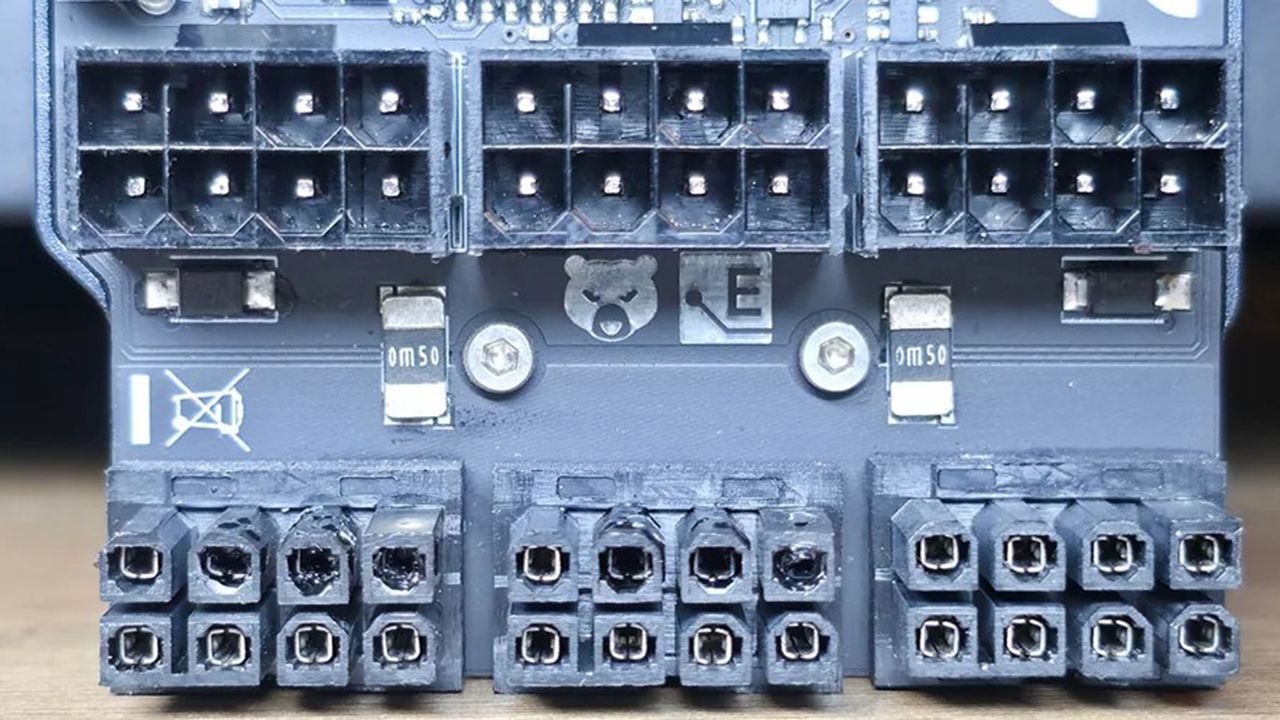
If you believe that the 8-pin PCIe power connector is entirely immune to the problems that have plagued the newer 16-pin connector, think again. A recent incident suggests that even the humble 8-pin is not entirely immune to failure. According to a Radeon RX 7900 XTX owner on Reddit, the 8-pin connectors on a Thermal Grizzly WireView monitoring device suffered overheating damage while connected to the graphics card.

The user said that they experienced frequent freezes and black screens before discovering the damage. The affected connectors were the 8-pin connectors on the GPU side of the monitoring device, with visible signs of burning and melted plastic. The user also confirmed that the connectors were fully inserted, although the exact cause of the failure is still unknown.

WireView is essentially an adapter that sits between a graphics card and the power cables, allowing users to monitor various values like power consumption, voltages, current in amperes, minimum and maximum power consumption, and more. Rather than connecting the PSU cables directly to the GPU, the power passes through the monitoring device, thus adding another set of connectors and electrical contacts to the power delivery path. A poor electrical connection, increased contact resistance, a damaged connector, or an issue with the adapter itself could have caused the overheating damage.

Thermal Grizzly previously pointed to improper seating, backplate interference, or incorrectly aligned or soldered contacts as possible causes of connector damage, although the company is yet to identify the cause of this particular incident. The company has reportedly contacted the affected user and asked them to get in touch with its support team so the company can investigate the damaged WireView adapter. The investigation could potentially help determine whether the failure originated from the adapter, the connectors, the GPU, or a combination of factors.

While we are on the subject of 8-pin power connectors, just days ago we saw a heavily modified RTX 5090 successfully running on traditional 8-pin connectors. The modders replaced the card's original 16-pin connectors with three 8-pin connectors soldered directly to the PCB, using heavy-gauge cables and modified sense pins. The card reportedly pulled as much as 900W and reached 3,400 MHz, demonstrating how capable 8-pin connectors can be when properly implemented. However, this was an extreme hardware modification, not a stock configuration.

  •  

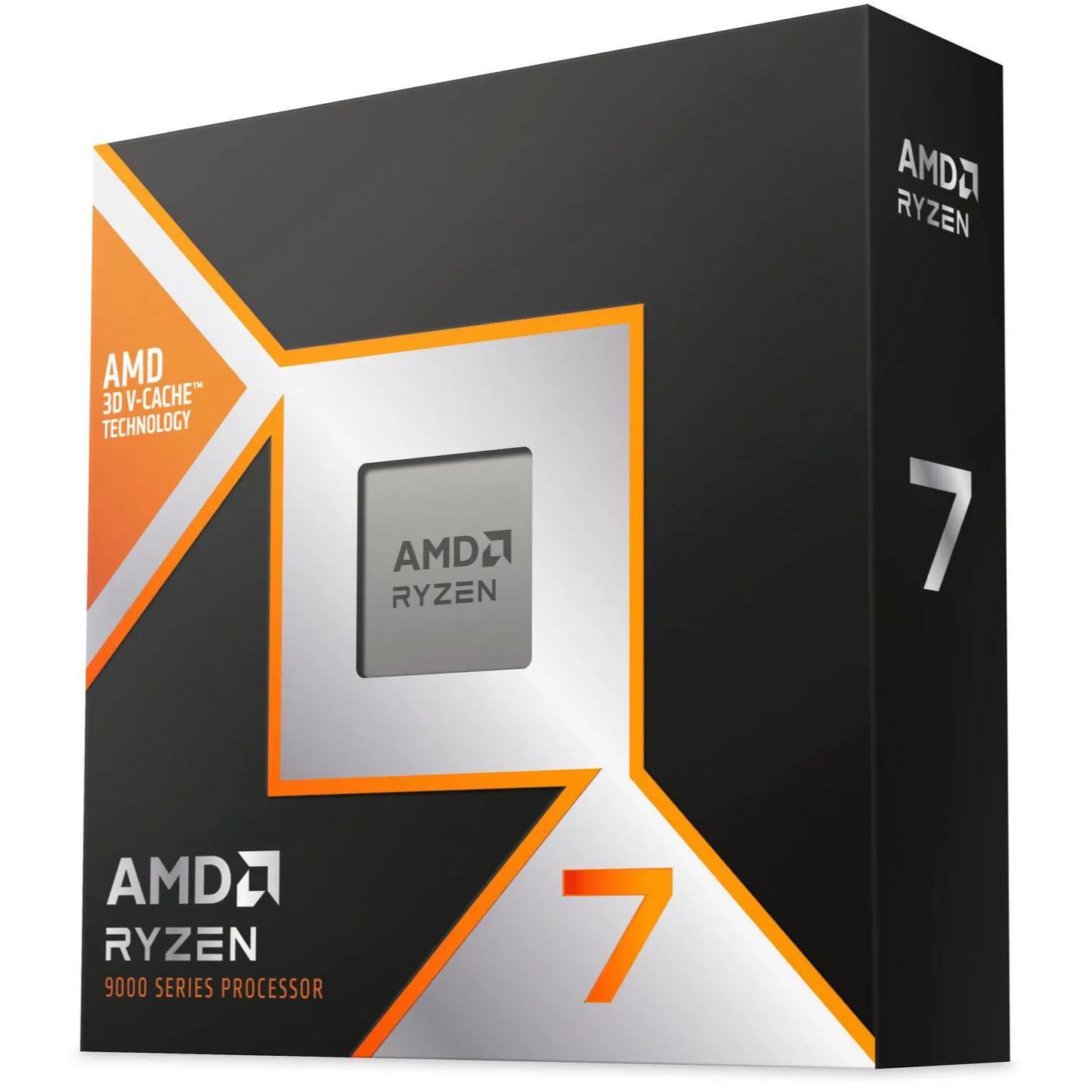
AMD’s best gaming CPU drops below launch price and includes free 240mm AIO cooler and Onimusha: Way of the Sword — grab the Ryzen 7 9850X3D for $484

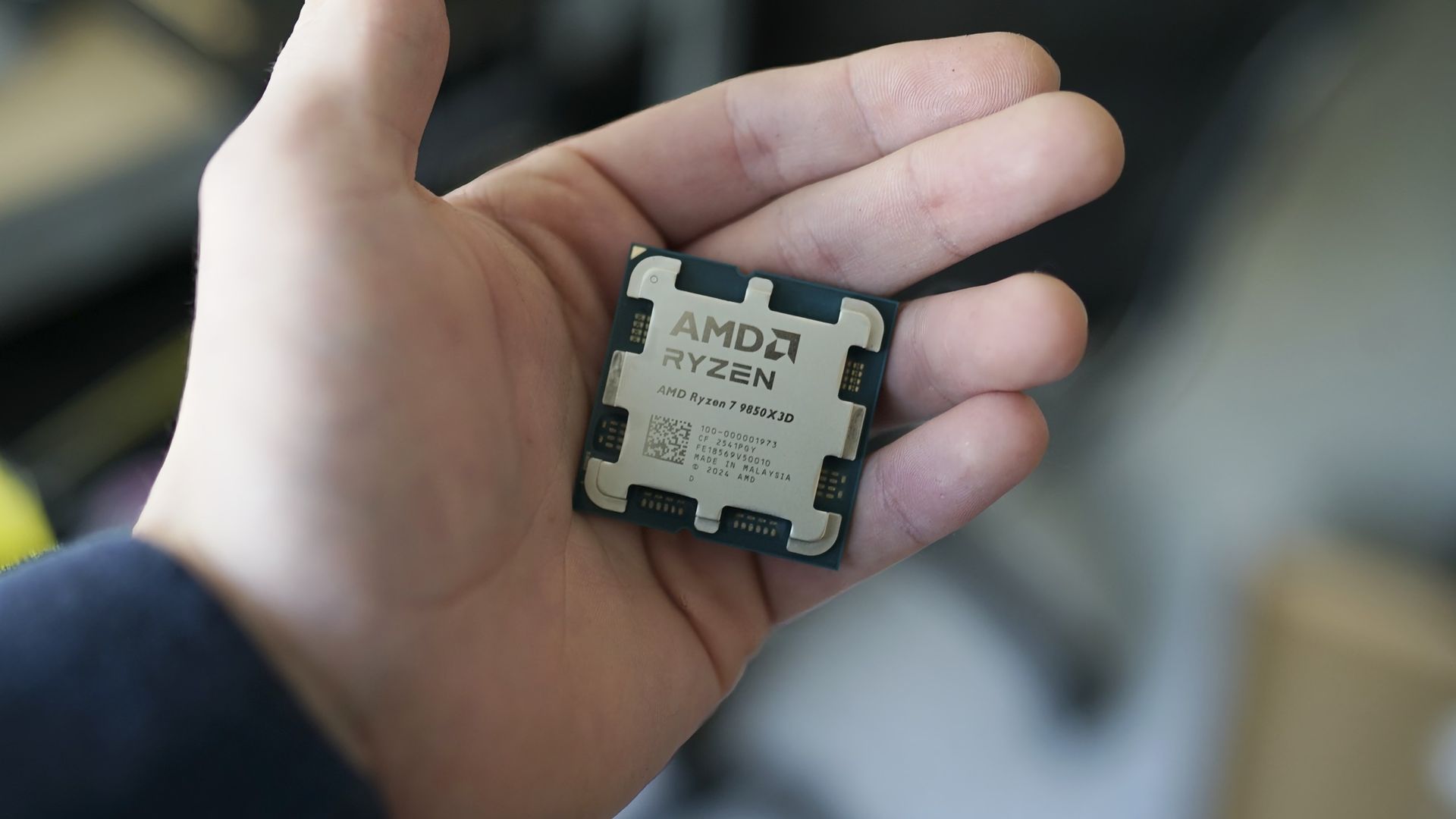
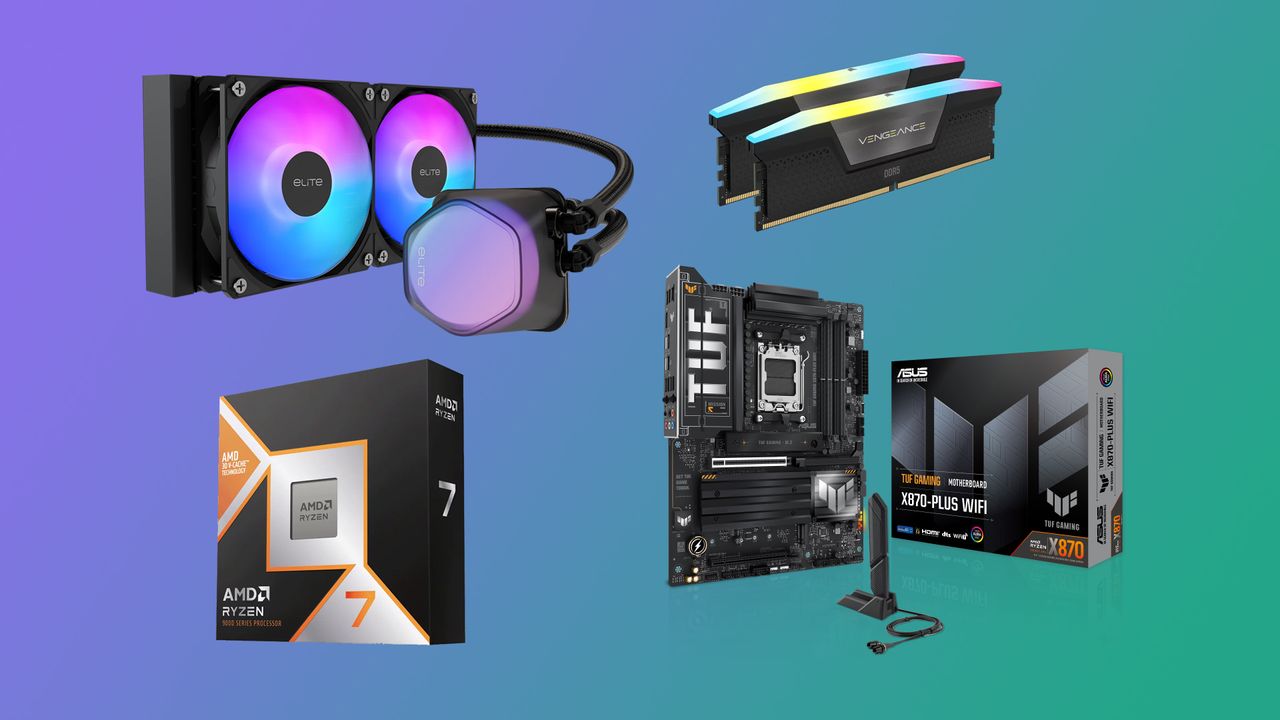
For those seeking the highest performance for gaming, AMD’s Ryzen 7 9850X3D is currently the best CPU money can buy. If you’re planning to upgrade or build a new PC, now might be a good time to pick one up, as Newegg is selling the 9850X3D for $484, around $15 less than its launch price. The deal also includes a 240mm Cooler Master AIO liquid cooler, valued at $79.99, along with a copy of Onimusha: Way of the Sword worth $69.99, both included as free gifts.

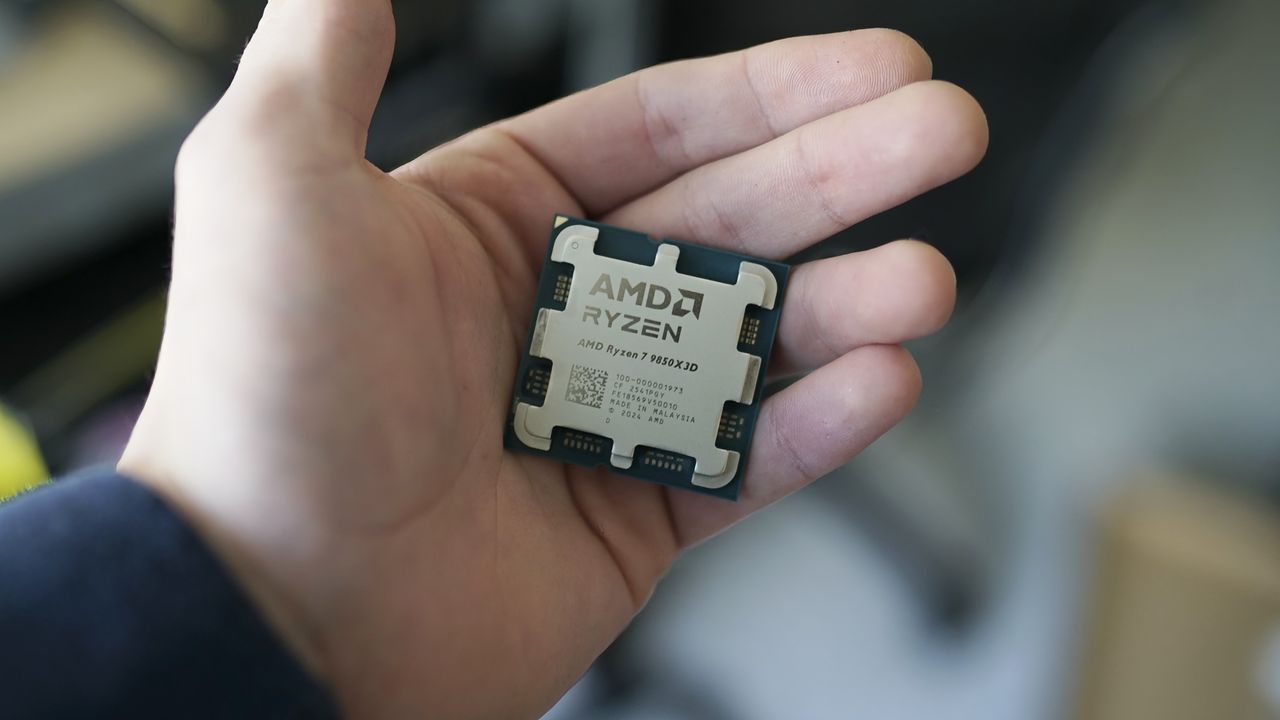
Announced at CES 2026, the Ryzen 7 9850X3D is essentially a higher-binned version of the Ryzen 7 9800X3D. It retains the same 8-core, 16-thread configuration and 4.2 GHz base clock as its predecessor, but gets a higher 5.6 GHz boost clock. The chip comes with the same 104MB of total cache, including 96MB of 3D V-Cache, which is the key ingredient behind its strong gaming performance. It also shares the same 120W default TDP and uses the AM5 platform with DDR5 memory support, making it compatible with a wide range of existing 800- and 600-series AMD motherboards.

Built on AMD’s Zen 5 architecture, the Ryzen 7 9850X3D combines 8 cores and 16 threads with a 5.6GHz boost clock and 96MB of 3D V-Cache.View Deal

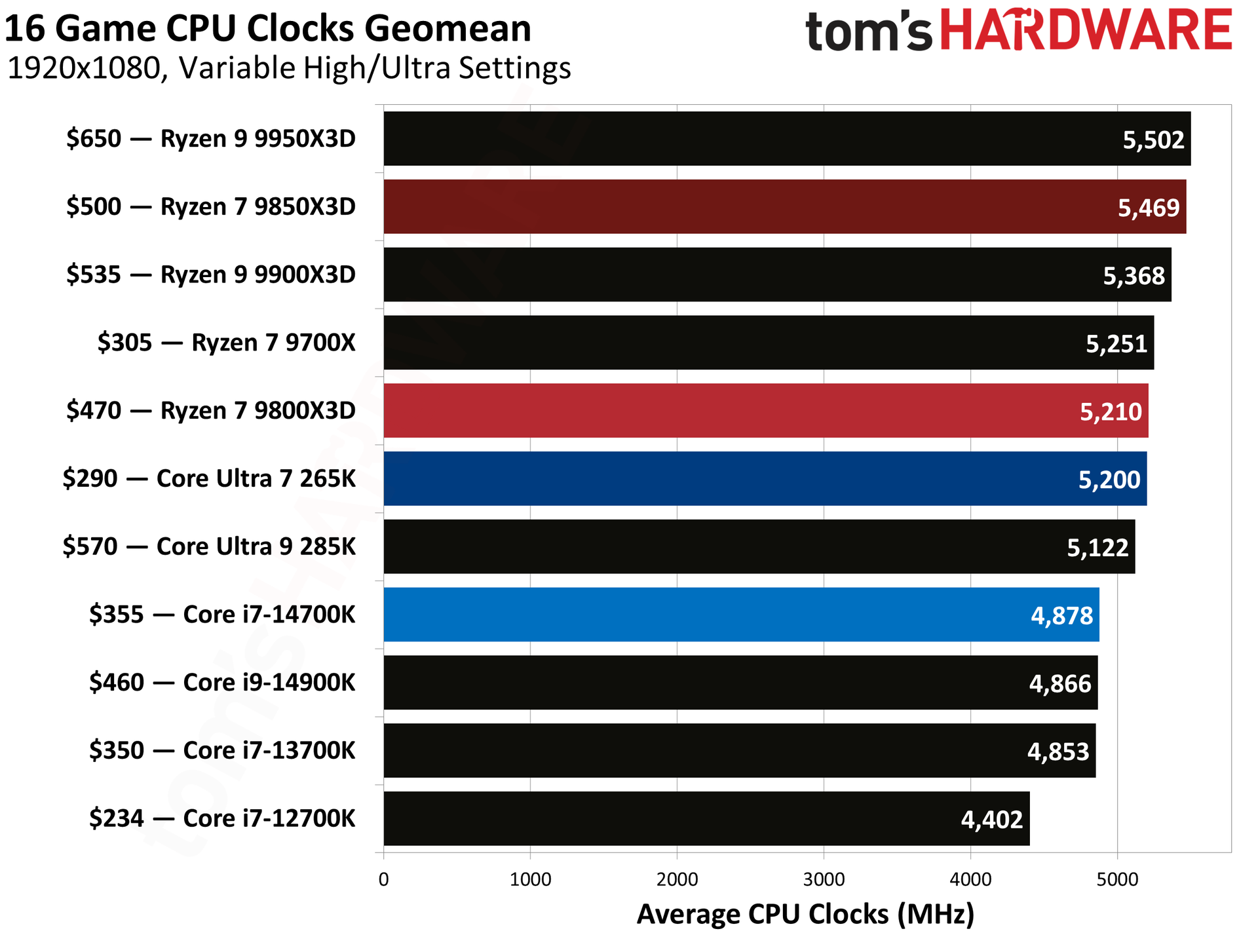
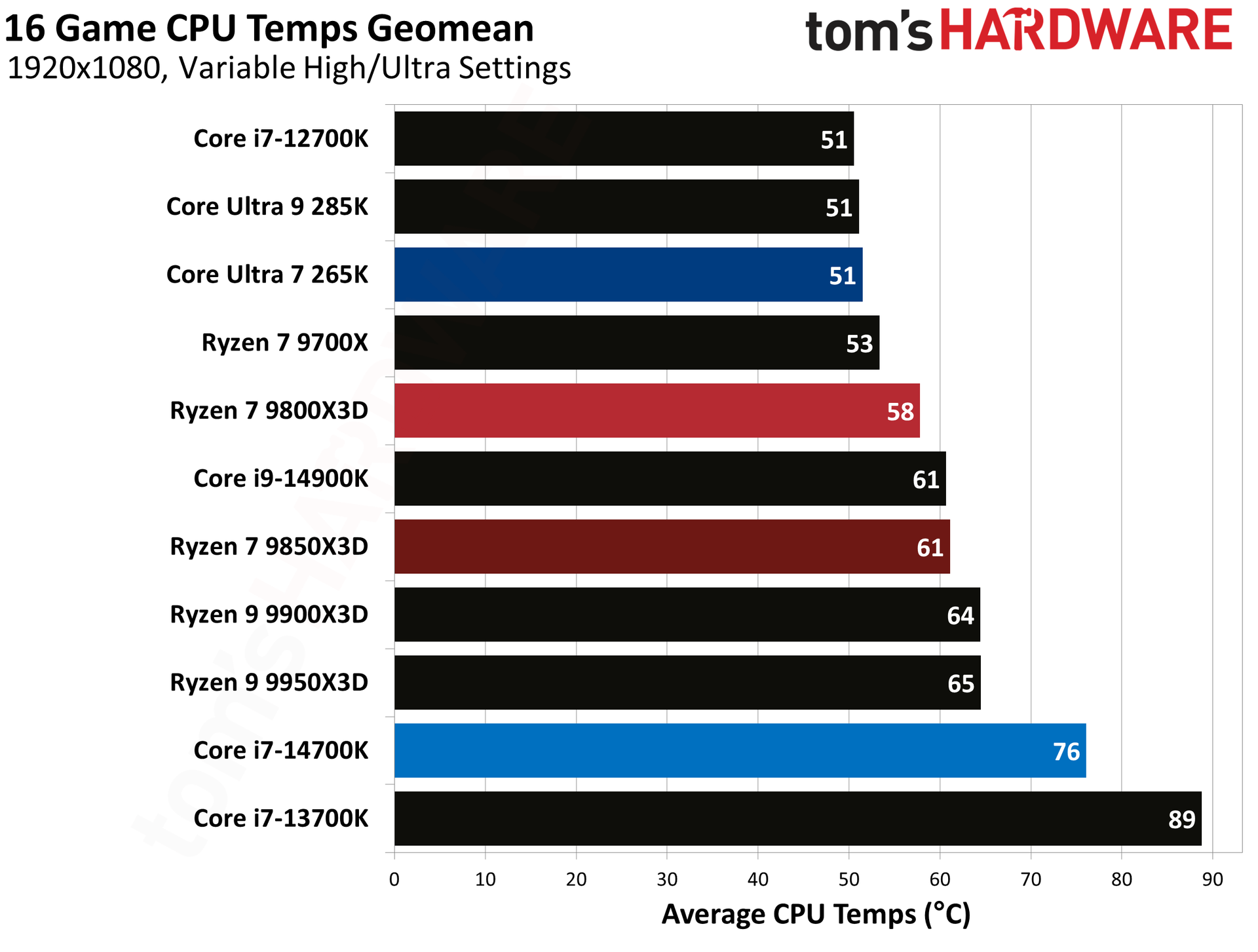
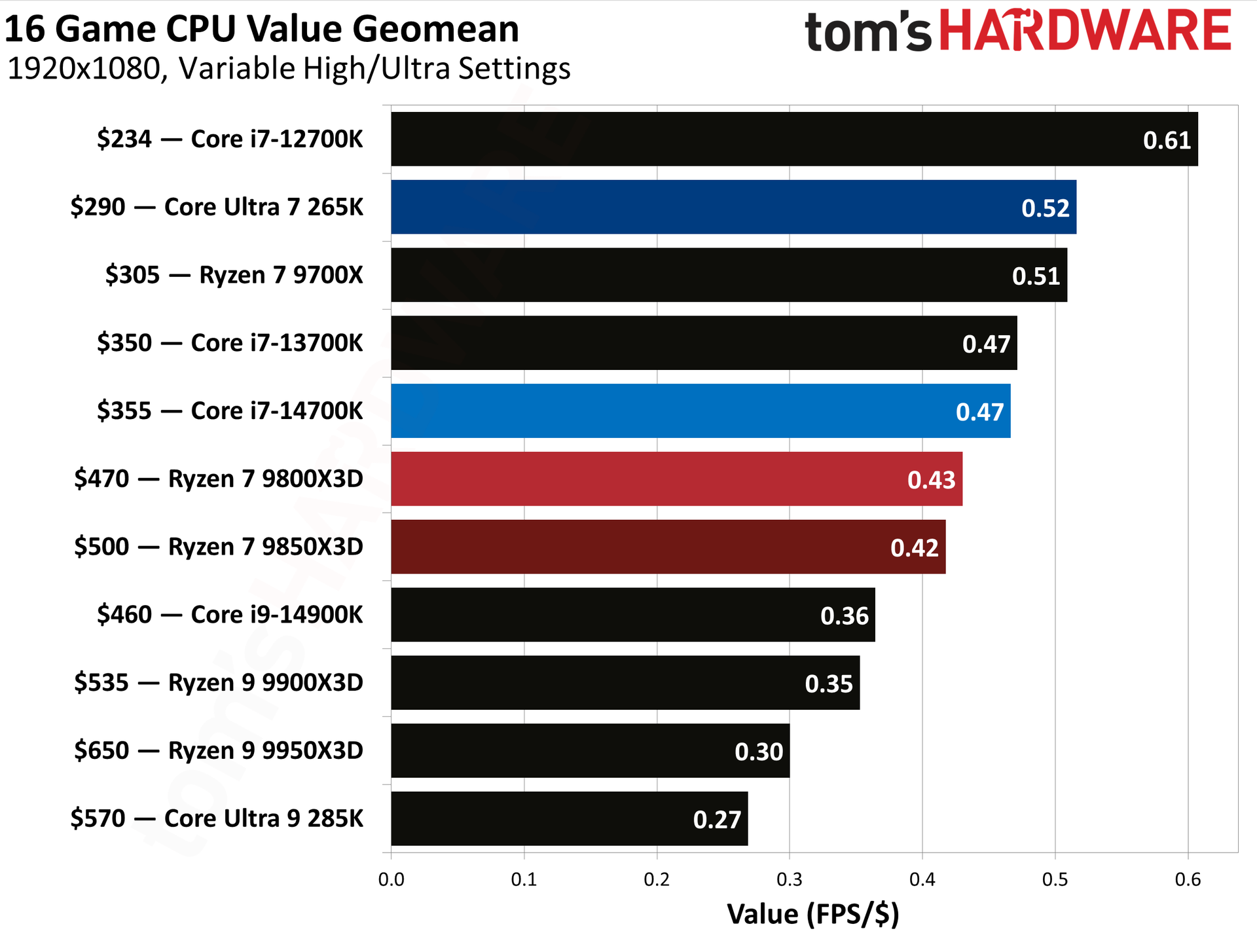
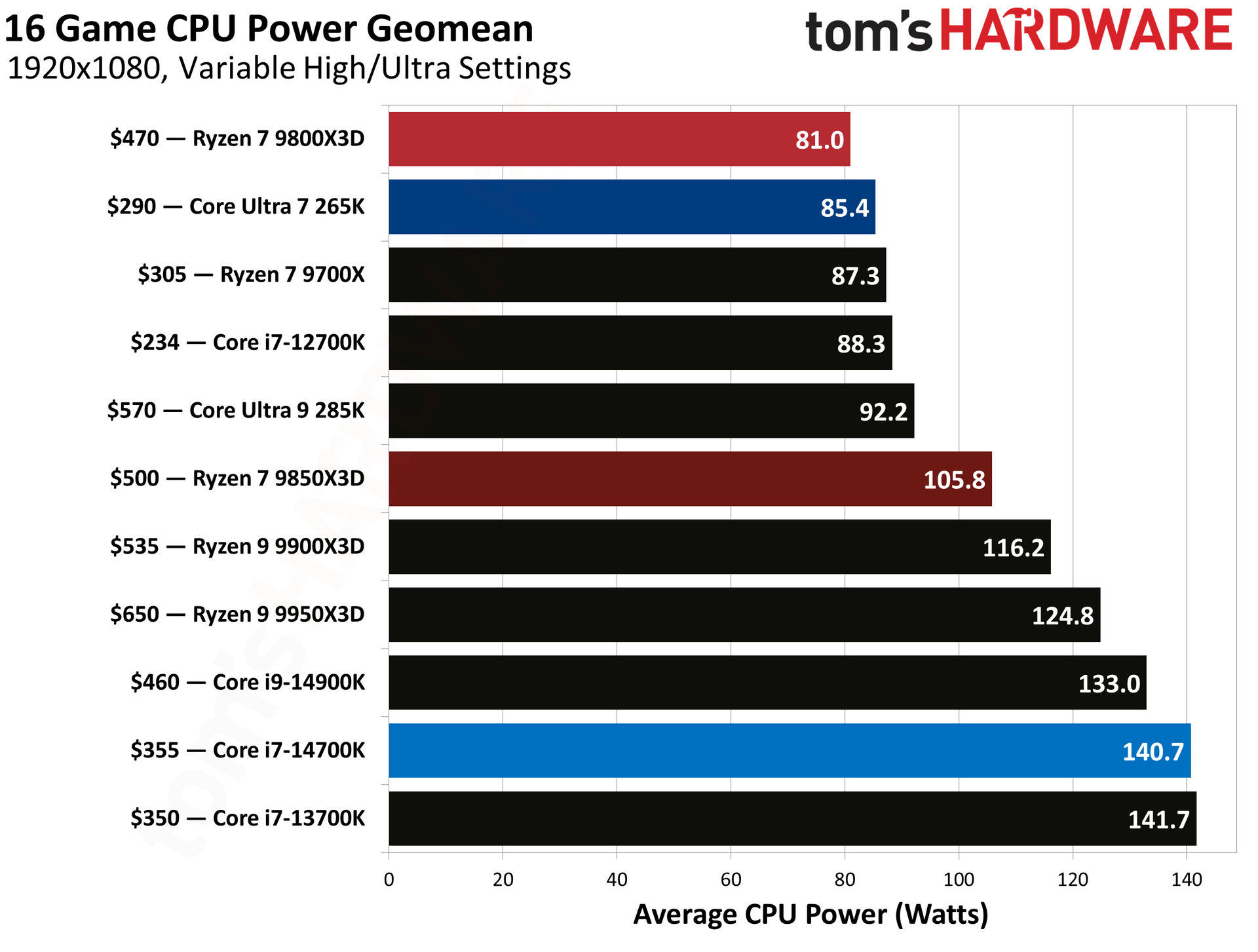
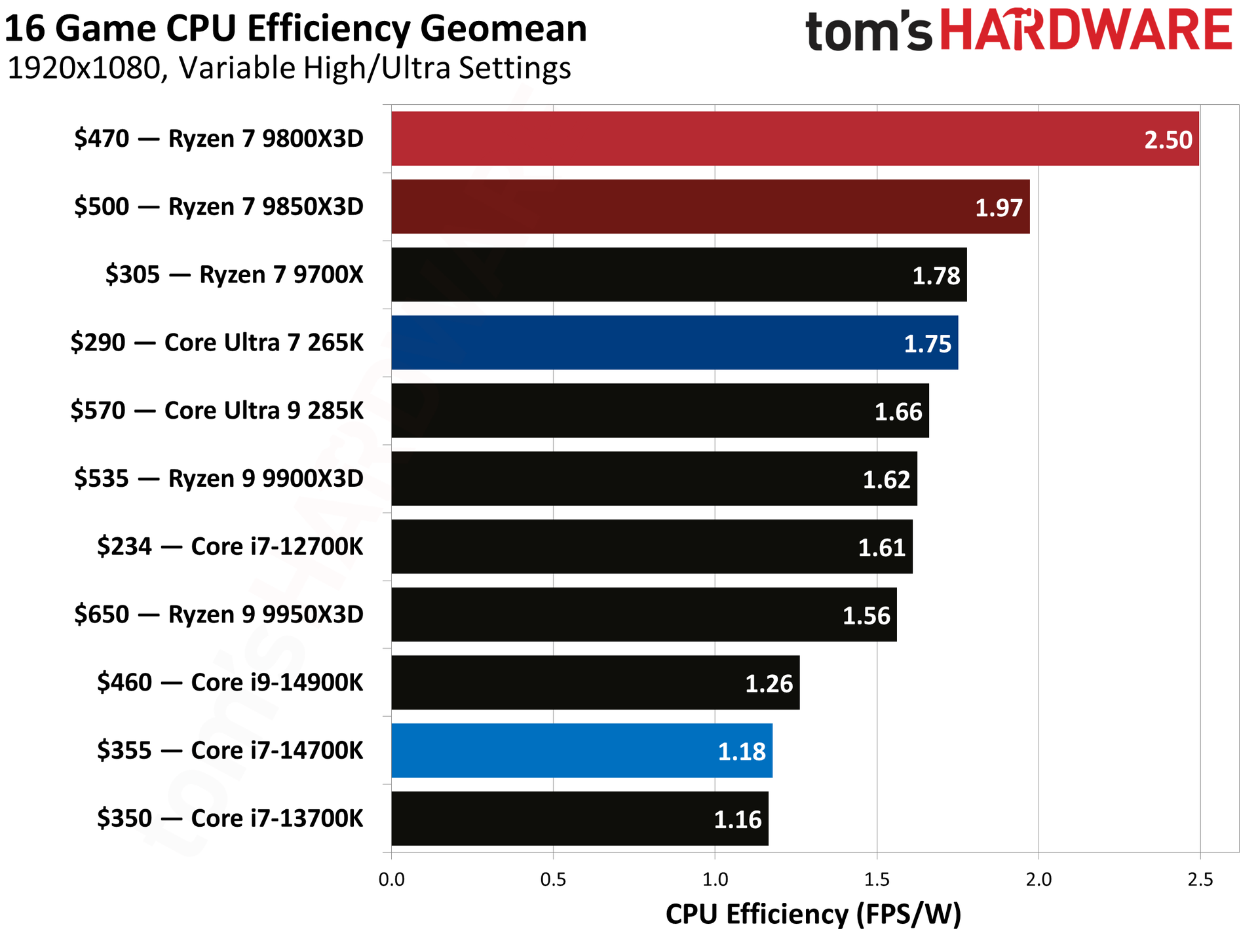
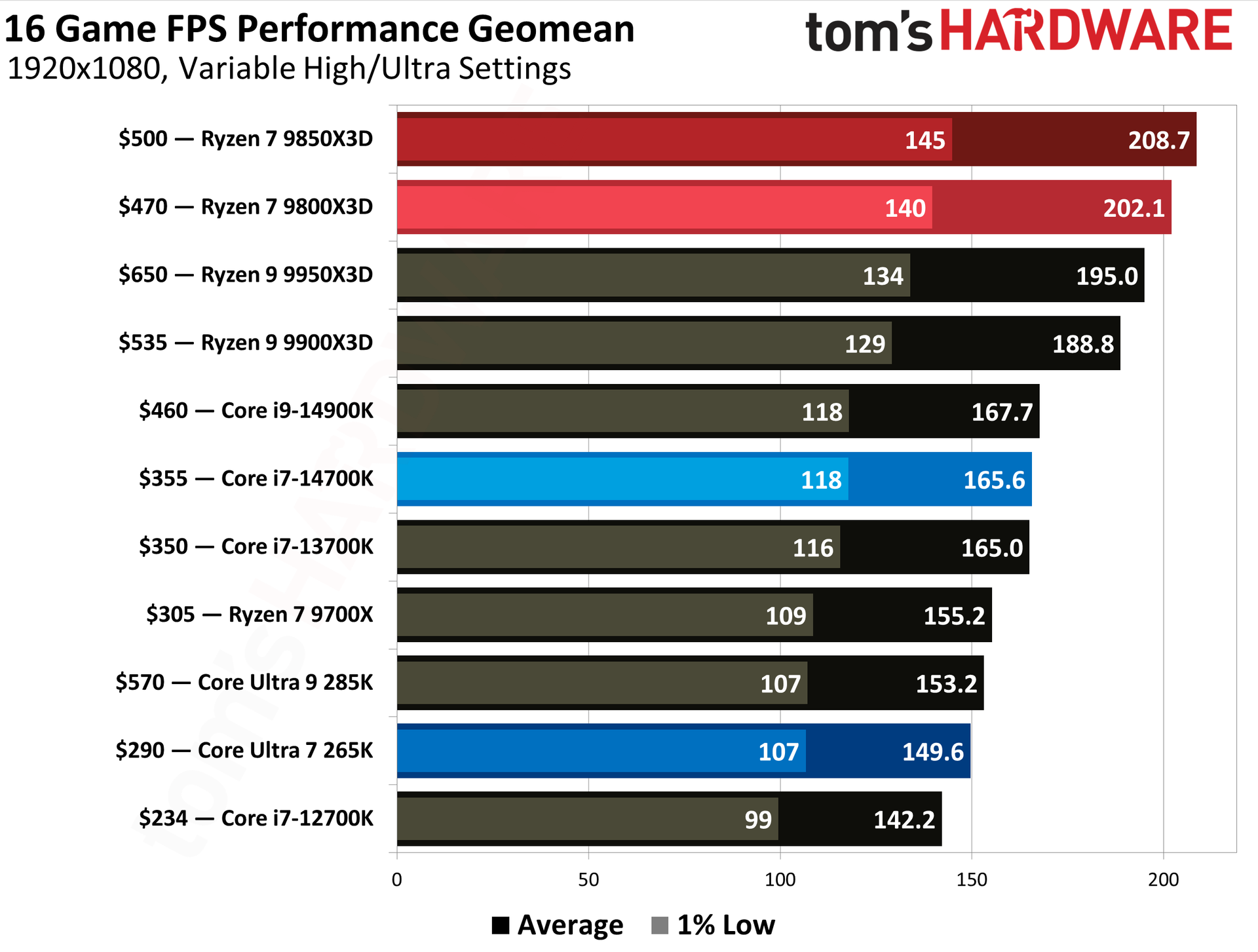
In our in-depth testing of the Ryzen 7 9850X3D, we found that it was only 3.3% faster than the Ryzen 7 9800X3D. But a win is a win, and that performance edge puts the CPU at the top of our 16-game 1080p FPS performance geomean, beating the more expensive Ryzen 9 9900X3D and 9950X3D. Although it loses out to Intel in some productivity workloads, the less complex 8-core configuration packed into a single CCD results in lower power draw. As you can see from our results, the peak power consumption is around 170W, making it much easier to cool.

AMD Ryzen 7 9850X3D
Tom's Hardware
AMD Ryzen 7 9850X3D
Tom's Hardware
AMD Ryzen 7 9850X3D
Tom's Hardware
AMD Ryzen 7 9850X3D
Tom's Hardware
AMD Ryzen 7 9850X3D
Tom's Hardware
AMD Ryzen 7 9850X3D
Tom's Hardware

With the included 240mm AIO liquid cooler, you should be able to keep the Ryzen 7 9850X3D well under control during gaming and moderate workloads, although it may run warmer under heavy multi-core workloads. At its sale price of $484, you’re paying less than its actual launch price while getting two useful extras at no additional cost. That makes this a worthwhile deal for anyone looking to build a high-end gaming PC around AMD’s gaming-focused platform.

  •  

Intel revives One Mono font after brief retirement during open-source purge — typeface built to fight coder eyestrain gets reprieve

Intel has reversed its decision to shelve its open-source font project designed specifically with developers in mind. The font’s GitHub repository was archived earlier this week, only for the company to reportedly restore the project and potentially continue to maintain it. The cancellation came amid a wider reduction in Intel’s open-source efforts. According to Phoronix, Intel has been closing down projects where development has slowed, or the employees responsible for them have exited the company.

Introduced back in 2023, One Mono is a monospace font where each character occupies the same horizontal width. Intel carried out the development in collaboration with type design studio Frere-Jones Type and marketing agency VMLY&R. Working with low-vision and legally blind developers during the design process, live testing sessions were conducted to identify characters that could be difficult to distinguish when reading code.

“Identifying the typographically underserved low-vision developer audience, we designed the Intel One Mono typeface for maximum legibility to address developers' fatigue and eyestrain and reduce coding errors,” said Intel in its introduction.

The font was designed with several features to improve legibility, including distinctions between similar-looking letters and coding characters. For example, characters such as the lowercase “e” and uppercase “G” were given more distinctive shapes to make them easier to identify. The difference in height between uppercase and lowercase letters was also increased, along with longer ascenders and descenders to make blocks of code easier to read. Additionally, the font supports more than 200 languages using the Latin script and is available in Light, Regular, Medium, and Bold weights, along with matching italics.

As mentioned, One Mono is available under an open-source license; thus, developers are free to use and modify it. Unfortunately, the font has not witnessed any significant updates since 2024, with activity during 2025 reportedly limited to Readme updates. Thus, its archival seemed pretty obvious, especially with Intel shutting down projects that were no longer seeing active development. For now, the font has managed to avoid becoming a casualty of Intel’s open-source cleanup. While the project remains silent, its revival means the developer-focused font is not being abandoned after all.

  •  

Build a high-end AMD gaming PC for less — Ryzen 7 9800X3D bundle includes an X870E motherboard, 32GB DDR5, AIO cooler and a game for $1,109.99

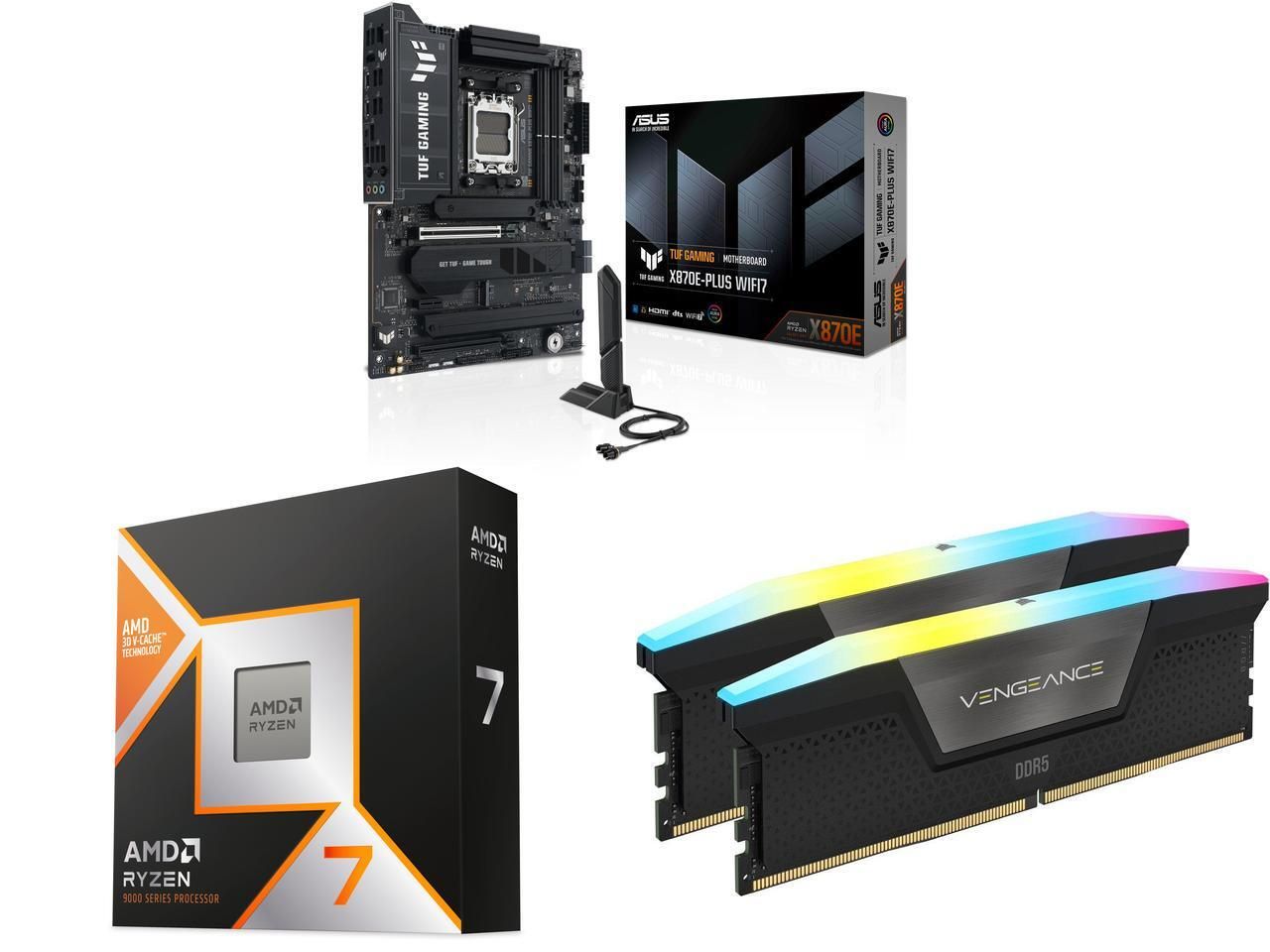
With the ongoing memory crisis driving up the price of RAM and other components, it is arguably one of the worst times to build a new gaming PC. However, bundle deals can be a good way to offset some of those inflated prices. Speaking of which, we’ve spotted an incredible AMD bundle over at Newegg that includes the AMD Ryzen 7 9800X3D, an Asus TUF X870E motherboard, and 32GB of Corsair Vengeance RGB DDR5-6000 RAM for $1,109.99, offering savings of around $150. The bundle also includes a 240mm Cooler Master AIO liquid cooler and a copy of Onimusha: Way of the Sword as free gifts.

The Ryzen 7 9800X3D is an 8-core, 16-thread processor based on AMD’s Zen 5 architecture. With a 4.7 GHz base clock and up to 5.2 GHz boost clock, the highlight feature of the chip is its 3D V-Cache technology that helps in lowering latency and giving a boost in overall gaming performance. If you’re looking for the best gaming CPU for a high-end build, the Ryzen 7 9800X3D should be at the top of your list.

TUF GAMING X870E-PLUS WIFI7 ATX Motherboard, 16+2+1 80A Power Stages, DDR5, PCIe 5.0, Four M.2 Slots, WiFi 7, AMD Ryzen 7 9800X3D 8-Core 5.2 GHz, CORSAIR Vengeance RGB 32GB DDR5 6000 RAM: was $1258.98 now $1109.99
Newegg’s bundle brings together AMD’s Ryzen 7 9800X3D, an Asus X870E motherboard, 32GB of DDR5 memory and a free 240mm AIO cooler, making it a compelling option for a high-end gaming build.View Deal

The Asus TUF Gaming X870E-Plus motherboard should be a suitable pairing for the 9800X3D as it offers premium features including a robust power delivery system, dual PCIe 5.0 M.2 SSD storage slots, and solid connectivity. The motherboard supports Wi-Fi 7, 2.5Gb Ethernet, dual USB4 (40Gbps) Type-C ports, and front USB 20Gbps Type-C connector with up to 30W PD Fast-charge. It also offers enlarged heatsinks for the VRM, M.2 storage and PCH, as well as tools to overclock and fine tune various features.

Last but not least, the bundle includes a Corsair Vengeance RGB kit with two 16GB DDR5 modules running at 6000 MT/s, with a CAS latency of CL36 and timings of 44-44-96. The memory features black aluminum heat spreaders with a patterned finish, along with RGB lighting across the top of each module. It also supports both Intel XMP and AMD EXPO profiles, making it easy to apply pre-configured memory overclocking settings.

If we look at individual pricing, Ryzen 7 9800X3D is currently $469, while the Corsair RAM kit and Asus motherboard are listed at $499.99 and $289.99, respectively. You also get a CPU liquid cooler worth $79.99 and a copy of Onimusha: Way of the Sword worth $69.99. That puts the combined value at around $1,408.96, making the $1,109.99 bundle price a saving of nearly $300. If you're planning a high-end AMD gaming PC, this bundle is definitely worth exploring.

  •  

Lucky PC scavenger discovers 12 RTX 3070 GPUs from the crypto mining era — cards survived years of basement storage with only minor signs of wear

A Reddit user has stumbled upon a GPU jackpot by claiming two old cryptocurrency mining rigs with 12 Zotac-branded Nvidia RTX 3070 graphics cards. The machines were reportedly used during the COVID-era mining boom and had been sitting unused in a basement, probably since the day Ethereum mining became unprofitable. The discovery was shared on the r/PCMasterRace subreddit, and judging by the photos, all of the parts look surprisingly undamaged despite the long period in a basement.

Apart from the graphics cards, the setup also features an MSI MPG Z390 Gaming Plus motherboard, a 1000W Gold-rated Rosewill power supply, two 4GB sticks of DDR4 RAM, and a pair of 120GB solid-state drives. Upon closer inspection of the GPUs, the Reddit user noticed minor silicone bleeding across most of the cards, which is a common occurrence caused by thermal pads breaking down and releasing oil over time. Commenters pointed out that while the cards might require a clean-up with isopropyl alcohol, as well as new thermal pads and thermal paste, the hardware is very likely salvageable.

Found used mining rigs with 12 x RTX 3070
 from r/pcmasterrace

Launched in 2020 as an upper mid-range graphics card, the RTX 3070 is based on Nvidia’s Ampere architecture with 5,888 CUDA cores and 8GB of GDDR6 memory. It was designed to deliver strong 1440p gaming performance and became one of the more popular GPUs of its generation. The card also arrived during the cryptocurrency mining boom, where its combination of performance and power efficiency made it attractive to miners.

GPUs used for mining aren't necessarily a bad proposition for gaming. Mining rigs were often configured to run GPUs at reduced core voltages and power levels to lower temperatures as well as electricity costs. This also helped in reducing stress on the silicon itself when compared to standard gaming.

For now, the Reddit user does not plan to keep all 12 graphics cards for themselves. Their first step is to test the RTX 3070s individually to find out how many are still in working condition. If most of the cards pass testing without issues, the user says they plan to sell 10 or 11 of the GPUs and keep at least one for themselves. With each RTX 3070 carrying 8GB of VRAM, the haul represents 96GB of VRAM in total, which in today's economy is a valuable amount of graphics memory, particularly due to the soaring prices of newer GPUs.

  •  

GameStop is reopening recently closed stores despite massive retail cuts — select locations return nationwide starting September 11

GameStop is bringing some of its recently closed stores back to life. The company announced on social media that “select closed stores” are reopening nationwide starting September 11, although it has not revealed exactly how many locations will return. When asked about the number of stores involved, a GameStop spokesperson reportedly told IGN that the count was “at least one” as of September 11, suggesting that we can expect more details to follow.

The move comes after GameStop reportedly had one of its biggest rounds of store closures listed for January 2026. According to a blog tracking the closures, around 470 locations across the U.S. were listed as either confirmed to close or already closed, as the retailer continued efforts to cut costs and improve profitability. GameStop had already closed hundreds of stores during the previous fiscal year, making the latest shutdowns part of a much larger reduction in its physical retail footprint.

Your local GameStop is back.Select closed stores are now reopening nationwide starting September 11. pic.twitter.com/OKbS0WAmy4September 10, 2026

GameStop's decision to reopen select physical stores is notably interesting given the wider shift away from physical game media. Digital downloads have replaced physical discs, while console manufacturers are increasingly offering hardware without disc drives. Recently, Sony took the shift even further after sharing its plans to stop producing new physical PlayStation game discs by January 2028. While that has resulted in a considerable backlash from the gaming community as a whole, Sony did clarify that existing titles can continue to be reordered and disc production will not simply disappear overnight.

It is worth mentioning that GameStop's business has moved beyond physical games. CEO Ryan Cohen said in July that software accounted for less than 12% of the company's business, although GameStop's fiscal 2025 filings put software, including physical games and digital download codes, at 20.1% of sales. Collectibles have become increasingly important, accounting for 29.2% of fiscal 2025 revenue and growing 47.7% year over year. This could explain why GameStop is potentially comfortable reopening selected stores despite the decline of physical games. That being said, it is safe to consider the announcement as a limited reopening rather than a complete reversal of GameStop's broader strategy.

  •  

Windows 11 can now reinstall itself from the cloud — Cloud Rebuild revives dead systems without secondary boot media, wipes broken installation and downloads a fresh copy of the OS

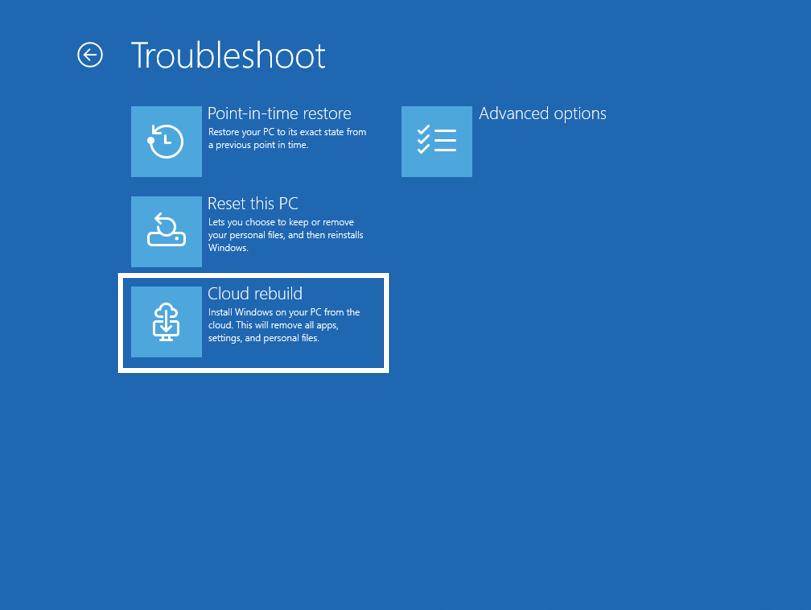
Microsoft has finally solved one of the biggest pain points of Windows with the rollout of Cloud Rebuild. The new recovery feature can reinstall Windows 11 even when an existing Windows installation is corrupt or refuses to boot. Available as a beta through the newly released Windows 11 Insider Beta Preview Build 26220.9343, the feature is essentially a hassle-free alternative to creating a Windows installation USB drive when a PC needs to be recovered.

According to Microsoft, Cloud Rebuild is designed to restore a Windows 11 PC to a “clean, known-good state” by downloading a fresh image of Windows along with the required drivers directly through Windows Update. Unlike the existing Reset this PC functionality, it does not depend on the health of your existing Windows installation, nor does it require users to have a USB drive or custom recovery image available.

The Cloud rebuild feature available in Windows Recovery

(Image credit: Microsoft)

Available via the Windows Recovery Environment (WinRE), users can access it by selecting Troubleshoot > Recovery and uninstall > Cloud rebuild from WinRE. Speaking of which, Microsoft has also improved networking support in WinRE. The recovery environment can now reuse eligible Wi-Fi profiles saved within an existing Windows installation, allowing a PC to connect during recovery without requiring administrators to separately configure Wi-Fi credentials in WinRE. Once the PC is connected, Cloud Rebuild checks Windows Update for the target Windows build and downloads the required files. Users can then confirm the Windows edition, language, and build before starting the reinstall.

The only catch here is that Cloud Rebuild completely wipes the system drive, meaning that the process removes all data stored in your main installation or C: drive, including locally stored files, accounts, applications, and settings, before reinstalling Windows. Thus, it is recommended to back up all your important files either locally or using a cloud-based service before starting the process. Once the installation is complete, the PC boots into the Windows out-of-box experience, similar to a fresh installation of Windows. For admin-managed PCs using Windows Autopilot and Microsoft Intune, the system can automatically reconnect to the organization's management infrastructure and restore assigned applications, policies, and backed-up settings.

Cloud Rebuild could particularly be useful when Windows becomes too corrupted to boot normally. Instead of finding another PC, creating installation media, and manually reinstalling Windows, users can potentially perform the entire recovery process directly from WinRE. The feature is still in preview; however, we can expect a wider release later this year.

  •