Microsoft, besser gesagt Pavan Davuluri, der Windows-Kopf, hat einen Zwischenstand zu den im März angekündigten Verbesserungen für die Qualität von Windows veröffentlicht. Viele der Änderungen wurden...
Der Juli ist Geschichte. Wie jeden Monat liegen auch dieses Mal frische Zahlen zu den Marktanteilen der verschiedenen Windows-Versionen vor. Ein alter Bekannter beweist dabei einen langen Atem. Das dürfte für Microsoft noch zum Problem werden. (Weiter lesen)
Microsoft said that it’s planning to optimize Windows 11 for systems with 8GB of RAM and above as part of its promise to improve Windows 11 in March 2026. The company said in its latest update that the optimization is part of expanding its focus on operating system upgrades, which include a faster out-of-the-box experience, easier parental controls, and improved voice interactions.
While the official minimum specifications for Windows 11 sit at just 4GB of RAM, most PC builders advise getting at least 16GB if you want to have a smooth experience. In fact, Microsoft has previously recommended 32GB of RAM for Windows 11 for gamers, especially if they want a system that can handle games in the near future. Unfortunately, the RAMpocalypse has forced both users and manufacturers to stick with slower DDR4 memory and lower capacities. Some experts predict that the entry-level PC will disappear by 2028, and we’ve even seen some manufacturers, including Apple, reintroduce 8GB laptops just to hit a specific price point.
The resurgence of 8GB systems will likely deliver a bad experience for users who stick with Windows 11, which is the likely reason why Microsoft is pushing for the optimization of its operating system. If Windows 11 performs poorly on these systems, it could draw users towards macOS or Linux alternatives as they blame the operating system for underperforming on limited hardware. In fact, we’ve already seen this happen before — after Microsoft ended support for Windows 10, MacBooks saw an uptick in sales as users migrated towards macOS instead of going for Windows 11. SteamOS is also encouraging some gamers to ditch Windows, and Valve is working on a general release for the OS, which many say contains less bloat and is a bit snappier than what Microsoft offers.
The RAM shortage crisis, alongside increasing competition, is forcing Microsoft to do better with Windows 11. Hopefully, these optimizations arrive sooner and don’t introduce new bugs, allowing both new and existing users to get more out of their systems.
The Windows blog post also gave an update on what improvements the company has made to Windows 11 so far. This includes a better Windows Search experience, more Taskbar and Start customizations, a more responsive and reliable File Explorer, among others. Many of these changes are still in preview, though, so unless you’re part of the Windows Insider Program, you’ll have to wait a few more weeks to months before you can start enjoying these changes.
Sony hat die Preise für Konsolen und Zubehör in den letzten Monaten immer wieder angehoben – das gilt auch für den Dualsense-Controller. Hier erfährst du, welche Geräte günstiger sind und trotzdem gut funktionieren.
weiterlesen auf t3n.de
Wer derzeit eine Nachricht im Namen von Paypal erhält, sollte zweimal hinschauen. Denn Betrüger:innen nutzen den Bezahldienst als Deckmantel, um an dein Geld und deine Daten zu gelangen. Vor welchen Paypal-Maschen du dich schützen musst.
weiterlesen auf t3n.de
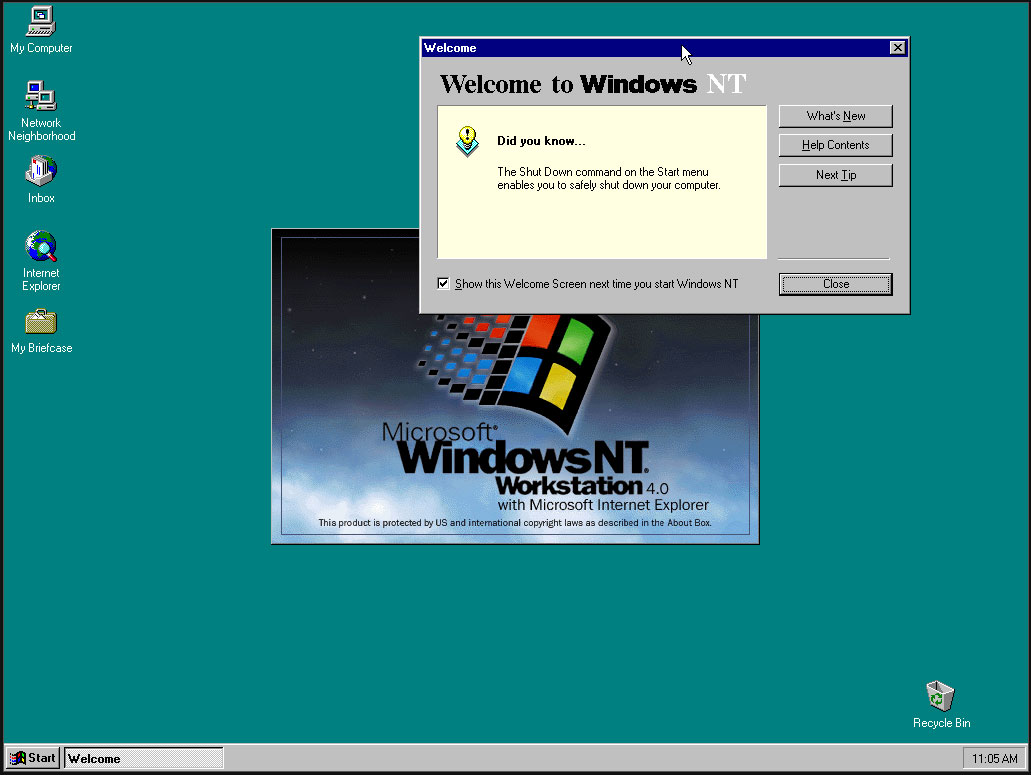
Microsoft released Windows NT 4.0 to manufacturing partners on July 31, 1996. Codename Cairo marked an important milestone in the history of Microsoft’s original server OS and would far outlive Microsoft’s original plans as enthusiasts and administrators clung to it, as older readers will be aware. Headlining features of NT 4.0, which made it a winner, include the melding of the intuitive new Windows 95 UI into the fully 32-bit enterprise OS. It was also notable for being the last version of NT to support Alpha, MIPS, or PowerPC CPU architectures.
Historical Windows NT timeline:
Windows NT Server 3.1 – in 1993, the first version of Windows NT also introduced NTFS
Windows NT Server 3.5 – in 1994, this update provided integrated support for Winsock and TCP/IP
Windows NT Server 3.51 - client/server support added in 1995
Windows NT 4.0 – in 1996, NT got the Windows 95 UI and the familiar My Computer, My Documents, and so on
Windows 2000 Server – the 5th NT release started a new naming scheme, introduced Active Directory, plus NTFS 3.0 with file system encryption
Followed by the more modern Server releases…
(Image credit: Microsoft)
After the initial Windows NT 4.0 release, Microsoft followed up with a version for embedded systems and its Terminal Server edition.
The Windows NT line was critical to Microsoft as it led the charge against dominant Unix server software ecosystems. Its first public release was in 1993, with version 3.1, but NT 4.0 coupled the underlying data server and personal workstation tooling with Win95 UI elements such as the Start Menu, Taskbar, Task Manager, and so on. It would also support new components like the cryptography API, DCOM, TAPI 2.0, and some DirectX (v2) features.
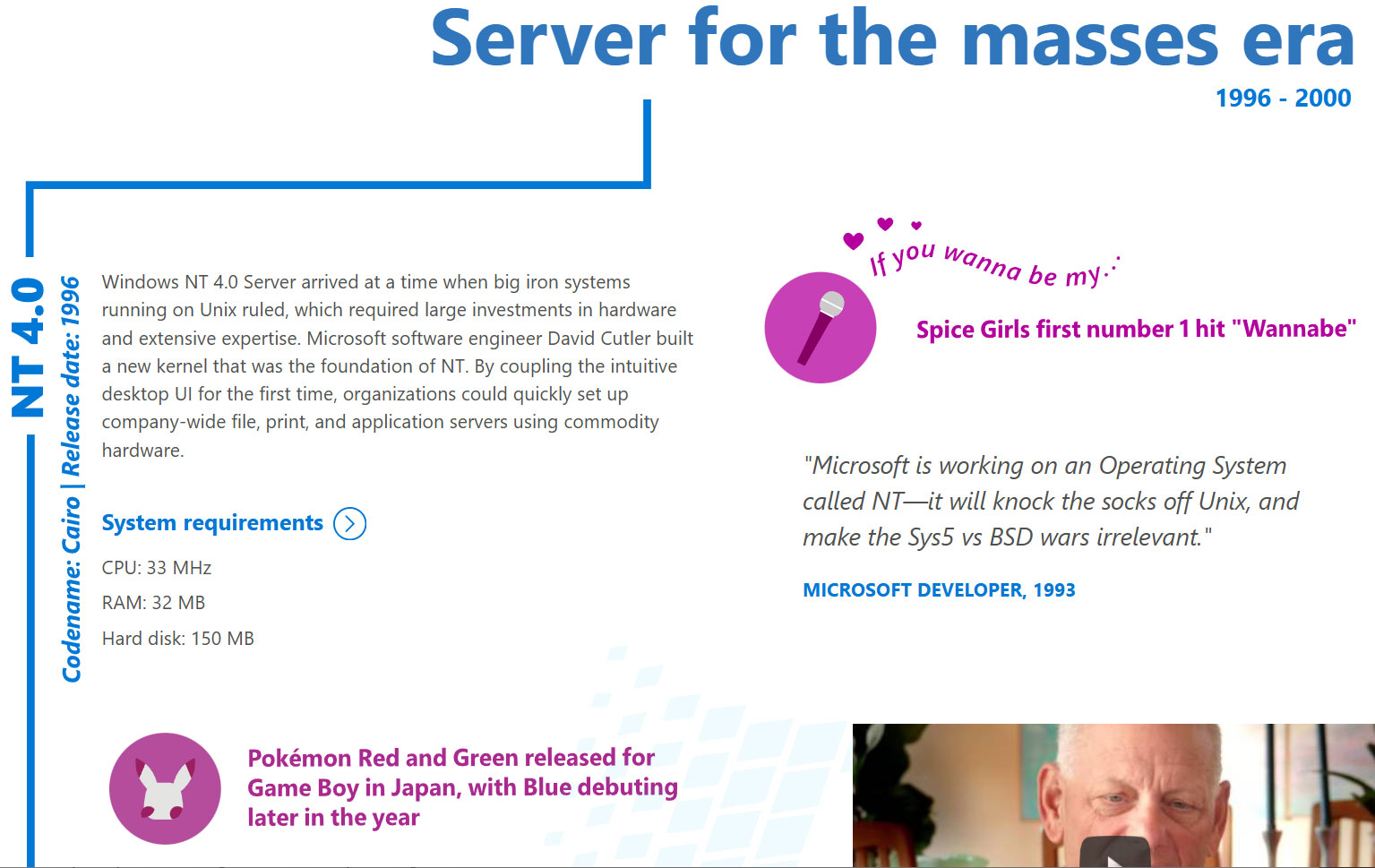
Despite all the new technology under the hood and the frills of the latest UI, Microsoft’s Windows NT 4.0 launched with remarkably low minimum requirements. Would-be users were recommended to install it on a PC with a CPU that ran at 33 MHz or better, had 32MB of RAM, SVGA graphics, and a hard disk with 256 MB capacity. This was in the Pentium / Pentium Pro era. NT 4.0 would become “the server for the masses,” boasted Microsoft on the OS’s 20th anniversary.
Another reason that NT 4.0 was so important is that it formed the foundation for the Windows XP release (2001), leaving the DOS-based 95, 98/SE, and Me versions of the consumer OS behind as archaic hybrids. In the half-decade between the release of NT 4.0 and XP, Microsoft had a lot of work to do, such as implementing Plug and Play, building out gaming tech, adding WDM drivers, and so on. Thankfully, PCs also grew in muscle, specs, and multimedia capabilities to make the larger and more demanding XP a big hit.
Windows XP landed with a core marketing line that it was “Built on NT technology,” which felt uncomfortable to read if you were from the camp that believed ‘NT’ was short for ‘New Technology.’
(Image credit: Tom's Hardware)
It is pretty easy to find an old Cairo release online for retro machine tinkering. Those interested in a more casual poke around in NT 4.0 out of interest, curiosity, or nostalgia will find there are some online installs you can play with via a web browser.
Microsoft arbeitet an einer umfassenden Super-App für seinen KI-Assistenten Copilot. Das hat Konzernchef Satya Nadella im Rahmen der aktuellen Quartalszahlen offiziell bestätigt. Die neue Anwendung soll...
Microsoft hat seine Bilanz für das abgelaufene Geschäftsjahr 2026/27 vorgelegt und verbucht dank des anhaltenden Booms bei Cloud-Diensten und künstlicher Intelligenz historische Höchstwerte. Der Gesamtumsatz kletterte...
Das BSI startet mit „Windows seziert“ ein neues Analyseprojekt. Den Anfang macht Windows Hello for Business. Ziel sind mehr Sicherheit und bessere Konfigurationen für Unternehmen. Die BSI-Untersuchung umfasst rund 170 Seiten. Sie beschreibt den gesamten Anmeldeprozess im Detail. Außerdem analysiert sie den Biometriedienst und das Windows-Biometric-Framework. Auch die Verwaltung biometrischer Daten wird ausführlich behandelt. Ein […]
The Document Foundation veröffentlicht LibreOffice 26.2.5. Das Wartungsupdate beseitigt 21 Fehler im Büropaket. Writer, Calc und Base profitieren von den Verbesserungen. Writer verarbeitet DOC-Dokumente jetzt zuverlässiger. Bedingte Textfelder bleiben beim Bearbeiten erhalten. Auch die automatische Textkorrektur arbeitet in bestimmten Fällen präziser. Abstürze bei der Texteingabe wurden ebenfalls behoben. Calc verbessert die Kompatibilität mit Microsoft Excel. […]
Microsoft verteilt auf Windows-11-Systemen aktuell ohne große Ankündigung eine neue Anwendung namens OneDrive Photos. Die App taucht nach Updates des OneDrive-Sync-Clients oder von Windows im Startmenü...
In den Steam-Diskussionsforen läuft derzeit eine Angriffskampagne, bei der sich Kriminelle als Helfer für Spiel- und Computerprobleme ausgeben. Statt harmloser Tipps verbreiten sie Anweisungen, die Geräte mit einem Kryptomining-Programm infizieren. (Weiter lesen)
Microsoft testet für Windows 11 eine Funktion, mit der Anwender die Copilot-Taste deaktivieren können. Seit 2024 werden neue Computer standardmäßig mit dem KI-Knopf ausgeliefert. An dieser Vorgabe hält das Unternehmen auch 2026 fest. (Weiter lesen)
Smart, dauerpräsent, aber umstritten: Microsoft verankert Copilot ab August 2026 im klassischen Outlook. Ein Menü liefert KI-Vorschläge direkt im E-Mail-Verlauf. Frühere Designpatzer wecken bei vielen Nutzern jedoch bereits handfeste Bedenken. (Weiter lesen)
Linux zu nutzen ist heute ziemlich simpel – wenn man ein paar Dinge vorher weiß. Wir erklären, wie der Umstieg möglichst reibungslos abläuft. Von der kompatibleweiterlesen auf t3n.de
Microsoft kann Windows Installationen eindeutig identifizieren. Neue Gerichtsunterlagen machen das Ausmaß dieser Technik erstmals sichtbar. Datenschützer sehen dadurch offene Fragen zur Transparenz und Privatsphäre. Im Mittelpunkt steht der sogenannte Global-Device-Identifier, kurz GDID. Diese Kennung entsteht während der Einrichtung mit einem Microsoft Konto. Sie bleibt dauerhaft erhalten und ändert sich erst nach einer vollständigen Neuinstallation. Betroffen […]
Der Fall hat in der Tech-Community für einigen Wirbel gesorgt: Nutzer staunten nicht schlecht, als auf ihren PCs nach dem Anschließen eines LG-Monitors plötzlich Werbe-Pop-ups auftauchten...
Microsoft hat die Pläne zum Support-Ende der OneDrive-Synchronisierungs-App unter Windows 10 präzisiert und ein konkretes Datum genannt. Ab dem 15. August 2026 stellt das Unternehmen...
Samsung hat One UI 9 für seine brandneuen Falt-Smartphones veröffentlicht. Die neue Benutzeroberfläche auf Basis von Android 17 bringt frische KI und verbesserte Privatsphärefunktionen mit, lässt Besitzer älterer Smartphones aber noch warten. (Weiter lesen)
Der Hersteller von Fernsehern und Monitoren erregte schon mehrfach wegen unerwünschter Funktionen Aufsehen. Jetzt sorgt ein neues Update für Zündstoff, das ungefragt Software installieren soll.
weiterlesen auf t3n.de

 Anmelden