❌

Lese-Ansicht

ASML and other critical semiconductor equipment suppliers expedite shipments to Musk's Terafab

Elon Musk says ASML and other critical semiconductor equipment suppliers have expedited shipments for the ambitious Terafab semiconductor manufacturing facility, supporting his aggressive timeline for the joint megaproject between Tesla and SpaceX. He made the announcement during a live broadcast of SpaceX's Q3 2026 earnings call on X yesterday, October 20. Musk also said the company is targeting volume chip production at the project's primary facility in Gibbons Creek, Texas, by the third or fourth quarter of 2028, emphasizing that the timeline is highly aspirational and carries "big error bars."
"These are very aggressive dates, and we're very appreciative of ASML and all of our other suppliers in accelerating equipment deliveries in order to achieve this outcome," said Musk, CEO of both companies behind Terafab. SpaceX plans to manufacture its first experimental test chip at its research fabrication facility in Austin, Texas, around Q2 2027.

Aside from Terafab, Musk also outlined near-term ambitions for his AI companies during the broadcast, saying he expects them to have 2.5 to 3 gigawatts (GW) of computing capacity active by the end of 2026. He also stated he is highly confident about bringing an incremental 10 GW online in 2027, saying he "would be surprised" if they do not hit a total of 13 GW of AI compute by the end of 2027.

Meanwhile, the next-largest project by planned capacity, the now-restructured 10 GW Project Stargate, was expected to reach full capacity in the 2030s. Meta's 5 GW Hyperion also has a similar timeline. To achieve the 13 GW milestone, Musk revealed that SpaceX and xAI are aggressively procuring upcoming next-generation NVIDIA architecture. He announced plans to get a massive 440,000-GPU Nvidia "Vera Rubin" training cluster online by the end of Q2 2027.

Shifting back to Terafab, Musk also boasted that once fully scaled and operational, the sheer commercial value of Terafab's advanced chip output will place it within the top 20 global country GDPs from a single physical building. For context, the 20th country on the list is Switzerland, with a GDP of around $1.14 trillion. The facility is a planned multi-billion-dollar, vertically integrated chip factory in Texas, with an ambitious goal of manufacturing 1 terawatt (TW) of AI computing power per year. Terafab will fabricate logic, memory, and advanced packaging internal architectures in one place. The project's massive planned output has mandated various collaborations across the semiconductor supply chain. Terafab will utilize traditional extreme ultraviolet (EUV) lithography systems utilizing Intel's 14A manufacturing node technology.

Intel officially joined the Terafab venture in April 2026 to help co-develop and refactor silicon fabrication technology, providing access to its state-of-the-art 14A manufacturing process. ASML, the world's sole commercial supplier of the $400 million EUV lithography systems required for high-volume, leading-edge chip production, is perhaps the project's most critical partner. Terafab's first EUV tool was reportedly slated for delivery in mid-2027, according to unofficial sources. It remains unclear if this is the expedited timeline Musk referred to in the broadcast.

Other major suppliers include American equipment manufacturers Applied Materials, Lam Research, and KLA Corporation, as well as Japan's Tokyo Electron. These companies will provide front-end processing, metrology, and process control machinery. Tesla and SpaceX are also in talks with about 10 South Korean equipment makers, including Hanmi Semiconductor, known for advanced packaging equipment, and HPSP, a high-pressure hydrogen annealing equipment manufacturer, as well as firms providing specialized piping components and process valves.

Musk's announcement says that several of these suppliers are expediting supply to Terafab, even as capacity remains tight across the semiconductor supply chain. The facility, which aims to mitigate future shortfalls of cutting-edge AI processors from external foundries like TSMC, will supply the chips for Musk's xAI clusters, self-driving vehicles, Optimus humanoid robots, and SpaceX's orbital AI data center, as well as the broader AI industry.

However, many experts have questioned the validity of Musk's 1 TW Terafab ambition. For context, research firm Gartner estimates the total global AI-optimized data center capacity is roughly 44 GW as of late 2026, 4.4% of Terafab's planned output. Although global AI computing capacity has grown by roughly 3.3x to 3.4x per year since 2022, according to EpochAI.
  •  

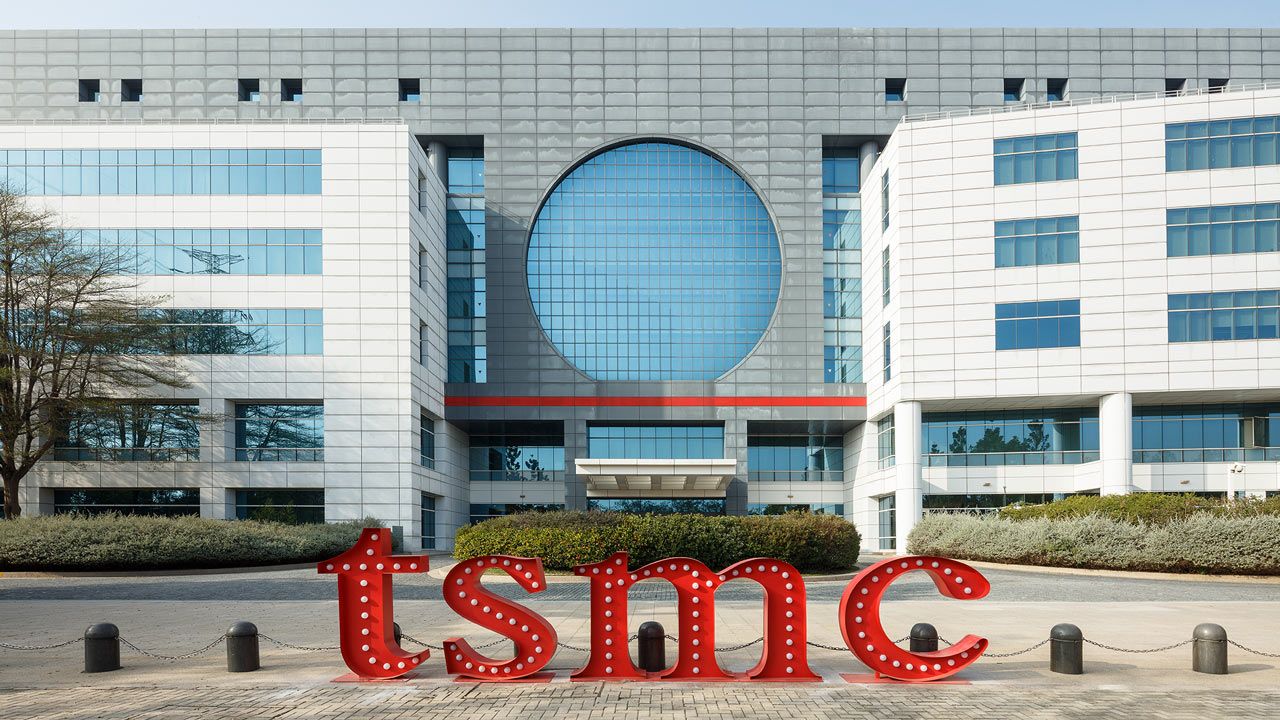
Four workers killed after fall at TSMC’s 2nm fab construction site

Three contract workers died, and one more is in intensive care after an accident at the construction site for TSMC’s 2nm Fab 22 in Kaohsiung, Taiwan, reports Taiwan’s Central News Agency. The Southern Taiwan Science Park (STSP) Bureau suspects the cause was a broken bolt on a steel connection plate that sent the workers and steel components tumbling. Steel hoisting on the project has been halted, and the STSP has sent labor inspectors to investigate. The accident is not the first of its kind but rather follows at least a half dozen others since September 2024 at TSMC construction sites in Taiwan, according to local reports. Each of those earlier accidents killed one worker.

Local police said that the men were welding a steel beam on an upper floor and fell with it, while the STSP said the workers were performing steel-structure hoisting and installation when a third-floor connection-plate bolt apparently broke.

10 emergency vehicles were sent to the site with 22 personnel, and all four men involved in the incident were taken to the hospital. On-site medical staff gave first aid, but three of the workers died despite resuscitation efforts, and the fourth was moved to intensive care. The workers were employed by a contractor working on the fourth phase of the complex’s construction, and TSMC said the area was within that contractor’s scope of work.

According to the report, TSMC stopped the related construction work on its own and is working with authorities and supervising the subcontractor’s follow-up.

The Fab 22 complex, located in Kaohsiung’s Nanzi District, is part of the science park and is being built to accelerate 2nm manufacturing. TSMC entered high-volume 2nm, or N2, manufacturing in the fourth quarter of 2025, including at Fab 22. The complex has five phases planned, with a total investment TSMC puts at more than NT$1.5 trillion, or about $46 billion. The accident happened on the construction side, not in a producing fab. Kaohsiung’s deputy mayor said construction on Phase 4 began in August 2025, with operations expected in the fourth quarter of 2027.

Business Today reports that TSMC fab construction has increased, from four fabs a year in 2017–2024 to nine a year in 2025 and 2026. The deaths come as the company plans for 13 new leading-edge and advanced-packaging fabs in Taiwan, with company-wide capex of $60 billion to $64 billion this year.

The faster pace has encouraged the addition of a contractor’s safety record as a weight in selection and a plan for a Taiwan Semiconductor Construction Engineering Safety Association with construction partners. TSMC Chairman C.C. Wei said at last year’s shareholders meeting that safety cannot be compromised, and the company’s 2025 annual report said it will keep investing in fabs across several locations in Taiwan “with a strong emphasis on construction site safety.”

Cliff Hou, TSMC senior vice president and deputy co-COO, told Business Today that increased worker count and overlapping construction have raised the risk, requiring careful supervision, and that TSMC’s contractor lost-time injury rate had fallen about 42% from last year’s high as of late May, when the publication toured the Nanzi site to see the overhaul. It’s too early to call the program a failure, with the cause as yet unknown.

The accident comes less than a week after an explosion killed two people at Intel’s chip plant in Israel, though that was an operating fab rather than a construction site. Both accidents come as chipmakers race to meet demand, with global chip sales passing $1 trillion through August, according to the Semiconductor Industry Association.

The STSP’s findings will determine what penalties, if any, will fall under Taiwan’s Occupational Safety and Health Act, while it assists the victims’ families. No date has been given at this time for that or for the Phase 4 steel hoisting restart. Nor has TSMC commented on any schedule impact.

  •  

TP-Link proposes $1 billion US Wi-Fi router manufacturing alliance with Key Tronic

TP-Link is fully determined to get in the good graces of the U.S. government to break free from a total ban on newly developed routers manufactured outside of the country. Although TP-Link is incorporated in the U.S. with a headquarters in Irvine, California, the company has been under pressure from the full weight of the U.S. government because of its historical Chinese roots. However, in an effort to appeal to the Trump administration’s zeal for creating jobs and touting American manufacturing, TP-Link this week announced that it has signed a letter of intent to assemble routers in the U.S. through a crucial partnership with Key Tronic.

How did we get here?

The ongoing saga started back in late 2024, when the House Select Committee on the Chinese Communist Party requested that the Department of Commerce investigate TP-Link. At the time, the committee warned that “TP-Link products are also found on U.S. military bases, with the Army and Air Force Exchange and the Navy Exchange selling these devices to members of the military and their families,” and claimed TP-Link routers were sending user data back to China.

The select committee implored the Department of Commerce to use its broad powers to investigate TP-Link and take any necessary action to mitigate threats to national security. The campaign against TP-Link ramped up in mid-2025, with 17 members of Congress petitioning the Commerce Department to ban the sale of the company’s hardware in the U.S. due to alleged deep ties to the CCP. In late 2025, 23 U.S. House members and Senators again asked the Commerce Department to investigate TP-Link’s actions, including adding the company to the Covered List, investigating any threats to national security, and informing the public about potential risks associated with using the company’s devices.

The situation reached a boiling point in March 2026, when TP-Link and other router manufacturers were added to the Federal Communications Commission (FCC) Covered List, forbidding the sale of foreign-made routers in the U.S. that hadn’t already been approved. At the time, the FCC noted, “Recently, malicious state and non-state sponsored cyber attackers have increasingly leveraged the vulnerabilities in small and home office routers produced abroad to carry out direct attacks against American civilians in their homes. From disrupting network connectivity to enabling local networking espionage and intellectual property theft, foreign-produced routers present unacceptable risks to Americans.”

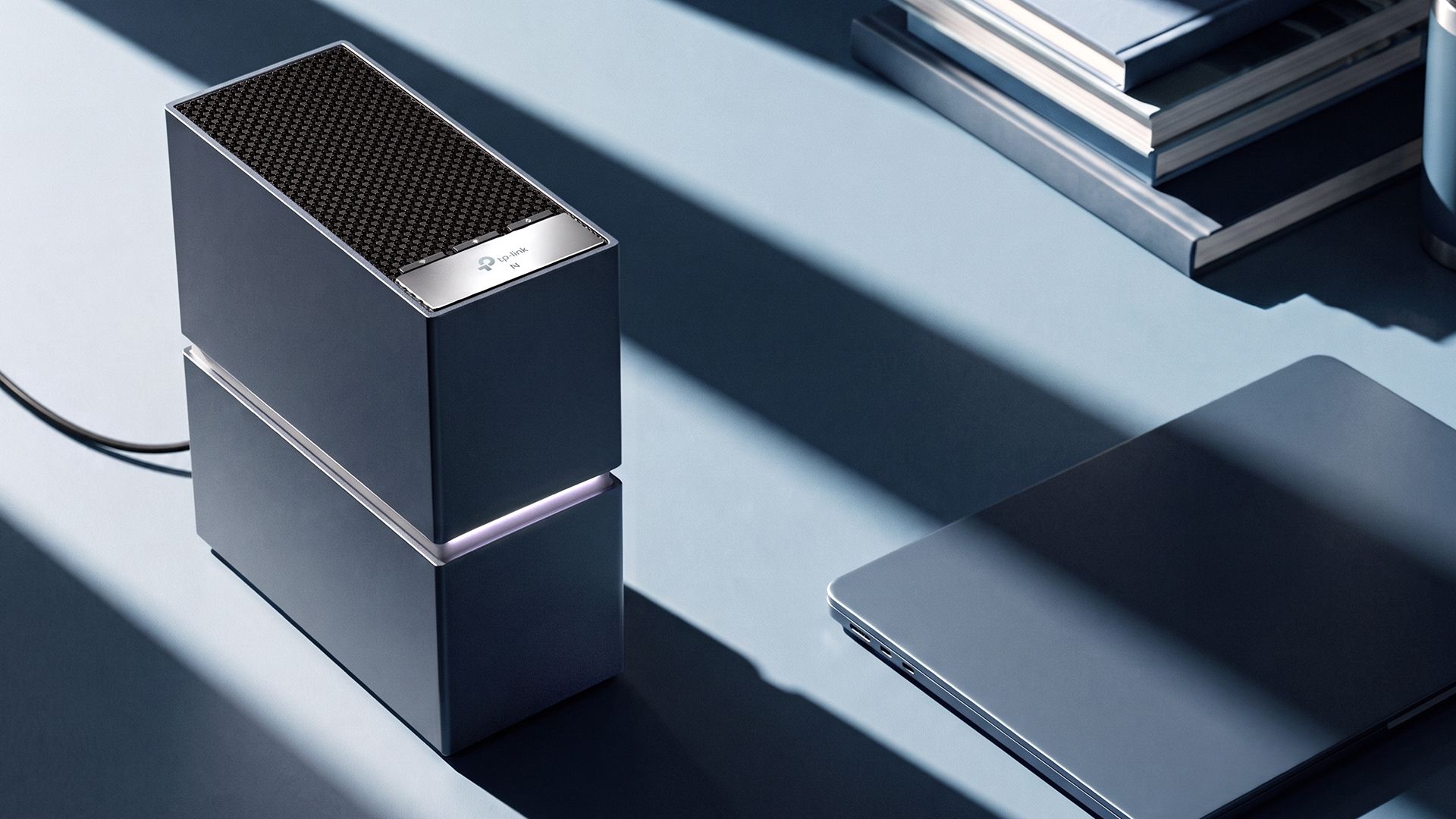
TP-Link Router Render

TP-Link Archer 8 Ultra (Image credit: TP-Link)

Since that time, several things have changed, with none of them being positive developments for TP-Link. Over the past six months, Amazon, Asus, and Netgear have all gained conditional approvals from the FCC to sell new wireless products in the U.S., while TP-Link has been stonewalled (conditional approvals are valid for 18 months from the date of issuance). Considering that TP-Link has been the world’s largest provider of Wi-Fi routers and associated devices for over a decade, losing access to the U.S. market for its new line of Wi-Fi 8 devices is a significant blow. This was readily apparent in late September when TP-Link opened preorders for its Archer 8 Ultra Wi-Fi 8 router. The company announced that the router would be available in the United Kingdom, Germany, and Australia. However, the U.S. was conspicuously absent from that list because of the ongoing ban.

Adding insult to injury, earlier this month, multiple states (including Florida, Montana, Iowa, and Nebraska) sued TP-Link Systems, alleging that the company has made false and misleading claims about the security capabilities of its products and continued ties to China.

“TP-Link’s conduct has placed Montana consumers at risk of harm by making their home and small-office networks vulnerable to exploitation and intrusion by foreign actors with a proven track record of nefarious conduct. That risk is ongoing: many consumers keep their routers for years, and many of the compromised TP-Link models in Montana homes do not support automatic firmware updates and no longer receive security support at all,” stated Montana Attorney General Austin Knudsen.

Knudsen further claimed that while TP-Link touts that it employs 300 people in the U.S., the bulk of its workforce (numbering over 11,000 employees) conducts development and manufacturing operations in China. “Further, TP-Link claims to manufacture its U.S.-market products in Vietnam, but less than one percent of the components by value are sourced in Vietnam, and the rest are imported from or through China,” Knudsen added.

“Iowans’ sensitive data and our national security is at risk because of TP-Link and their connection to the communist Chinese government,” stated Iowa Attorney General Bird. “TP-Link tells Iowans its routers are safe, our personal data is secure, and that they have no ties to China. They are not telling the truth. It’s time to hold China and China-backed companies accountable.”

TP-Link barks back

Up until this point, TP-Link has vehemently denied any ties to the Chinese government and has refuted similar allegations from one of its primary competitors, Netgear. However, on October 13, the company issued its sharpest rebuttal yet in a letter to the FCC. TP-Link touted its “America-first” strategy and chastised the state lawsuits brought earlier this month.

“A group of 21 state-level officials recently raised a scattershot barrage of baseless and previously debunked allegations relating to TP-Link’s confidential, non-public application,” TP-Link exclaimed. Rather than seeking to advance legitimate public policy objectives, the letter appears aimed primarily at encouraging federal officials to apply a heightened standard to TP-Link’s pending application that would be unattainable to TP-Link or any other router manufacturer in the world.”

TP-Link stated that its innovation in the router space earned its position as the market leader in the U.S., and that the constant barrage of legal fights and war of words is undermining fair competition and is an actual threat to national security and critical infrastructure given the broad proliferation of its products.

To that end, TP-Link reiterated that it has officially filed for conditional approval from the FCC, so that it can specifically sell two next-generation Wi-Fi 8 routers in the U.S. The company noted, “As the United States positions itself as a leader in wireless technology, a Conditional Approval would guarantee American consumers access to the same cutting-edge wireless equipment that will soon be available in other parts of the world."

TP-Link proposes $1 billion investment in the U.S.

With its back against the ropes, TP-Link is appealing to the U.S. government in the best way it knows how: with money and jobs. If there’s anything that the U.S. government likes, it’s investment in manufacturing on its own soil and high-paying jobs to bolster local economies. To help push the U.S. government along in approving a conditional approval to sell Wi-Fi 8 hardware, TP-Link has signed a letter of intent with Key Tronic to manufacture routers in the U.S. instead of importing them from Vietnam. More specifically, the routers would be assembled in Corinth, Mississippi.

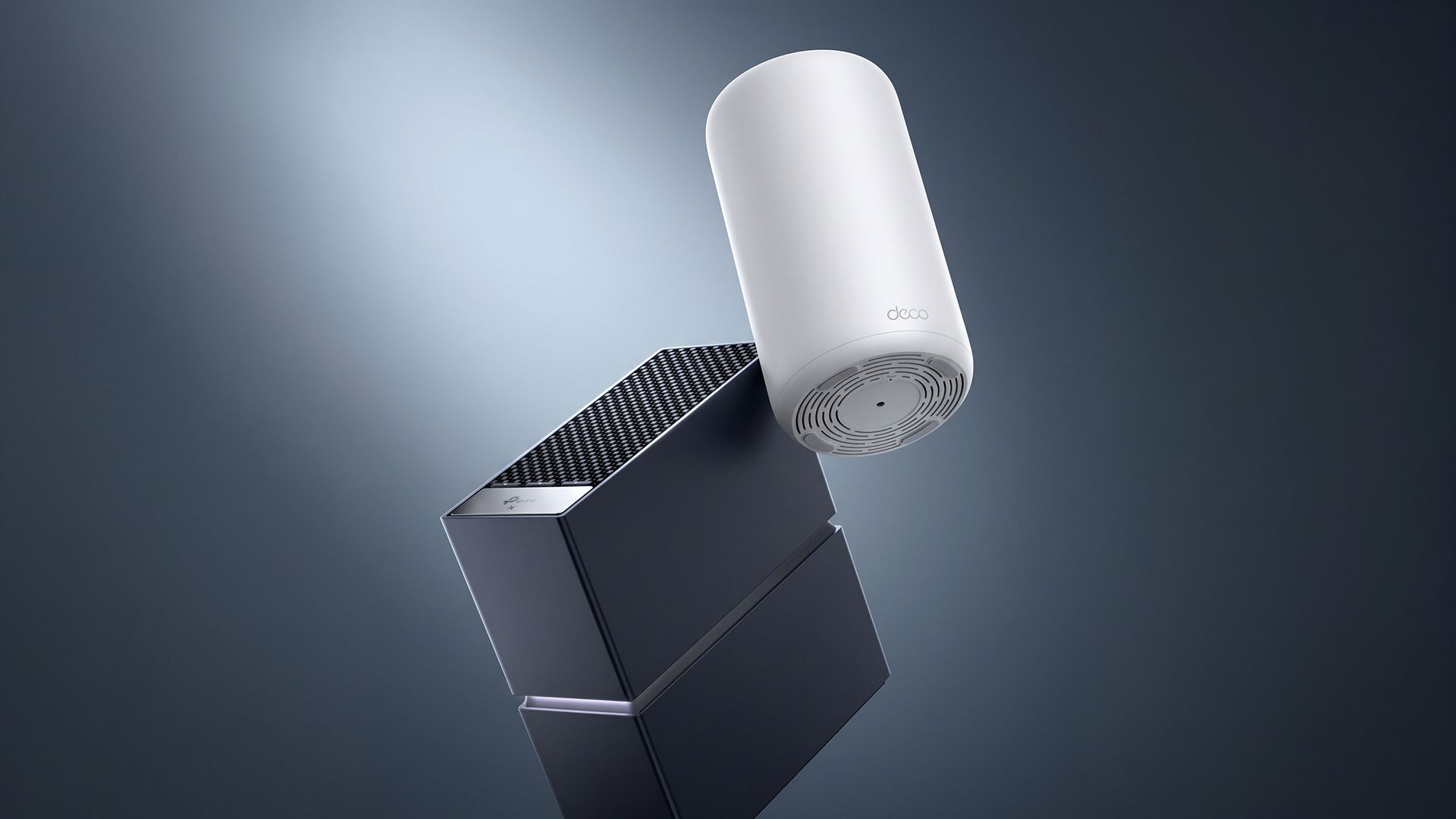
TP-Link Deco Router lifestyle shot

TP Link Deco 8 Ultra (Image credit: TP-Link)

“This LOI with Key Tronic demonstrates our firm commitment to expanding domestic advanced manufacturing, and establishing America as our base for delivering secure, reliable connectivity solutions to households and businesses around the world,” said TP-Link Systems Inc. CEO Jeffrey Chao. “By choosing to assemble cutting-edge products here at home, we are thrilled to support U.S. high-tech job growth and empower a new generation of American innovation and innovators.”

TP-Link hopes that the investment will cut through most of the red tape that is currently preventing it from selling its latest products stateside. However, it remains to be seen if these latest sweeteners will be enough to sway President Trump and the agencies under his purview. As the company notes, it was the first to deliver Wi-Fi 7 routers in the U.S., and it wants to continue that leadership position by offering the first Wi-Fi 8 routers. The hardware is ready to go, as evidenced by the opening of preorders; it’s just currently being held up by roadblocks at the federal level, along with added pressure from state governments.

Until that time, Wi-Fi 8 products like the Archer 8 Ultra and Deco 8 Ultra will remain off-limits to Americans, which have given TP-Link a reported 65 percent share of the U.S. consumer router market.

  •  

Google rollt Personal Intelligence für Android Auto aus: Warum deutsche Autofahrer leer ausgehen

Google veröffentlicht ein großes Update für Android Auto, mit dem auch Geminis Personal Intelligence unterwegs verfügbar ist. Allerdings gibt es für deutsche Autofahrer:innen, die sich schon auf die KI-Features gefreut haben, vorerst einen Dämpfer. weiterlesen auf t3n.de

  •  

AGF TV-Konvergenz-Quoten im September 2026: „Babylon Berlin“ unglaublich stark, auch „Sommerhaus“ boomt

Vorbei ist die absolute "GZSZ"-Dominanz in den Konverenz-Quoten. "Babylon Berlin" überrascht mit großer digitaler Stärke und auch "Das Sommerhaus der Stars" zeigt, wieso das Format trotz linear teils mächtig überschaubarer Werte weiterhin eine absolute Macht ist.

Der Beitrag AGF TV-Konvergenz-Quoten im September 2026: „Babylon Berlin“ unglaublich stark, auch „Sommerhaus“ boomt erschien zuerst auf DIGITAL FERNSEHEN.

  •  

„American Horror Story“: Staffel 14 bestätigt – Streaming-Rekord bei Hulu und Disney+

FX setzt „American Horror Story“ fort. Nach dem bislang erfolgreichsten Streaming-Start einer Serienpremiere von Ryan Murphy auf Hulu und Disney+ erhält die Horror-Anthologie eine 14. Staffel.

Der Beitrag „American Horror Story“: Staffel 14 bestätigt – Streaming-Rekord bei Hulu und Disney+ erschien zuerst auf DIGITAL FERNSEHEN.

  •  

Kritik zu „Gnomes – Angriff der Killerzwerge“ bei ZDFneo: Gremlins aus dem Schrebergarten

Blutige Gartenzwerge, tumbe Nazi-Schergen und eine Königin mit Weltherrschaftsplänen: Die australische Horror-Comedy „Gnomes – Angriff der Killerzwerge“ setzt auf Splatter, Slapstick und maximalen Irrsinn.

Der Beitrag Kritik zu „Gnomes – Angriff der Killerzwerge“ bei ZDFneo: Gremlins aus dem Schrebergarten erschien zuerst auf DIGITAL FERNSEHEN.

  •  

Buch-Piraterie für KI: Gericht zwingt Meta, Namen offenzulegen

Buch-Piraterie für KI: Ein US-Gericht verpflichtet Meta, Beteiligte hinter Torrent-Downloads von Anna’s Archive und LibGen zu benennen.

Der Artikel Buch-Piraterie für KI: Gericht zwingt Meta, Namen offenzulegen erschien zuerst auf TARNKAPPE.INFO

  •  

Microsoft Defender kommt offiziell auf den Linux Desktop

Microsoft erweitert seine Sicherheitsplattform Defender for Endpoint auf Linux-Desktops. Die Funktion ist ab sofort als öffentliche Vorschau verfügbar und richtet sich an Unternehmen, die Linux-Arbeitsplätze zentral überwachen und gegen Bedrohungen absichern wollen. Für private Linux-Nutzer ist das Angebot nicht gedacht, denn es handelt sich nicht um die bekannte Consumer-Version von Microsoft Defender, sondern um eine […]

Der Beitrag Microsoft Defender kommt offiziell auf den Linux Desktop erschien zuerst auf fosstopia.

  •  

Netflix: Schwächstes Wachstum seit Jahren

Netflix: Schwächstes Wachstum seit Jahren
Bei Netflix läuft es zwar auf dem Papier finanziell solide, das Tempo beim Wachstum ist aber eingebrochen. Im abgelaufenen Quartal verzeichnete der Streaming-Riese mit einem Umsatzplus...

Zum Beitrag: Netflix: Schwächstes Wachstum seit Jahren

Wo du uns folgen kannst: Facebook, Reddit, Google News, X, Threads

  •  

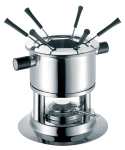
Schulte-Ufer Mambo Fondue-Set (16 cm, Edelstahl, 6 Gabeln, induktionsgeeignet) für 66,35 €

66,35€ - Amazon

Rechtzeitig vor der Fondue-Saison gibt es bei Amazon das Mambo Fondue-Set von Schulte-Ufer für 66,35 €. Verkauf und Versand durch Amazon. Der nächste Preis im Vergleich liegt bei rund 109,95 € laut idealo.

Im Set:
• Fonduetopf 16 cm aus hochglanzpoliertem Edelstahl, etwa 2 Liter Inhalt
• Rechaud mit Pastenbrenner
• 6 Fonduegabeln

Details:
• Für Fleisch- und Gemüsefondue mit Öl oder Brühe
• Holzgriffe mit Flammschutz aus Edelstahl, die Hitze bleibt am Topf
• Kapselboden zum Vorheizen auf allen Herdarten, auch Induktion

Schulte-Ufer stellt seit über 100 Jahren Kochgeschirr in Deutschland her. Laut Amazon sind nur noch wenige Stück auf Lager.


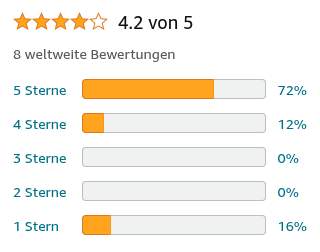
Kundenrezensionen
2857143-5lsik_1.jpg
  •  

BEDSURE Bettwäsche 135x200 4teilig Mikrofaser - Anthrazit, 80x80 Kissen

22,94€ - Amazon

Anderswo starten die Preise derzeit ab 58,99€


Hergestellt aus ultrafeinem, weichem, strapazierfähigem und knitterfreiem Mikrofaser Polyester.


Bequem in der Handhabung dank robustem Reißverschluss; abnehmbar und maschinenwaschbar.


Entspricht dem OEKO-TEX Standard 100 zertifiziert und ist frei von hautfreundlichen Schadstoffen.

Die BEDSURE Bettwäsche 135x200 ist bei Amazon für 22,94 € erhältlich und bietet eine stilvolle und komfortable Lösung für das Schlafzimmer. Dieses Set besteht aus vier Teilen, darunter zwei Bettbezüge in der Größe 135 x 200 cm und zwei Kissenbezüge mit den Maßen 80 x 80 cm. Die Bettwäsche ist in einem eleganten Anthrazit gehalten, das jedem Raum einen modernen Touch verleiht.

Gefertigt aus hochwertiger Mikrofaser, überzeugt die Bettwäsche durch ihre außergewöhnliche Weichheit und Atmungsaktivität. Der glatte Stoff sorgt für ein angenehmes Gefühl auf der Haut und bietet höchsten Komfort. Die Polyester-Mikrofaser ist zudem strapazierfähig und knitterfrei, was die Pflege erleichtert.

Ein robuster Reißverschluss ermöglicht ein einfaches Ab- und Beziehen der Bettwäsche. Dank der durchdachten Konstruktion mit acht Eckbändern bleibt die Bettdecke sicher an ihrem Platz, ohne zu verrutschen. Diese Details machen die Handhabung besonders bequem.

Die Bettwäsche entspricht dem OEKO-TEX Standard 100, was bedeutet, dass sie frei von schädlichen Substanzen ist und somit sicher für die Haut. Diese Zertifizierung bietet ein zusätzliches Maß an Sicherheit und Seelenfrieden.

Ein weiteres Highlight ist die verbesserte Haltbarkeit durch die saubere Nähkonstruktion, die für eine starke Verbindung an den Nähten sorgt. Die spezielle Färbetechnik verhindert ein Ausbleichen der Farbe, sodass die Bettwäsche lange Zeit frisch und lebendig aussieht.

Die Pflege der Bettwäsche ist unkompliziert, da sie maschinenwaschbar ist. Dies macht sie besonders praktisch für den täglichen Gebrauch. Mit einem Gewicht von 1,32 Kilogramm ist das Set leicht zu handhaben und ideal für den Einsatz zu Hause oder im Hotel.


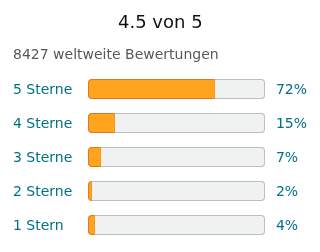
Kundenrezensionen
2857136-7ywqw_1.jpg
  •